
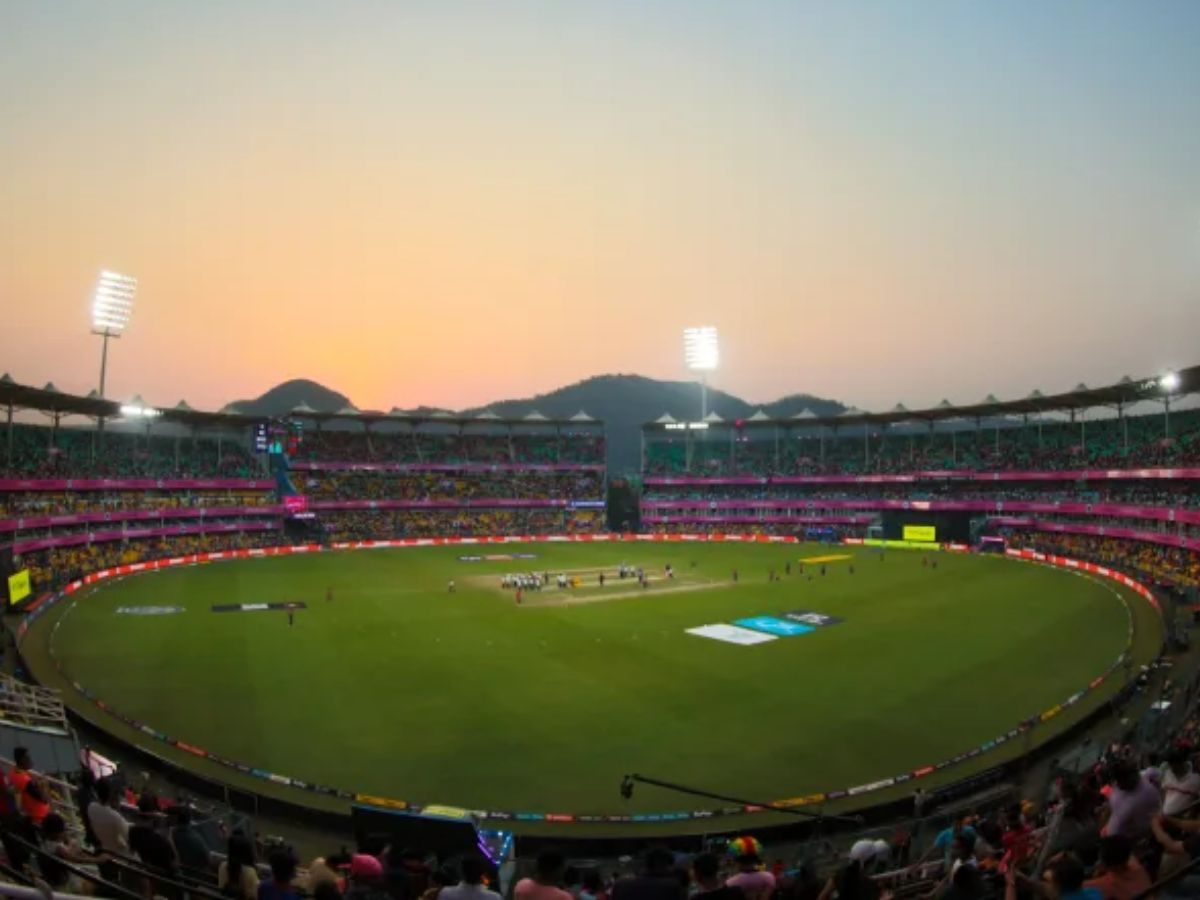
To take Tea before lunch in a traditional Test match sounds like something odd of old county cricket, or even a fictional social media meme but it’s a reality in Guwahati. The schedule for the second Test between India and South Africa at the Barsapara Stadium has been rearranged to accommodate the players taking tea before lunch, breaking a routine that has existed since Test cricket began in 1877.
This is not a small adjustment or a trivia note. It marks the first time in 148 years of regular day Test cricket that the order of breaks has been formally reversed.
Normally, a Test day follows the pattern: toss → lunch → tea → stumps. In Guwahati, the order has changed to: toss → tea → lunch → stumps. This new structure has come about due to practical concerns involving daylight and India’s single time zone.
Why Guwahati Needed a New Schedule
Guwahati and the North-East are ahead of the rest of India in terms of natural sunlight hours. Relatively close to 90°E, the region receives daylight very early in the morning compared to cities such as Delhi or Mumbai but still follows the Indian Standard Time based on 82.5°E. By around 4:30 pm, it often seems like almost sunset, making it difficult to get in the full 90 overs of play without bad light stoppages.
To resolve this problem, BCCI and Cricket South Africa mutually agreed to start the Test at 9:00 am – that is half an hour earlier than the regular start time – and finish at 4:00 pm. Consequently, the day is restructured as below:
First Session: 9:00 am – 11:00 am
Tea Break: 11:00 am – 11:20 am
Second Session: 11:20 am – 1:20 pm
Lunch Break: 1:20 pm – 2:00 pm
Third Session: 2:00 pm – 4:00 pm (extendable to 4:30 pm)
An official from the BCCI explained earlier that this was done to avoid losing time later in the day. The reason, he said, was to create extra usable game time in the afternoon as well as not to shorten play with fading light.
A change that follows ICC’s Test Rulebook
The ICC’s Test playing rules specify only the duration of breaks-mandatory 40 minutes for lunch and 20 minutes for tea-and not which break precedes the other. This implies that host cricket boards, along with the touring nation and the ICC, are free to rearrange the sequence so long as the total break time of one hour remains constant. Guwahati’s schedule meets these requirements fully.
Though new on a routine day Test, similar structures have already been in use in day-night matches, where a shorter tea break precedes a longer dinner interval after sunset. The difference here is that Guwahati is applying the same reasoning to a daytime match using sunlight instead of floodlights as the deciding factor. Players React to the Time Shift Players have largely taken the move in a professional stride. Indian batter Sai Sudharsan even went as far as finding humor in it, saying he “already drink tea during lunch,” and seemed confident that the change could be “exciting to explore.”
South African spinner Keshav Maharaj acknowledged that the adjustment helps “maximise playing time in tricky light.” However, opener Aiden Markram admitted he was not too keen on the idea and was hoping it would not be something of a regular trend, although he accepted that players must “just get on with it.” A Moment that Enters Cricketing History Whatever the outcome of this experiment, Guwahati has already added a new page to Test cricket history. Barsapara Stadium is where the game finally asked the simple question why can’t tea come before lunch? and then acted on it. Copied or not, this Test will be remembered for more than scorecards and results of the match. It will be remembered for being that moment when cricket bent tradition to suit the sun.
Also Read: Winless Australia forced into two changes to side against France