
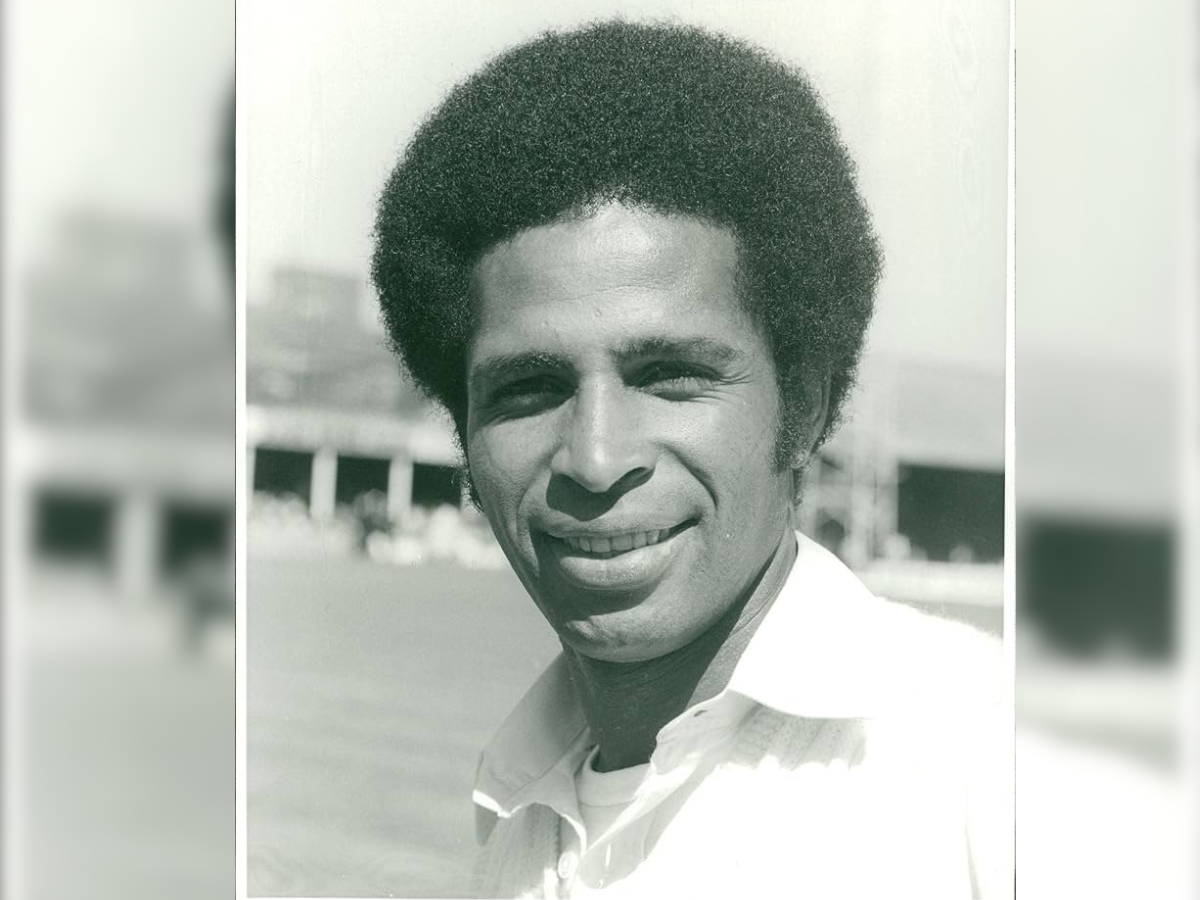
Bernard Denis Julien (13 March 1950 – 4 October 2025) was a Trinidad and Tobago cricketing icon, best known as a member of the all-rounder class who played an important role in the West Indies’ winning the first 1975 Cricket World Cup. Julien died at the age of 75 in Valsayn, Northern Trinidad, leaving behind a vast legacy across domestic and international cricket, coaching, and sports administration.
Where Was Bernard Julien From?
Born in 1950 in the village of Carenage in Trinidad, Julien played in his youth for St. Mary’s College. He debutued at first-class level at 18 against North Trinidad for South Trinidad in the Beaumont Cup and soon moved on to play for Trinidad and Tobago at the senior level.
Bernard Julien’s Domestic Career
In 1970, Julien was recruited by Kent County Cricket Club in England. He started out playing for the Second XI before making his first XI debut in 1972, becoming Kent’s 152nd capped player. Though he suffered from persistent injuries and international assignments, he continued to score more than 400 first-class runs and more than 40 wickets during several seasons, solidifying his position as a reliable all-rounder.
What Made Julien a World Cup Hero?
Julien’s overseas career was an attempt at brilliance. In his third Test, he hit 121 out of 127 balls at Lord’s, with a 150-run partnership with Garry Sobers for England during the 1973 West Indies tour.
He was a key player in the World Cup of 1975, conceding 4/20 against Sri Lanka and 4/27 against New Zealand in the semi-final. In the final game against Australia, Julien scored a mere 26 not out, as the West Indies won their first-ever men’s World Cup championship.
Later, Julien joined Kerry Packer’s World Series Cricket in 1977. His international career concluded controversially when he participated in the rebel tours to South Africa (1982–84), defying the sporting boycott against apartheid.
Bernard Julien’s Net Worth
Though precise amounts are not made public, Bernard Julien accumulated his wealth largely from professional cricket, coaching, and administrative work in Trinidad and Tobago’s Ministry of Sports. His experience with Kent and involvement in World Series Cricket supplemented his income, representing a career with elements of skill, opportunity, and sportsmanship.
Bernard Julien’s Family
Julien was not one to talk about his personal life, but he will be remembered kindly by family and friends as well as the cricketing community. Posthumous tributes flowed in from past colleagues and administrators, among whom were former captain Clive Lloyd, who acknowledged Julien for his work ethic, enthusiasm, and unflinching loyalty to the team.
Bernard Julien’s Wife
Julien had a low-key approach to his marriage life. Though his public records about his wife are meager, his close associates recall him as an amiable, friendly, and respectable person on and off the court.
How Will Bernard Julien Be Remembered?
Following his retirement from cricket, Julien served Trinidad and Tobago’s Ministry of Sports and also embarked on coaching. He overcame a diagnosis of throat cancer in 2005, showing strength off the field too.
Bernard Julien took his place in the annals of cricket history as a flamboyant, burly all-rounder a cricketer capable of heavenly strokes, dynamic bowling, and charming fielding. His contributions in the 1975 World Cup, domestic cricket, and guiding young cricketers leave an indelible mark on the generations of cricket lovers.