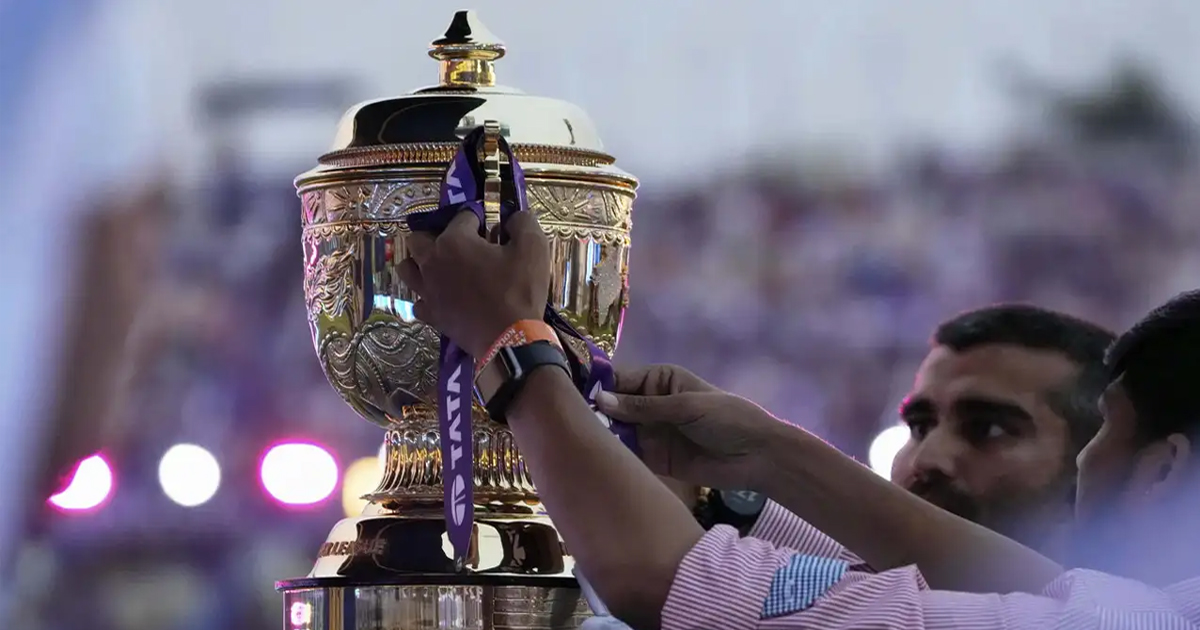
Players falling over in exhaustion, physios dashing in with ice packs, and thermometers hitting 40°C — this was the harsh reality of the 2025 Indian Premier League. A new climate report, ‘Hit for Six: The Danger Zone,’ has revealed that an increasing number of IPL matches are being staged in unsafe heat conditions, posing risks to players’ health and performance.
The research analyzed 65 matches in the 2025 season and determined that 36% were contested in “Extreme Caution” heat levels. Another 12% were contested under “Danger” conditions — heat zones where heatstroke is a serious threat. These categories rely on the Heat Index, which combines both heat and humidity to measure health risks.
Shahnawaz, a Tengpora 11 cricketer in Srinagar, recalled the mounting battle on the pitch.
“Sweat stings the eyes, gloves turn soggy, and the helmet turns into an oven. Sunscreen or no, sunburn is always there. Most alarming is the feeling of lightheadedness or nausea. You have to pay attention to your body to avoid heat exhaustion,” he said.
“Cricket will become much more difficult for many to play, including in Kashmir, as temperatures climb. The dangers extend beyond cramps and exhaustion. Heatstroke is another possibility, particularly for younger or older players.”
The analysis is based on climate records between 1970 and 2024 gathered from India’s major cricket grounds. It revealed a steep increase in the number of days when heat exceeded safe levels for playing. Thiruvananthapuram had 117 such days in 2024, the most among all the grounds.
Mike Tipton, Professor of Human and Applied Physiology at the University of Portsmouth, pointed out the physiological pressure the players face now.
“Players are now being expected to compete in conditions that are not only uncomfortable, but dangerous,” Tipton said. “Increasing heat and humidity are driving the human body to its limits.”
Even once-touted temperate cities, such as Dharamsala, are experiencing severe heatwaves. Mumbai has witnessed a 125% rise in dangerous heat days between 1970 and now. Urban heat islands and humid atmospheres are also exacerbating conditions in other cities, including Guwahati and Navi Mumbai.
Looking back on his own life, Shahnawaz observed the radical shift, “When I started playing cricket in Kashmir, the weather used to be more predictable. Summers were okay, sunny, windy. But over the years, I’ve seen a perceptible shift in climate trends. Now we’re experiencing summer heatwaves frequently, random spells of rain, and even dusty conditions.”
As the IPL spreads its wings and climate change gathers speed, the game might need to reinvent itself to face new, tougher realities on the pitch.