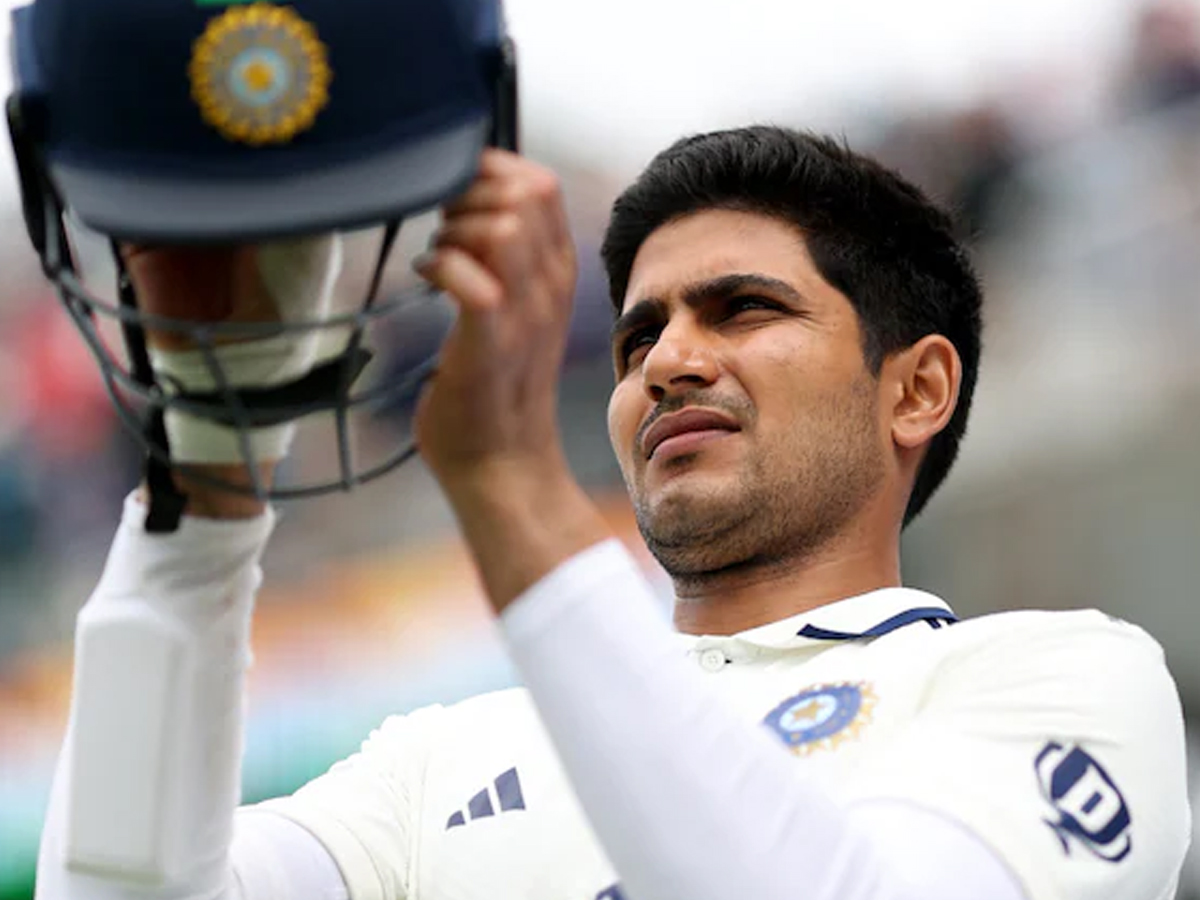
In a stunning exhibition of form, temperament, and leadership, Shubman Gill has entered cricket history books by shattering Sunil Gavaskar’s 46-year-old record of the highest runs by an Indian captain in a single Test series. With 743 runs off 9 innings at an eye-watering average of 90.50, Gill’s show has transcended numbers – it marks the arrival of a new leadership chapter in Indian cricket.
What makes this achievement so special is the backdrop. Gill, at a young 25, is captaining India for the first time in one of the most competitive away series. To bat in England, under conditions of seaming and swinging that test even the most experienced batters, Gill has not only prospered but also spearheaded from the front with aplomb.
Gavaskar Surpassed: A Legacy Redefined
Gill’s 743 runs have now officially passed the record which was set by the long-time Indian record of Sunil Gavaskar, who had made 732 runs in the 1978/79 domestic series against West Indies. This record, which was a milestone for almost five decades, now has a contemporary successor.
Gill’s series total comprises three centuries, one of which was a record-breaking 269 at Edgbaston, and a half-century. His 269 was not only the highest individual mark by an Indian Test captain (topping Virat Kohli’s 254* vs. South Africa) but also established the record for the highest Test score by an Indian batsman away from Asia.
ALSO READ: India End Day One at 204/6 as Karun Nair Shines in Potential Career-Saving Innings
Leadership Under Pressure in Foreign Conditions
While statistics make the headlines, it is Gill’s flexibility and decision-making that define his captaincy potential. He joined the list of only five Indian captains to have achieved a century on Test debut, beginning the series with an undefeated 127 at Headingley. It was no run-of-the-mill hundred—it came amidst pressure on Day 1 and was the template for India’s game-plan intent.
At Edgbaston, Gill’s double hundred was as much about quantity; it was delivered with class and control. His 269-run innings reflected his capacity for marathon knocks accompanied by bursts of acceleration. Against a potent English pace attack, he revealed both patience as well as power, marrying old-school Test grit with contemporary strokeplay.
Match-by-Match Brilliance and Consistency
From Headingley to The Oval, Gill has never indicated fatigue or pressure. His run-scoring consistency has been the backbone of India’s batting order. Even when India has won low-scoring games or played on bowler-friendly surfaces, Gill has been steady, making him India’s most dependable batter this series.
Gill is also in the running to break additional records as of now. He only requires 20 runs to join the record books as the top run-getter in an India-England Test series. A score of more than 53 in the fifth Test will see him break yet another Gavaskar record for most runs in a series. A knock of 80 will see him become the first Asian player to achieve 800 runs in a Test series.
Gavaskar vs Gill: The Story of Two Generations
Gavaskar’s 732 record was achieved in Indian conditions against a formidable West Indies team. It was an innings that etched a generation and put Gavaskar in the list of all-time greats. Compare this with Gill’s record, which has arrived in hostile English conditions, potentially making it even more special.
This torch passing is representative of Indian cricket’s progression. From Gavaskar’s grit to Gill’s grace and ferocity, the game has come a complete circle. What has remained constant is the mental strength characteristic of fine Indian openers across the generations.
Beyond the Numbers: Impact on Team India
Gill’s influence extends beyond individual performances. His captaincy has lifted the Indian dressing room. With him at the helm, India staged a comeback after initial setbacks and were able to tie the series. His calmness, strategic mind, and leading by example have invited comparisons with some of the best captains the game has witnessed.
“He was the first Indian captain to reach three hundreds in England,” the match figures verify. His efforts, a record 430 runs in a solitary match at Edgbaston, among others, were instrumental in India’s transformation.”.
With his innings holding up one end, the rest of the team got the liberty to play their own game. Bowlers were aided by huge first-innings scores, and young players gained confidence in a captain who was leading from the front.
Technical Brilliance in Harsh Conditions
All of Gill’s success has been based on his perfect technique. His movement against seam, his outside-off stump judgment, and his capacity for playing both the swinging new ball as well as the old ball have impressed everyone. His shot-making, especially the punch through covers and short-arm pulls, have been a feast to watch.
It is this technical backbone, ably supported by mental strength, which makes him a budding all-format captain.
The Legacy Begins
This English tour will be one to remember as the coming-of-age tale of Shubman Gill. By breaking Gavaskar’s long-standing record, Gill has not only scripted an exciting new chapter in Indian Test cricket but also intimated that the future of Indian cricket is in secure, stylish hands.
As the last Test plays out, the world waits to see what additional records this young captain will overcome. One thing is for certain: Shubman Gill is no longer a bright prospect—he is the present and the future of Indian cricket.