
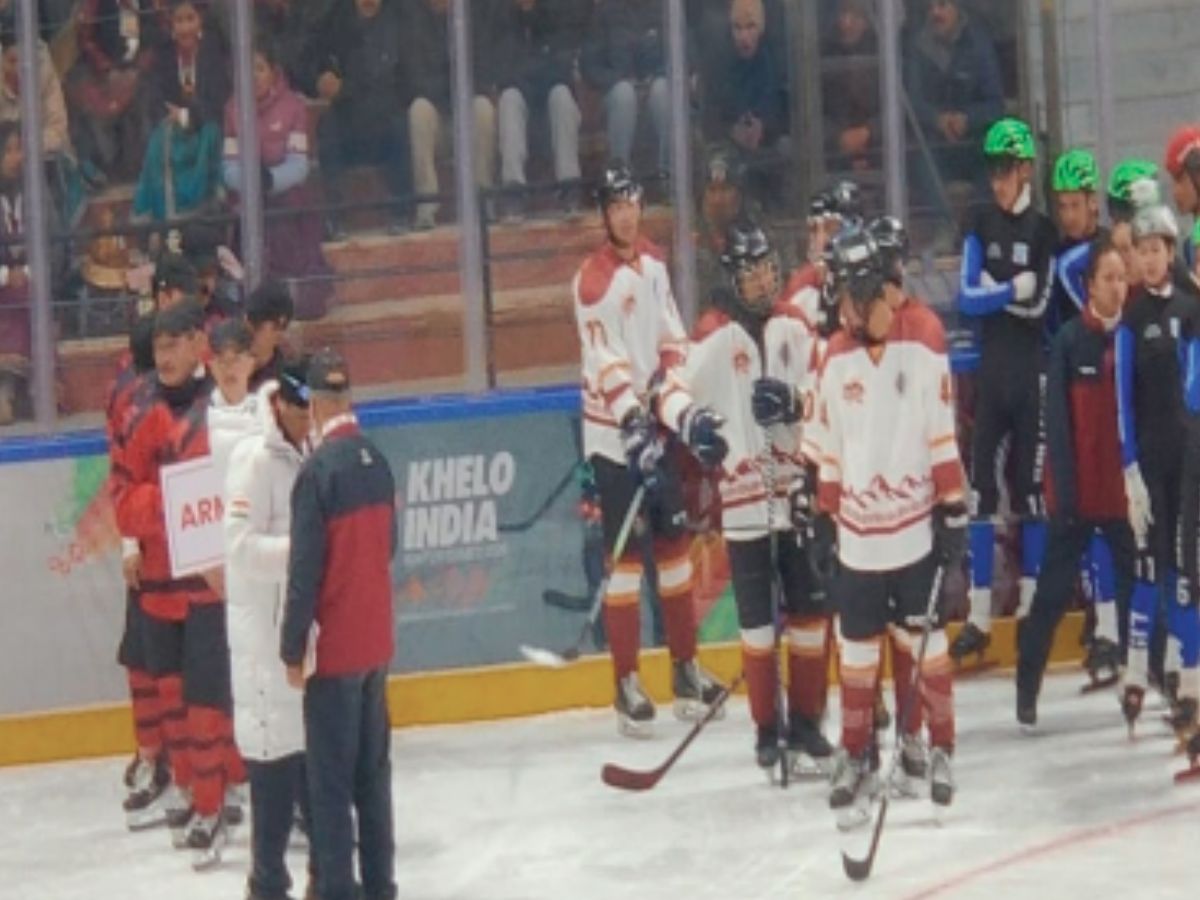
The curtains went up on the sixth edition of the Khelo India Winter Games at the Nawang Dorjan Stobdan (NDS) Stadium here on Tuesday. The Ladakh phase of the winter Games, which will host ice sports like skating and hockey, will conclude on January 26. This is the third time that the Union Territory of Ladakh is hosting KIWG. The snow leg of KIWG will be held in Gulmarg, Jammu and Kashmir, later this year.
At a colourful opening ceremony, punctuated by traditional music and dance and an exhibition ice hockey match between Army XI and UT Ladakh, Khelo India Winter Games 2026 were declared open by the Lt Governor of Ladakh, Kavinder Gupta. The first leg of the Khelo India Winter Games 2026 will be organised by the Youth Services and Sports department of the Union Territory of Ladakh under the supervision of the Sports Authority of India. The technical expertise for the conduct of the Games will be provided by the national sports promotional bodies/federations managing ice sports.
In a message to Ladakh, Mansukh Mandaviya, the Minister for Youth Affairs and Sports, said, “I congratulate the Union Territory of Ladakh for successfully hosting the Khelo India Winter Games once again and for demonstrating, with confidence and capability, that India’s winter sports future is being built from the Himalayas outward. Under the visionary leadership of Prime Minister Narendra Modi, Ladakh has emerged as a symbol of what focused policy, infrastructure development, and local commitment can achieve. The manner in which these Games have been organised sends a clear national signal that winter sports are now an integral part of India’s competitive sporting framework and will be pursued with seriousness, scale, and long-term intent.”
Mandaviya added, “The Khelo India Winter Games 2026 have been deliberately designed as a two-leg competition, with ice sports in Leh followed by snow events in February at Gulmarg in the Union Territory of Jammu and Kashmir, to build depth, continuity, and high-quality competitive exposure for athletes. This structure allows athletes to test themselves across varied terrains and conditions, closely aligned with international winter sport standards. Such sustained domestic competition is essential if India is to move beyond sporadic participation and steadily build credibility, consistency, and competitiveness in winter Olympic disciplines over the coming years.”