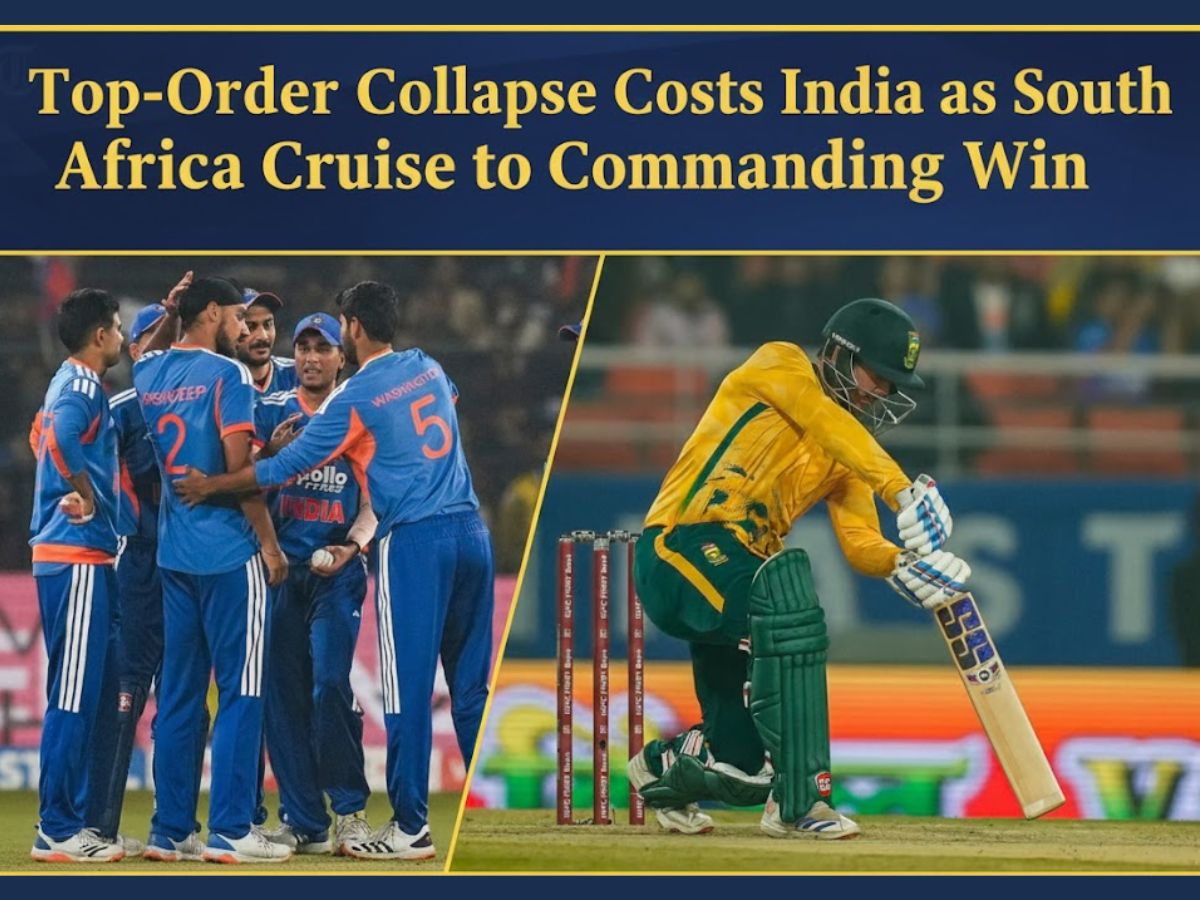
India vs South Africa 2nd T20I: South Africa put on a dominant all-round display to defeat India by 51 runs in the second T20I at Mullanpur’s Maharaja Yadavindra Singh International Cricket Stadium on Thursday. With Quinton de Kock smashing 90 and Ottniel Baartman leading a disciplined bowling attack, the Proteas defended 213 and dismissed India for 162 to tie the series.
How Did South Africa Set Up the Win?
After being sent in to bat first, South Africa’s innings was shaped by a stunning power-hitting show from veteran opener Quinton de Kock. He took charge from the outset, smashing a 46-ball 90 that included seven sixes and five fours, laying a rock-solid foundation.
Key contributions in the South African innings:
- Quinton de Kock: 90 runs off 46 balls (Strike Rate: 195.65)
- Donovan Ferreira: 30* off 16 balls
- David Miller: 20* off 12 balls
The Proteas reached a strong 213/4 in their 20 overs thanks to Ferreira and Miller’s late flourish in the last overs. For India, mystery spinner Varun Chakaravarthy (2/29) was the most effective bowler.
Also Read: Bulgarian PM Rosen Zhelyazkov Resigns Amid Massive Anti-Corruption Protests
What Went Wrong for India’s Chase?
India’s chase never got going when faced with a tough needed rate of more than 10.5 runs per over from the outset. After Shubman Gill, Yashasvi Jaiswal, and skipper Suryakumar Yadav were dismissed early in the powerplay, the top order crumbled under duress, and the scoreboard showed a dangerous 32/3.
The lone bright spot was a fighting half-century from Tilak Varma (62 off 34 balls), but he watched wickets fall regularly at the other end. The middle and lower order had no answer to the disciplined South African attack, especially pacer Ottniel Baartman, who returned exceptional figures of 4/24 in his four overs to dismantle the tail. India was bowled out for 162 in 19.1 overs.
Who Were the Key Performers?
South Africa – Quinton de Kock (Player of the Match): His aggressive knock at the top set an insurmountable target and broke the back of the Indian bowling attack.
South Africa – Ottniel Baartman:In the last moments, the fast bowler was deadly, taking four vital wickets to prevent India from mounting a late comeback.
India – Tilak Varma: With a well-made 62, the young batsman shown perseverance and determination, but his efforts were in futile because of a lack of assistance.
A valiant effort from #TilakVarma, but the chase falls short as South Africa pull level at 1-1. 💥
Series perfectly poised now! 👀🔥#INDvSA, 3rd T20I 👉 SUN, DEC 14, 6 PM pic.twitter.com/kfDQC3N0Pd
— Star Sports (@StarSportsIndia) December 11, 2025
Your Questions Answered: 2nd T20I Analysis FAQs
Q: Did India’s decision to field first backfire?
A: Yes, decisively. Winning the toss and choosing to bowl is common in T20s, but the plan to exploit early conditions failed completely. De Kock’s assault in the powerplay put South Africa ahead, and the Indian bowlers had no answer on a good batting pitch.
Q: What was the turning point of the match?
A: India lost their top order inside the powerplay, with three big wickets falling for only 32 runs in a 214 chase. The run rate shot up right away, piling pressure on each new batsman and almost sealing the game in the first six overs.
Q: How significant is Ottniel Baartman’s performance?
A: tremendously important. His numbers of 4/24 (economy of 6.0) won the game in a high-scoring contest. He proved to be the difference between a competitive finish and a one-sided rout by making significant breakthroughs and finishing the inning.
Q: What does this result mean for the series?
A: As of right now, the series is tied at one. The next match is scheduled for December 14 in Dharamsala, setting up a thrilling contest for the last three games. Both teams will attempt to gain the upper hand in what has been an intensely competitive series.
Q: What are the main concerns for India?
A: The main issue is the top order’s vulnerability to pressure from the scoreboard. Before the next game, it is imperative to address the over-reliance on Suryakumar Yadav and the inability to form partnerships at the beginning of a major chase.