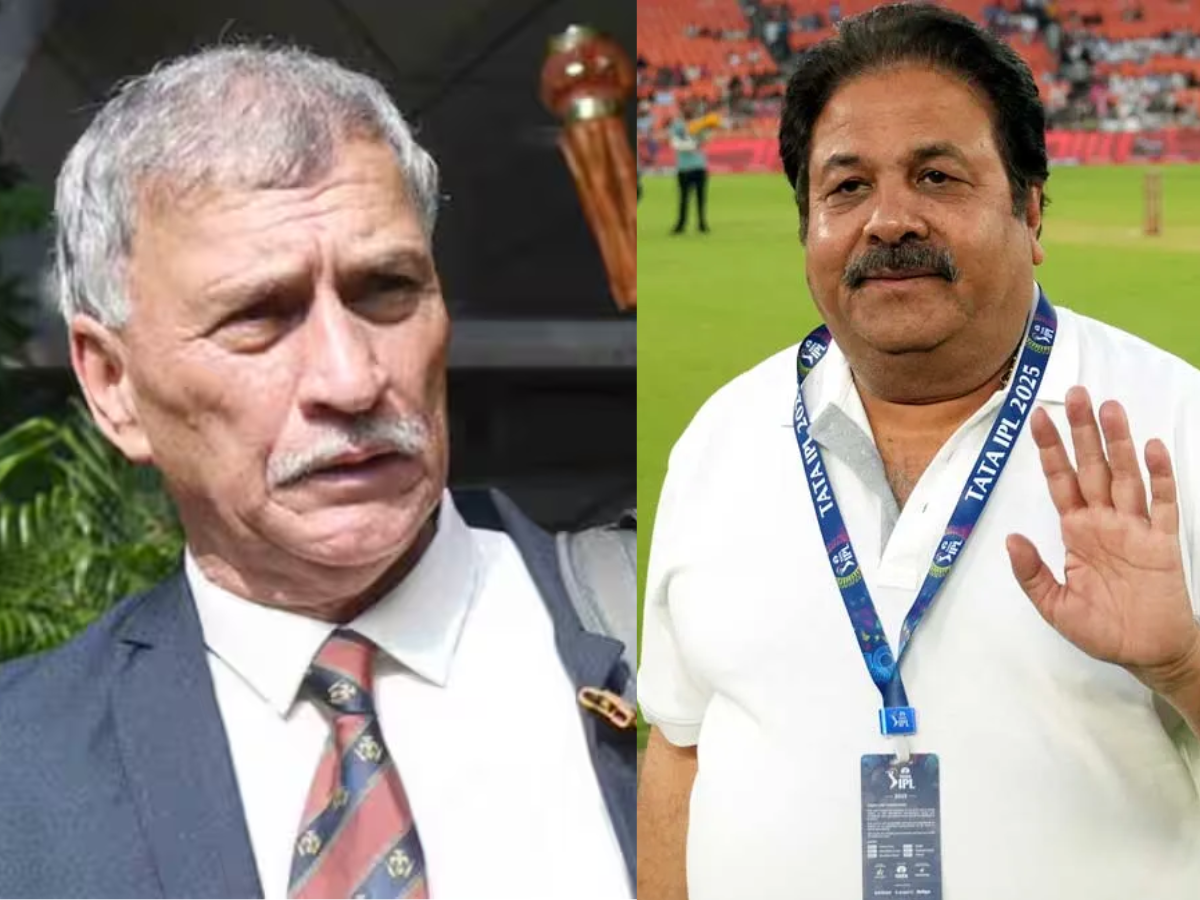
In a dramatic turn of events in Indian cricket governance, Roger Binny resigned as the President of the Board of Control for Cricket in India (BCCI), and senior board official Rajeev Shukla has been named the interim chief.
Binny’s Tenure and Resignation
Roger Binny assumed the BCCI presidency in October 2022, replacing Sourav Ganguly. A key player in India’s 1983 World Cup-winning squad, Binny was the tournament’s leading wicket-taker with 18 dismissals. He has contributed to Indian cricket in a variety of ways over the years, such as coaching the U-19 team to victory at the 2000 World Cup, as a national selector, and president of the Karnataka State Cricket Association.
Binny had just celebrated his 70th birthday on July 19, 2025, and according to the BCCI constitution, any office-bearer who attained the age of 70 years is no longer eligible to hold on to their position. Contrary to previous indications that he would be allowed to remain in office with the passage of the newly enacted National Sports Bill—who increases the age limit for office-bearers of national sports federations to 75 years—Binny relinquished his position, respecting the existing BCCI norms.
Rajeev Shukla Appointed as Interim President
65-year-old Rajeev Shukla, currently serving as the BCCI Vice-President since 2020, has been appointed as the interim President. He will be in charge of the day-to-day running of the board until the next Annual General Meeting (AGM) is held, possibly in September 2025. The permanent decision regarding the next full-time President of BCCI will be made at the AGM based on state unit consensus.
Shukla, who is an experienced administrator and former member of the IPL governing council, has the onus of a stable run-through in this interim phase. His major tasks are handling current tournaments, sanctioning sponsorship issues after Dream11’s contract was canceled, and ensuring hassle-free preparations for the upcoming Asia Cup.
Binny’s Legacy and Contributions
Binny’s reign as BCCI President overlapped with times of acute importance in Indian cricket, such as planning for international competitions and the increasing excitement of cricket’s possible return to the Olympics in 2028. During his leadership, the board focused on building up domestic cricket infrastructure and raising India’s standing in world cricket administration.
Shukla’s Take on Player Retirements
Talking about senior players like Virat Kohli and Rohit Sharma, Shukla reiterated that farewells are an individual choice of the players. “Our policy is very clear – BCCI never instructs any player to retire. He has to decide on his own. He himself has to make this call,” Shukla replied to speculations of possible farewell matches.
The interim phase under Shukla will be marked by continuity and stability while the BCCI plans its next long-term leadership strategy. With domestic as well as international cricket schedules full in the months to come, ranging from the Asia Cup, India’s cricket board will require steady management to see through challenges ahead.