
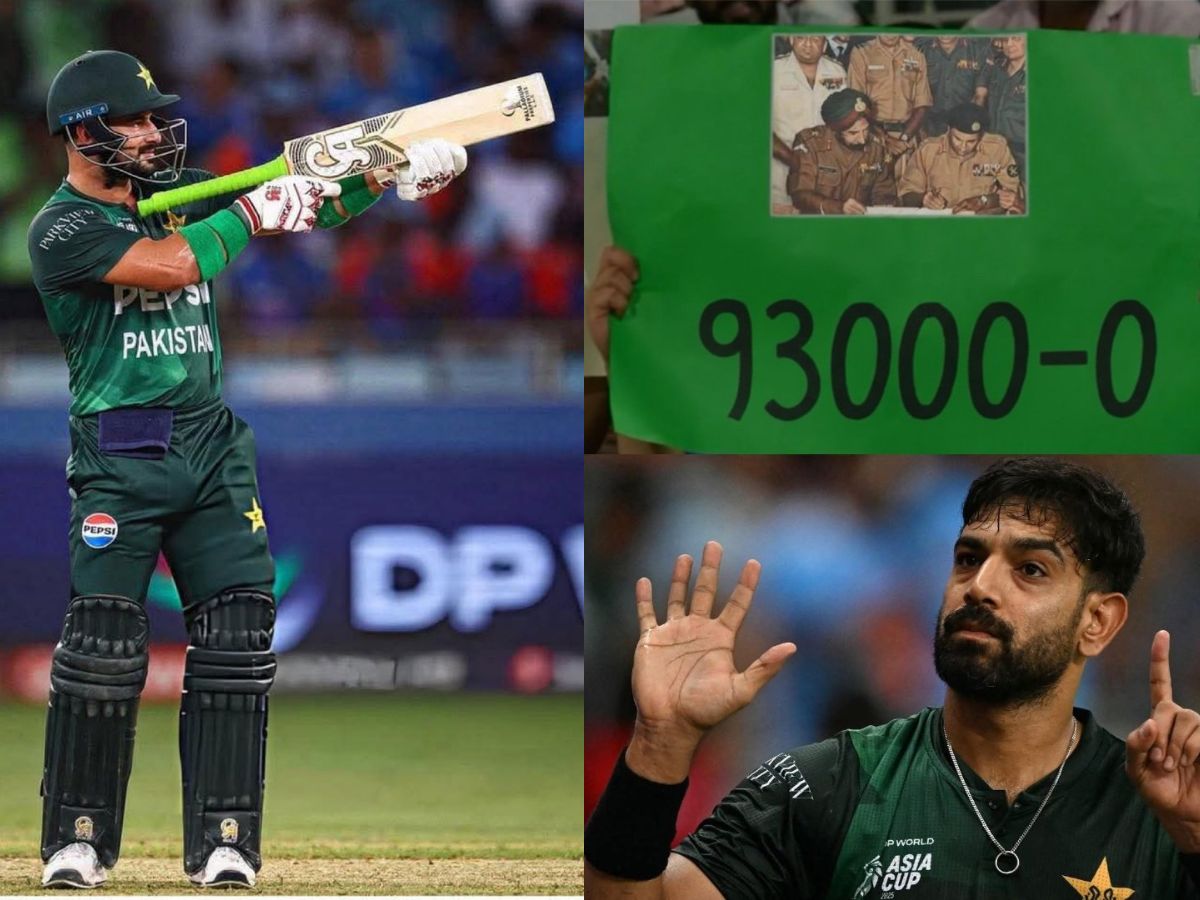
The India-Pakistan Asia Cup encounter recently played out in Dubai has generated hot anger and fury among Indian cricket aficionados and the general public. What was anticipated to be an electrifying sporting duel became a political and emotional war zone, highlighting the manner in which sports, particularly cricket, symbolise deeper national emotions. The Board of Control for Cricket in India (BCCI) is now under fierce criticism for going ahead with the match against Pakistan, a country many Indians view as unfriendly and associated with terrorism without properly taking into account public opinion or national pride.
Controversy Sparks on and off the Field
During the game, Pakistani pace bowler Haris Rauf committed a very inflammatory act of signalling ‘0-6’ between his fingers to Indian crowd. The gesture was immediately picked up by social media as another day-dreaming illusion of Pakistan’s assertion that it shot down six Indian fighter planes during the military standoff after Operation Sindoor in early 2025.
Triggering the flames, Pakistan’s Sahibzada Farhan cut loose with a bat-holding ‘AK-47’ gun firing gesture towards the Indian dugout to celebrate his half-century. It was universally interpreted as insensitive and blatant disrespect, particularly in the wake of the previous Pahalgam terror attack when 26 innocent Indian tourists were brutally murdered by Pakistan-backed militants. Farhan’s gesture was termed by Shiv Sena politician Sanjay Raut as a “spit in the face of BCCI and Modi government,” directly connecting the act to terrorism and seeking responsibility.
Public Outrage and Social Media Backlash
The web was filled with boycott hashtags against cricketing matches with Pakistan. People commented in disgust and hurt, asking why the ‘friendly’ game had to be played with a nation perceived as a “terrorist country.” Most saw the moves as insults to the sense of sportsmanship and respect, prompting calls for India to end all cricket relations with Pakistan until the day a true attitudinal change is seen.
Commentators pointed out that it is not merely about performing well on the field but also about respecting opponents and countries. Pakistan’s behaviour, particularly under circumstances of persistent diplomatic hostility and security issues, was considered uncalled for and insulting.
The Call for Boycott: A Matter of Self-Respect and Mutual Respect
Boycott calls find resonance beyond political posturing. They are born out of a need for India to project its self-respect and maintain a common sense of honour in global affairs. Most contend that playing cricket with a nation hosting anti-India terrorists indirectly encourages such acts. The boycott is thus perceived as a non-violent but potent protest.
While the BCCI and ICC proudly promote cricket as a unifying element, the recent episode demonstrates how sports can turn into a field of national narrative warfare too. It invites cricket administrators to question whether sport should tolerate or engage with such provocations.
Lessons for the Future
The BCCI’s decision to allow the match came with claims of maintaining sporting diplomacy. However, the backlash emphasises the need for stricter guidelines on player conduct and deeper consideration of public sentiment and geopolitical realities. Cricket is a sport beloved by millions in India, but the feelings of patriotism and security cannot be sidelined. This episode is a wake-up call that sportsmanship has to also include respect, empathy, and sensitivity to context. The BCCI and concerned authorities have to learn from it to safeguard the sanctity of the game and the feelings of the country’s people so that they do not continue embarrassing themselves on the international stage.
In summary, the Haris Rauf and Sahibzada Farhan episode graphically illustrates that cricket cannot be separated from the socio-political environment it is a part of. The BCCI needs to respond to the India-Pak cricketing dynamic with greater sensitivity, respecting ethical behaviour, respect between nations, and national honour from now on.