
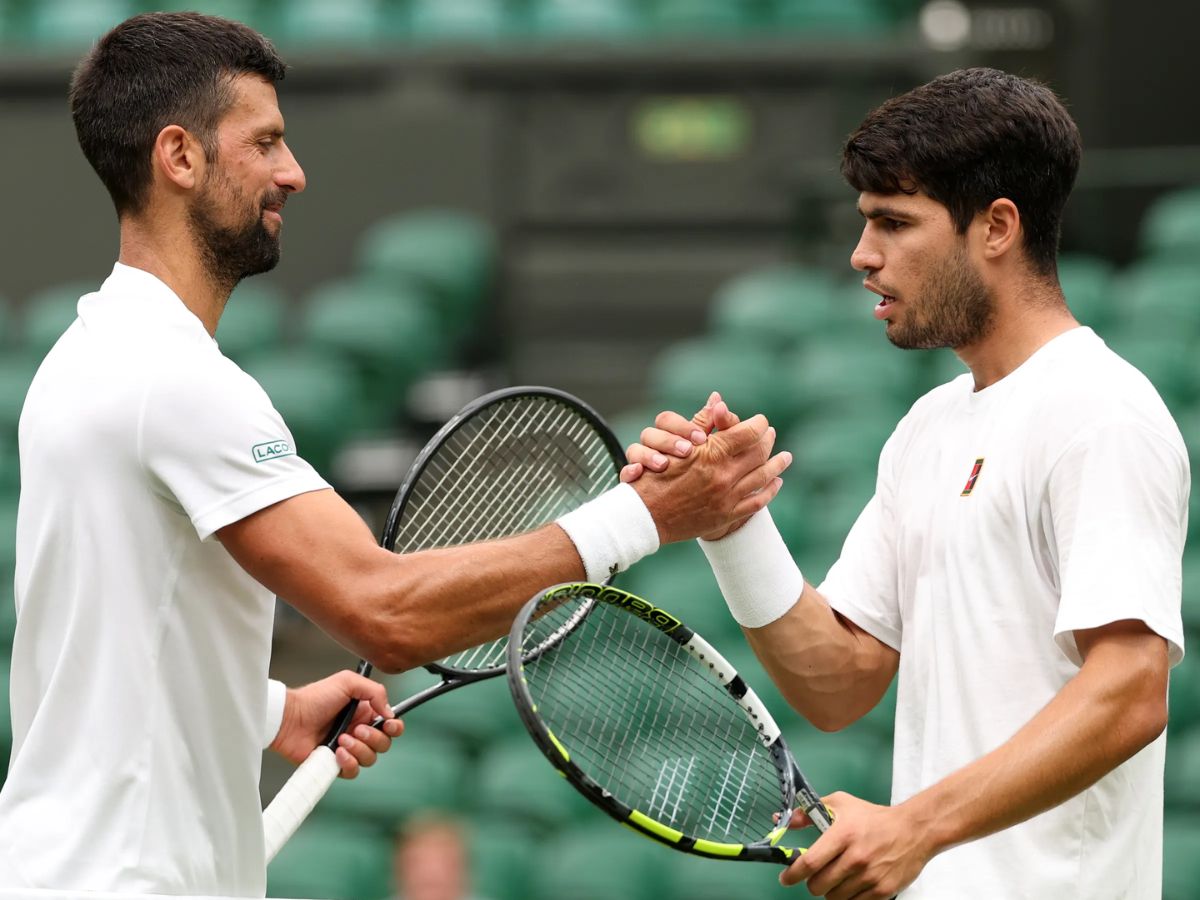
For tennis fans, Friday’s US Open semifinal was more than a match; it was a narrative masterpiece. In one corner, the legendary Novak Djokovic, the ultimate competitor fighting against time. In the other, Carlos Alcaraz, the brilliant young phenom hell-bent on claiming the throne. In the end, it was youth, power, and stunning resilience that prevailed, as Alcaraz won 6-4, 7-6 (7-4), 6-2 to storm into his second US Open final.
How Did Alcaraz Actually Win?
Let’s be honest, this wasn’t the free-flowing, highlight-reel Alcaraz we saw in 2022. This was a different, perhaps more impressive, version. He was forced to grind. The first two sets were a brutal, physical chess match with minuscule margins. The difference? Carlos’s serve was an absolute weapon when he needed it, and he had the courage to go for aggressive, huge groundstrokes early in the rallies. He didn’t out-magic Novak; he out-muscled and out-lasted him. As he said himself, “It wasn’t the best level of the tournament for me but I kept a cool head.” That mental strength, in a match of this magnitude, is what separates champions.
What Really Happened in the Third Set?
Fans saw something they’re not used to seeing, Novak Djokovic simply ran out of gas. The turning point was stark. At the start of the third set, the engine sputtered. Two uncharacteristic, weary double faults handed Alcaraz the crucial break and a 3-1 lead. You could see the shoulders slump. The explosive recovery to his right was a half-step slower. The relentless pressure that has broken so many opponents finally broke him. His post-match admission said it all: “I ran out of gas. It’s just the physicality of it.” For a player who built a career on being the fittest guy on tour, it was a telling moment.
Also Read: ICC Slashes Women’s World Cup Ticket Prices to Historic Rs. 100 | Cheapest Tickets in History
Was This the Official “Changing of the Guard” Moment?
It sure feels like it. Think about it: Djokovic was the young gun who overthrew Federer and Nadal. Now, he’s the established king being challenged by Alcaraz and Sinner. He still possesses that otherworldly talent, we saw it in a vintage backhand winner down the line and that insane 27-shot rally he somehow won. But sustaining it over five sets against this caliber of explosive athlete is becoming a Herculean task. The 30 unforced errors weren’t a case of the yips; they were the result of being a millisecond late, of being stretched to the absolute limit on every point.
The respect. After batting a volley wide on match point, Novak didn’t slump. He hung over the net, waiting to genuinely congratulate the younger man. Then he waved to all corners of Arthur Ashe, a gesture that felt like a potential farewell to this stage. It was a classy exit from the ultimate warrior.
What Does This Loss Mean for Novak Djokovic?
This match feels like a significant moment in the sport’s ongoing transition. Djokovic, who once broke the duopoly of Roger Federer and Rafael Nadal, now finds himself being squeezed out by Alcaraz and Italy’s Jannik Sinner. While he remains the world number three and has reached all four major semifinals this year, the match against Alcaraz revealed a clear gap in sustained physicality. Despite flashes of his legendary quality, including a stunning backhand winner and winning a grueling 27-shot rally—he committed 30 unforced errors under constant pressure.
Also Read: With Eye on Final, Afghanistan Bench Rashid Khan in Tune-Up vs UAE
Who Will Carlos Alcaraz Face in the Final?
The 2022 US Open champion will await the winner of the other semifinal between Italian top seed Jannik Sinner and Canadian Felix Auger-Aliassime. A final against Sinner would set up a clash between the two young players most consistently tipped to dominate the sport for years to come.
The match served as a powerful statement: the future of men’s tennis is now, and its name is Carlos Alcaraz.