
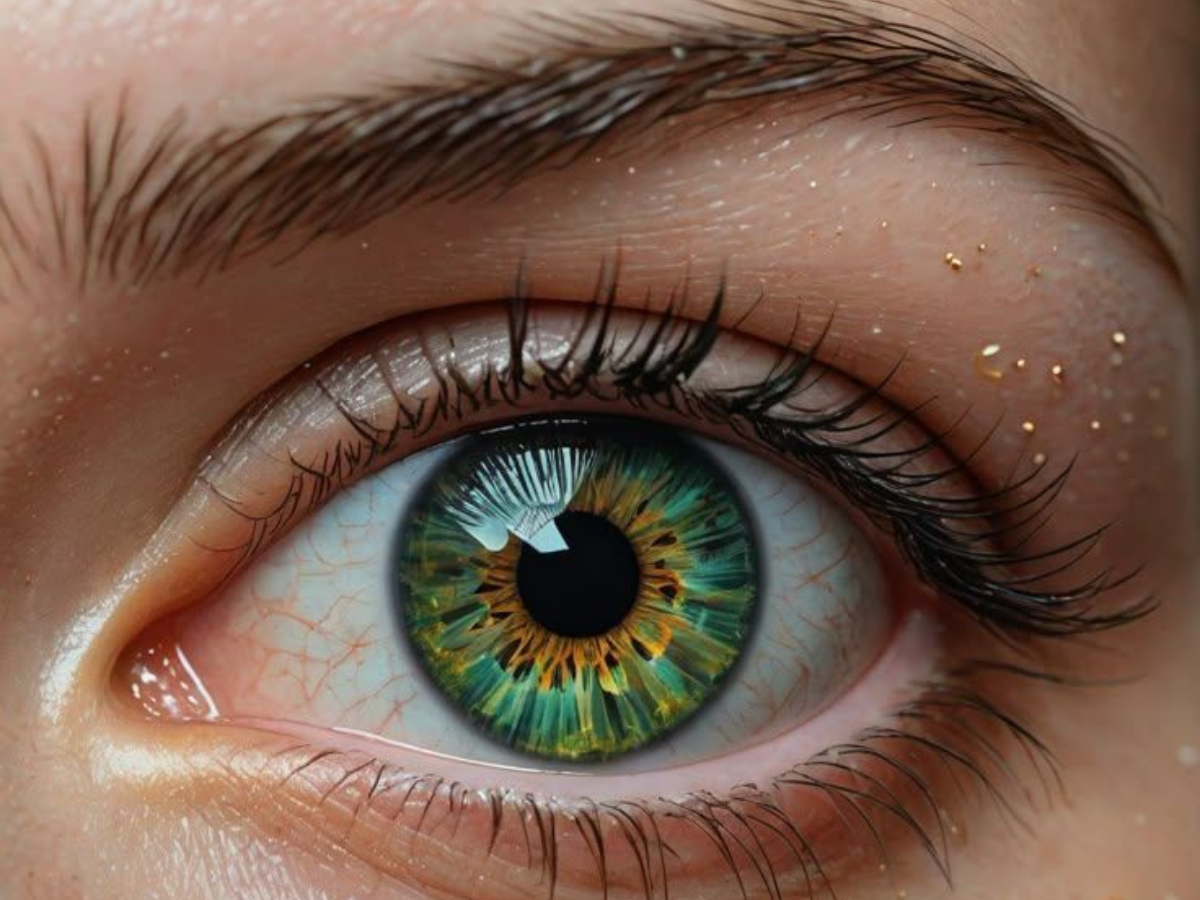
Eye colour is a fascinating and special feature of human appearance considered amazing, shades can range from deep browns, icy blues, vibrant greens, to shifting hazels. Behind such beauty lies a matrix of pigments, genetics and light all working together to create the amazing array of human eye colours.
What is the Role of Melanin in Determining Eye Colour?
The single most important factor in affecting eye colour is melanin, a pigment found in the iris which is the colored ring surrounding the pupil. The more pigment there is and its distribution-in the iris, the more brownish, the greater the proportion of light which is absorbed and so forth. The brown eyes are said to be formed by the very high concentration of melanin and they absorb lighter and thus are darker.
The blue eyes have the opposite view and in this case denoting very little melanin and their color is attributed to light scattering occurring within the iris. The scattering of light combined with some pigment produces the greenish color of certain eyes, hazel eyes appear as an amalgam, displaying a blended array of pigments and giving them a unique shifting appearance.
ALSO READ: Science of Color: How Light, Vision & Brain Create the World we See
What are the Genetics of Eye Colour?
Eye color was for decades thought to be controlled by a single gene with simple brown versus blue outcome but modern science has painted a far more intricate story eye colour is influenced by several genes with complex and varied patterns of inheritance. This explains why siblings can have very different eye colours and why two blue-eyed parents may have a child who has green or brown eyes.
Besides, eye colour itself can change, especially during infancy. Many babies were born with sky blue or blue-grey eyes due to low levels of melanin, the pigment that decides eye colour and as melanin starts to increase in early childhood and may sometimes irreversibly change eye colour.
How Rare & Striking Eye Colour Variations?
Beyond the common shades, some people possess eye colours or patterns that catch attention like ne such heterochromia the two eyes differ in colour or one of the irises manifests multiple colours. This rare trait may be inherited, arise from an injury or accompany certain medical conditions.
The celebrities such as Kate Bosworth and Mila Kunis are well-known for heterochromia while David Bowie was famed for his mismatched eyes that resulted from a permanently dilated pupil owing to an unfortunate accident with such oddities only add to the charm and peculiarity of eye colours.
ALSO READ: Oxygen Generation for Astronauts in Zero Gravity: The Science Behind
How Lighting & Environment Influence Eye Colour Perception?
Eye colour is not a fixed trait in terms of the way it appears to an observer, and it subtly changes with light conditions, surrounding objects and even the colours of clothes. The flecks of gold may sparkle in brown eyes; green shades may intensify in hazel ones while the blue of icy eyes may deepen or soften in a particular environment.
These changes are due to intricate relations between texture and melanin in the iris and light lending a very dynamic with expressive quality to the gaze.
How Eye Colour is Beyond Aesthetic Appeal?
Aside from being popularly admired for beauty, eyes symbolize more than the aesthetic feature, and they tell the story of the biology of pigment production, of how light scatters and the extremely complex, coded genetic program interaction by which each human being is wired.
The eye-colour itself has become a metaphor for lineage, identity and in some cases, health an inconspicuous powerful marker of who we are linking us to our forefathers and the natural environment.
What is the Cultural & Scientific Importance of Eye Colour?
Brown eyes are the most prevalent and dominate in the world, with high melanin levels and most often found in Africa, Asia and some parts of the Americas. The blue eyes are usually restricted to Northern and Eastern Europe while green eyes are among the rare ones, representing not more than 2% of the world population.
In regions like India, brown and hazel-eyed people are with blue and green considered attractive oddities. The scientists do not study eye colour simply for the sake of genetics and it also offers a window on human migration, evolutionary history and population diversity.
ALSO READ: Astrophotography Telescopes: How to Shoot the Moon, Planets & Nebulae
Disclaimer: This article is for informational purposes only and does not provide medical advice. Eye colour varies and may be influenced by health or genetics.