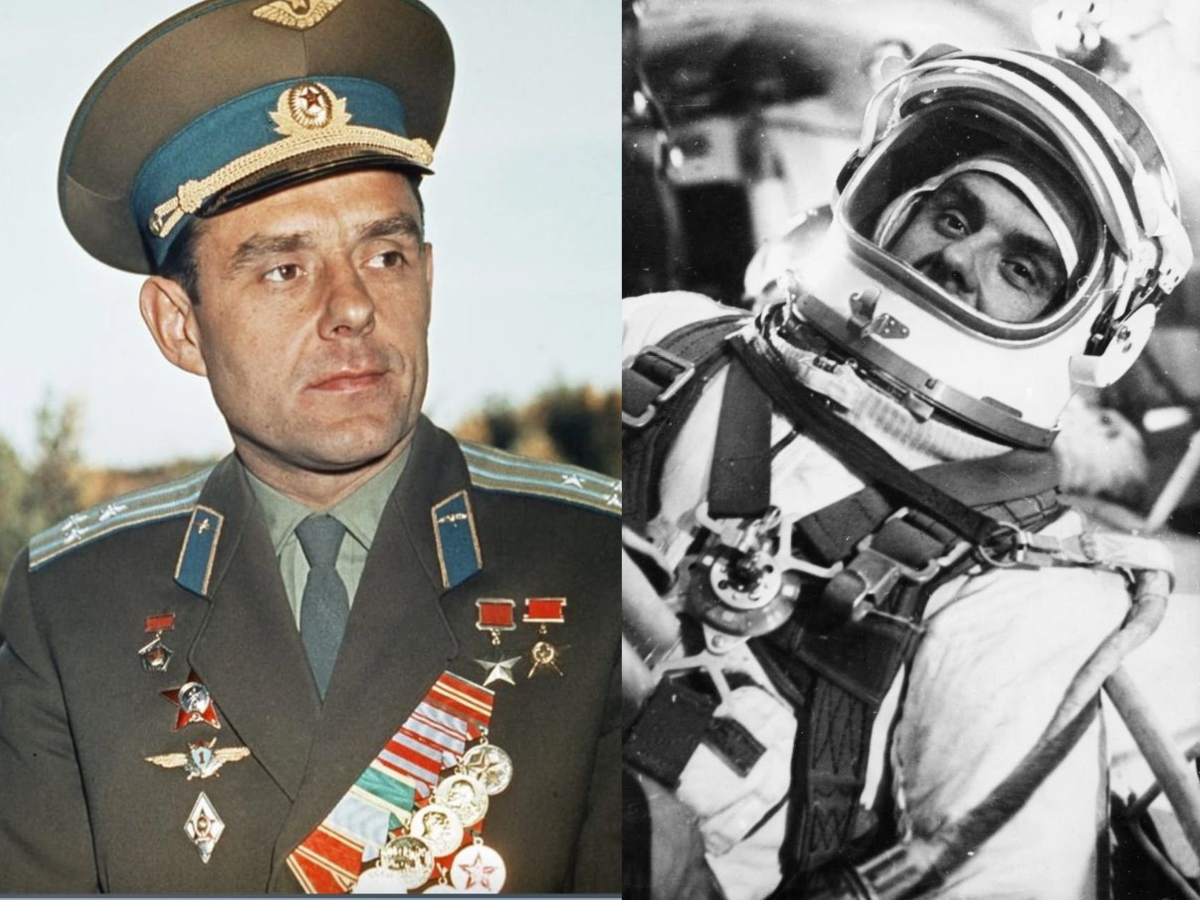
Vladimir Komarov is a founding father of cosmonautics, whose name hardly appears in school books, despite great merit toward his name and the ultimate taking of his own life in sacrifice in so doing. His death with Soyuz 1 on April 24, 1967, was not merely a casualty it became a limpid delineation of the agony accompanying competition in the Cold War and the technological hastiness that ensued.
Who is Vladimir Komarov?
Born in Moscow in 1927, Komarov began cultivating his interests in aviation at a very early age and he carried on with some military training in his teens and soon after found himself working his way up the ranks within the Soviet Air Force. Graduating from the elite Zhukovsky Air Force Engineering Academy, he weighed technical mastery against sheer obedience as his first and only laws.
His first pot-shot at outer space in 1964, commanding Voskhod 1 went down in the record books as the first crewed mission to carry more than one astronaut, but it was through the second flight Soyuz 1, that he sealed his fate and legacy.
Soyuz 1: A Mission Doomed from the Start
On April 23, 1967, the Soyuz 1 mission was to have been a landmark test of a new-generation spacecraft but even the launch was marred in failure from the get-go. A critical solar panel failed to deploy, setting off a chain of power shortages and navigation problems.
Komarov’s communications showed he knew the danger was increasing but he pushed on anyway, fully grasping the enormous political ramifications. Things turned worse during re-entry, when both main and reserve parachutes failed. The spacecraft crashed in the southeastern part of Russia and killing him instantly.
Vladimir Komarov: Secrecy & Pressure at Play
The loss of Komarov raised issues with the Soviet approach toward space exploration. Technical warnings had been sounded by the engineers and cosmonauts like Yuri Gagarin on various issues, but political pressure silenced them.
ALSO READ: Who is Anna Menon: Biography, Career & Family | First Polaris Dawn Astronaut in 2025 Class
The Soyuz system design was radically changed with rules to maintain safety integrity set very high in the aftermath of the catastrophe and the price for human life was yet to be paid.
Vladimir Komarov: Lasting Contribution
The story being concealed for a couple of decades or so, his sacrifice stands as a major point in altering the landscape of spaceflight safety and solemnly speaks of the risk associated with each innovation.
He was announced posthumously as a Hero of the Soviet Union and buried within the Kremlin Wall silent witness and testimony to a man who sacrificed everything for the sake of progress when the odds were stacked conspicuously against him.
ALSO READ: Northern vs Southern Lights: What Makes These Polar Wonders So Different?
Disclaimer: This article is based on historical research for educational purposes and does not aim to assign blame or speculate beyond verified facts.