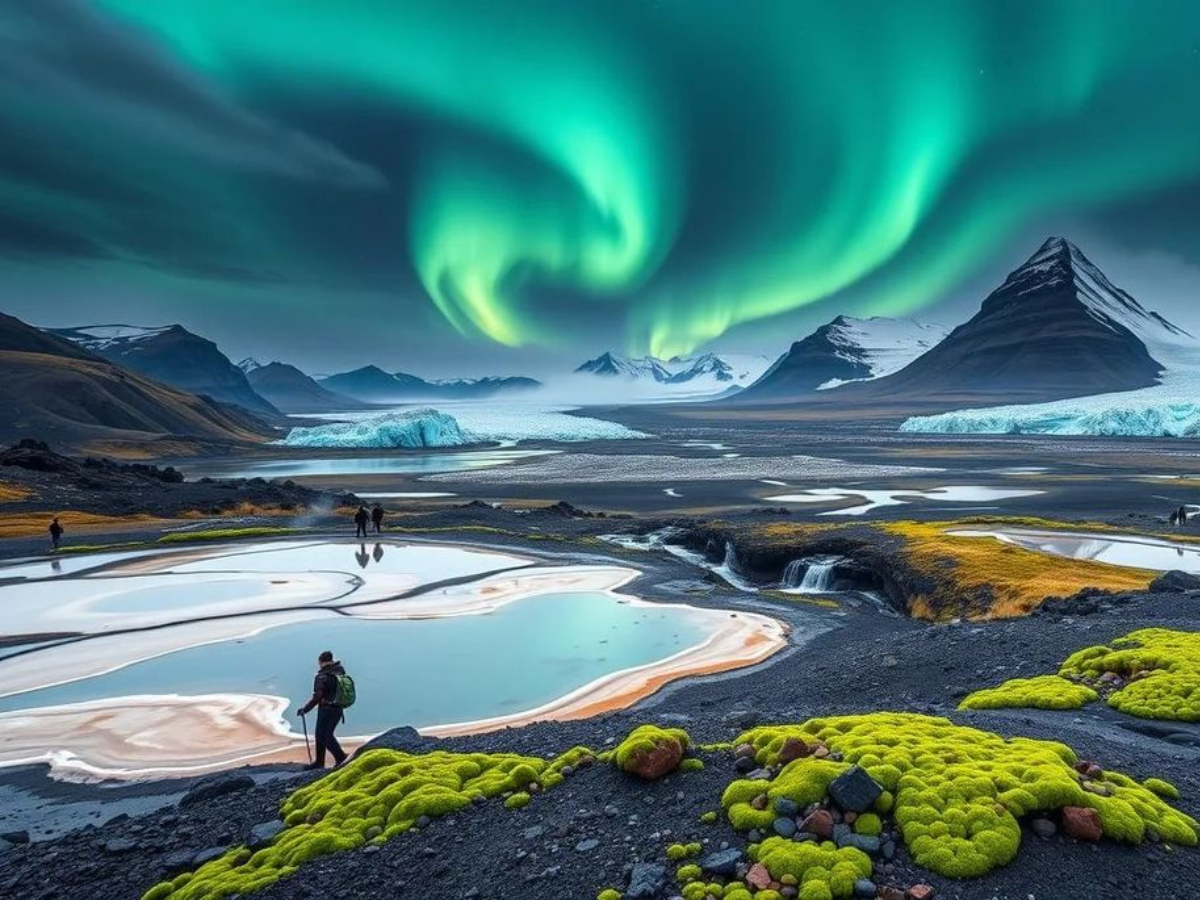
Northern Lights, the aurora borealis is a multicultural phenomenon of light streaked through polar skies and excited by solar wind and Earth’s magnetosphere. It is best viewed from the Arctic Circle and offering a glimpse of the forces at play on a cosmic level.
How Are the Northern Lights Formed?
The northern lights are a cosmic ballet of solar energy and the protection of Earth’s magnetosphere. The sun pours out charged particles onto the solar wind. Once this energetic medium arrives on the shores of Earth and the magnetic field diverts them toward the polar region.
The particles then plunge into the upper atmosphere where they collide with gas molecules and principally those of oxygen and nitrogen. These collisions excite the gas, causing them to release a spectrum of colors through the night sky and varying from brilliant greens to intense reds.
What are the Best Practices for Experiencing the Aurora?
The Northern Lights travel to high-latitude destinations namely Iceland, northern Canada, Norway or Alaska. The prime viewing window extends from September to April with a peak around the equinoxes in spring and autumn. Dark skies far away from city lights bode well. Since it is usually a matter of working patience, wear thermal layers and bring along hot drinks to keep warm while waiting.
ALSO READ: What Really Happened in the Bermuda Triangle | Flight 19 to Cyclops Mystery
What is the Aurora’s Impact on Technology?
The aurora is a stern reminder of the solar energy disasters. Powerful geomagnetic storms can fill the atmosphere with enough energy to jeopardize satellites, interfere with GPS signals and damage electrical infrastructure. A historic case in 1989 even blacked out Quebec. As we increase our dependence on technology and learning about the aurora will become less a scientific pursuit and more a technological shield.
Northern Lights Happen on Other Planets Too?
Auroras are not confined to Earth alone. Some other celestial bodies like Jupiter, Saturn and Uranus all show auroral activities. The physics behind them is about the same they all look different because of the particular atmosphere and magnetic fields of each planet. Jupiter’s auroras are different because they are sustained not by solar winds but by its moons with volcanic Io providing extra particles into its magnetosphere.
Do Aurora Borealis Cause Sound?
Very few auroras by describing faint crackling or whispering sounds during strong displays. When scientists objected to these claims and recent studies started to indicate that under special conditions and electrical discharges may produce sounds that are audible at Earth’s surface. This phenomenon is thought to occur via temperature inversions trapping charged particles close to the ground which provides a short-lived sound that coincides with the display above.
ALSO READ: Great Pyramid’s Latitude & Light Speed | Cosmic Coincidence or Myth
What are the Solar Origins Atmospheric Expression of Northern Lights?
It sees energy from the Sun; the aurora is painted on an atmospheric canvas of Earth. The colors visible depend on the gas that solar particles hit and at what altitude. Oxygen usually glows green at lower altitude and very red above. Nitrogen may show some blues and purples. This is an intriguing combination of astrophysics and atmospheric chemistry solar fireworks performed on an invisible stage of our Earth.
Northern Lights are Just Green Color?
The green glow is only the start and under changing circumstances, an aurora might reveal a jungle of otherworldly colors pink, violet, deep red or white. These colors are not random, but they are dependent on the energy levels of the solar particles and the nature of the atmospheric element they hit. Red auroras are rarer and appear for high solar activity at even higher altitudes.
What is the Future for Northern Lights?
With climate change changing the conditions of the atmosphere and urban expansion increasing light pollution, the future sighting of the Northern Lights may be jeopardized. Earth’s magnetic field is slowly changing ultimately altering the areas of aurora appearance.
In the framework of a cosmic timescale and the Sun keeps an 11-year activity cycle which means we are now right up to a peak known as solar maximum and marking a time of raising frequency of displays. On the contrary, during solar minimum, auroras are less frequent and less vigorous. A world that takes mankind into the future may need to preserve dark areas in order to give their generations the opportunity of experiencing this wonder in nature.
ALSO READ: Why Antarctica Experience 6 Months Day & 6 Months Night | Science Behind It