
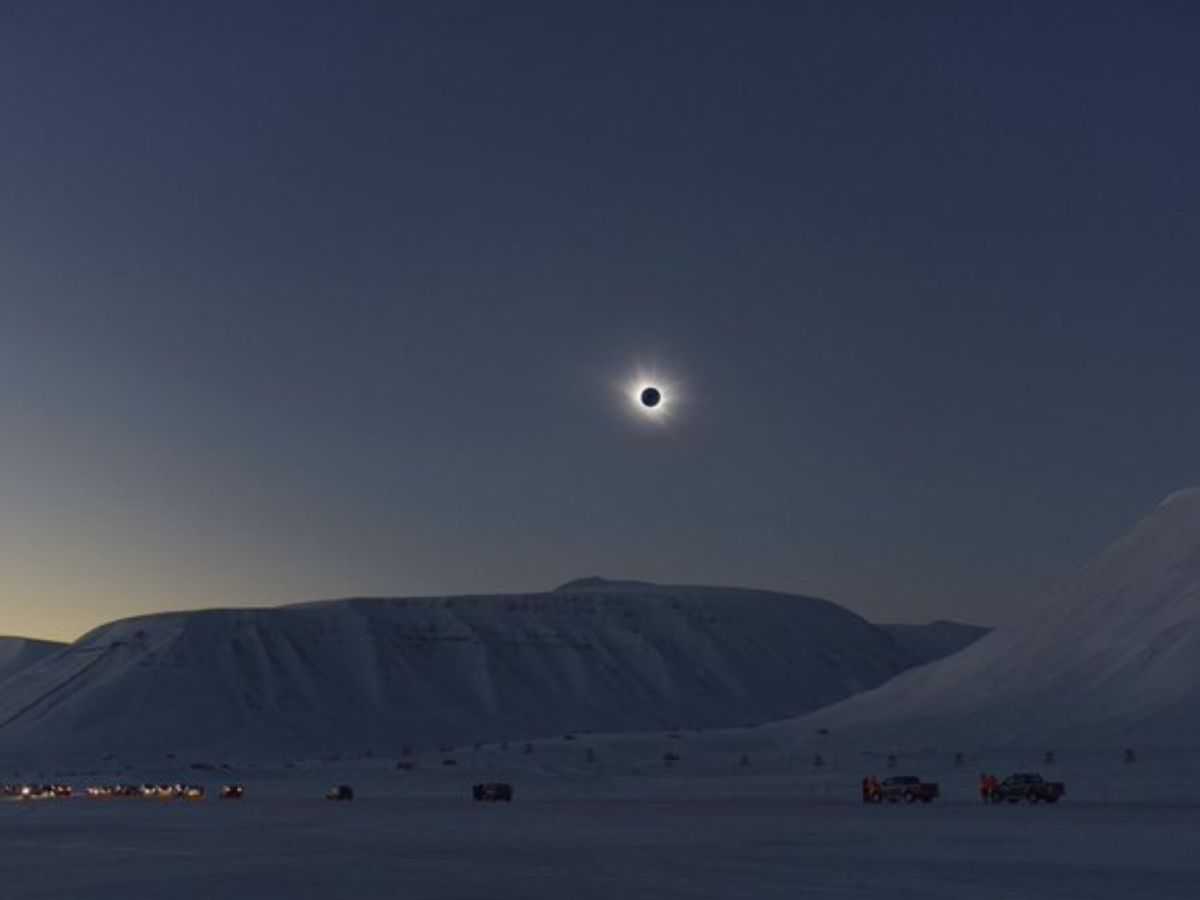
The skies in September 2025 promise an extraordinary series of celestial events for stargazers across the globe. From a lunar occultation of the Pleiades to a partial solar eclipse, and finally to Saturn shining at its brightest, the month offers multiple chances to look up and witness the wonders of space.
September 12: Moon Meets the Pleiades
The month began with a rare sight on September 12, 2025, when the Moon passed in front of the Pleiades star cluster. Known as a lunar occultation, this event temporarily blocked the bright stars of the cluster, creating a stunning visual treat. While brief, it highlighted the cosmic dance of celestial bodies visible from Earth.
September 21: A Partial Solar Eclipse
Just over a week later, on September 21, a partial solar eclipse will mark the last solar eclipse of the year. During this phenomenon, the Moon will cover part of the Sun’s disc, appearing like a “bite” taken out of the Sun.
-
Where visible: Southern New Zealand, parts of Antarctica, and regions of the southern Pacific.
-
Timing: The eclipse coincides with a New Moon, ensuring darker skies at night and perfect conditions for stargazing once the Sun sets.
For observers in the southern hemisphere, this will be a fitting finale to 2025’s solar eclipse cycle.
Also Read: Solar Eclipse 2025: Do’s & Don’ts You Should Know
Saturn at Opposition: The Night’s Main Attraction
While the eclipse will be visible only in limited regions, everyone on Earth will have a chance to enjoy another event the same day: Saturn at opposition. At 2 a.m. Eastern Time on September 21, Earth will move directly between the Sun and Saturn, making the ringed planet appear at its brightest and closest for the year.
-
Distance: About 1.28 billion kilometers (795 million miles) from Earth.
-
Visibility: Saturn will rise in the east at sunset and remain visible all night, glowing near the constellation Aquarius.
-
Best viewing time: Around midnight, when it will be highest in the sky at about 35° above the southern horizon.
-
Equipment: No telescope is required, but binoculars or small telescopes will reveal Saturn’s spectacular rings.
NASA emphasizes that the new moon will keep skies darker, making conditions ideal for planetary viewing.
September 20: Titan’s Rare Shadow Transit
In the lead-up to opposition, stargazers with telescopes can witness a bonus event. On September 20, just after 1 a.m. Eastern Time, Titan, Saturn’s largest moon, will transit across the planet, casting its shadow on Saturn’s surface.
Astronomer Ed Bloomer explains, “It is quite a challenge, you are looking at a small dot moving in front of a bigger dot, but … it is technically possible.” The entire transit will last more than two hours, adding to the excitement of Saturn’s opposition weekend.
Clearing Up the Confusion: Antares and Meteor Misreports
Some reports have incorrectly suggested that September 21 would bring an Antares occultation or a meteor event sometimes misnamed the “Antares occupation.” Astronomers clarify that:
-
There is no known meteor shower called the Antares occupation.
-
This is likely a mix-up with the Antares (Alpha Scorpii) fireball phenomenon occasionally spotted in the sky, or confusion with the nearby Saturn opposition.
-
While Antares, the bright red supergiant in Scorpius, has been occulted by the Moon in past years, no such occultation is scheduled on September 21, 2025.
-
The major astronomical highlight on September 21 remains Saturn’s opposition, when the planet will be at its most brilliant for the year.
Why These Events Matter
Events like eclipses and planetary oppositions remind us of Earth’s place in the universe. As astrophysicist Chris Lintott noted, “It’s good for the soul, I think, to be reminded that we live on a planet that’s in a solar system that’s in motion, that’s part of a galaxy.”
The sight of Saturn glowing brightly with its rings on display, alongside the fleeting beauty of an eclipse, underscores the cycles of life beyond our planet. From the lunar occultation of the Pleiades on September 12 to the partial solar eclipse and Saturn’s dazzling opposition on September 21, September 2025 is a month to remember for skywatchers. Whether with the naked eye, binoculars, or a telescope, these celestial shows are accessible to everyone. For those who miss Saturn at its brightest, there’s good news: the planet will remain visible in the night sky until February 2026. In a month filled with cosmic wonders, September 21 stands out as a rare night when both the Sun and Saturn share the spotlight one partly hidden, and the other shining at its fullest.