
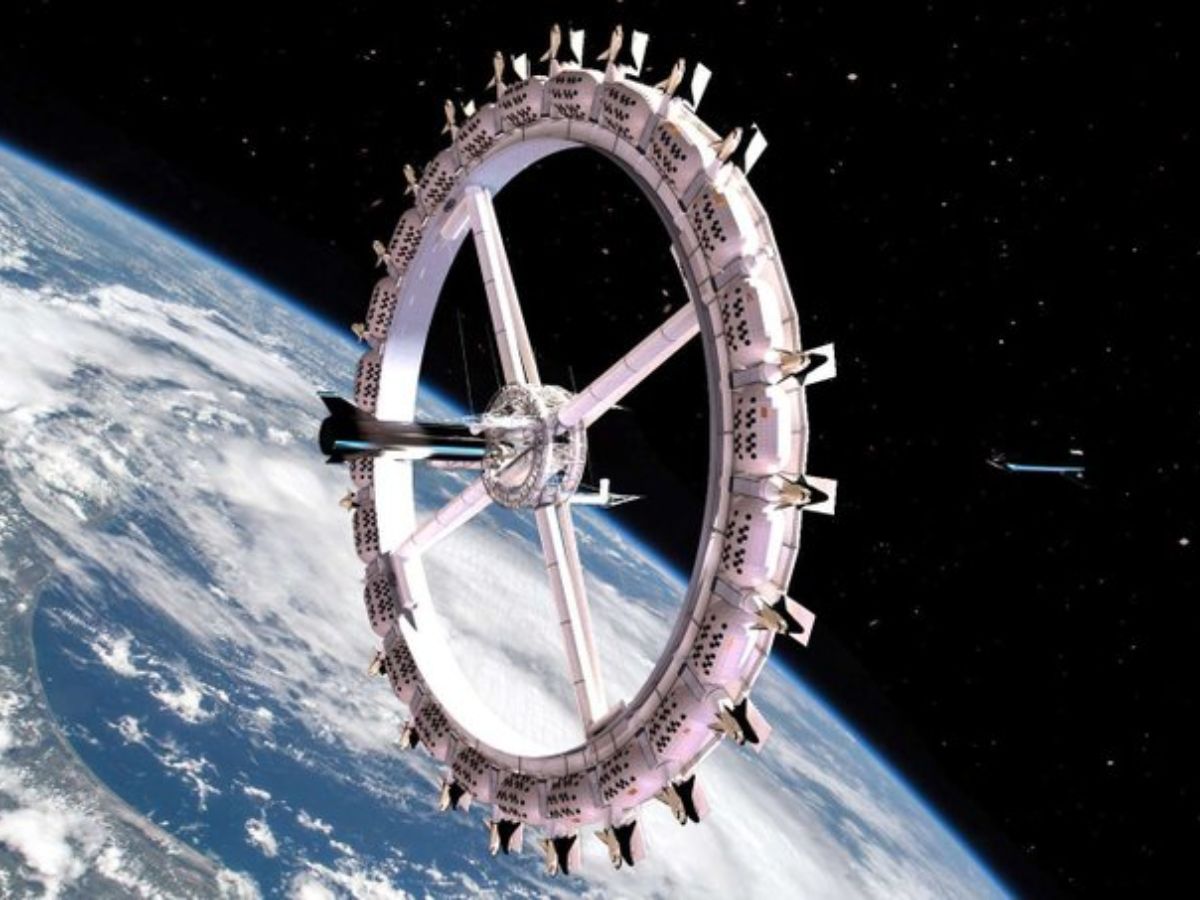
The space tourism era is about to reach a dramatic new milestone. A commercial space hotel named Voyager Station is planned to orbit Earth by 2027, offering a luxury experience once only imagined in science fiction. The project aims to build an orbital resort complete with dining, entertainment, private suites and unique microgravity living, a first for humans outside Earth’s surface.
Voyager Station represents a bold step in space travel, merging hospitality with cutting-edge aerospace design. If completed on schedule, it will set the stage for the future of long-term space tourism and private orbital stays.
What is Voyager Station?
Voyager Station is designed to be the first fully commercial space hotel in orbit around Earth. The concept features a large rotating structure with multiple modules that will host both guests and crew. The hotel plans to offer:
- Luxury space hotel for 280-400 guests & 112 crew
- Rotating wheel design with 24 connected modules
- Floating 250 miles above Earth in low Earth orbit
- Private suites with panoramic Earth views
- Fine-dining restaurants
- Fully stocked bars
- A gym and wellness facilities
- A concert hall and cinema
- Guests will travel to space, dock at the facility and enjoy extended stays in orbit — a dramatic leap from short space flights and orbital visits.
Voyager Station: Launch Plan & Timeline
The current target for Voyager Station’s orbital launch is 2027. Construction work on test hardware is expected to begin by 2026, though timelines remain ambitious given the scale of the project.
The station will launch from a major spaceport, with Kennedy Space Centre widely expected to be the departure point for crew and visitors. Once in orbit, the spacecraft will rendezvous with Voyager Station for docking and extended missions.
Voyager Station Design & Facilities
Voyager Station’s design includes 24 specialised modules that collectively create a usable space of approximately 125,000 square feet. The modules are intended to provide comfort, entertainment, views of space and Earth, and emotional well-being for guests.
Upon arrival, visitors will enter a zero-gravity pod before using a specialised elevator system to reach the station’s living and recreational areas. The environment is planned to support both leisure and routine activities.
Voyager Station: Cost of Staying in Orbit
Stays at Voyager Station will be extremely expensive, likely costing tens of millions of dollars per visit. The hotel is targeting ultra-wealthy travellers and space enthusiasts at first, similar to early pricing for orbital flights and private space missions.
As the space tourism industry grows, costs could decline over time, but initial bookings are expected to be limited by price and availability.
How will Voyager Station Sustain in Orbit?
Voyager Station is designed to use centrifugal force to create artificial gravity. The hotel will rotate at about 1.5 rotations per minute, generating a force similar to one-sixth of Earth’s gravity, similar to the Moon’s gravity. Over time, designers hope to allow conditions closer to those on Mars or Earth for longer stays.
The basic physics behind this system was first proposed more than a century ago, with early ideas by Russian scientist Konstantin Tsiolkovsky and later popularised by German engineer Wernher von Braun. The station will maintain its orbit through a balance of forward motion and Earth’s gravity, similar to the way the International Space Station functions today.
Voyager Station: Challenges & Ambitions
While the idea of a space hotel has existed in concept for decades, Voyager Station represents the first serious attempt to turn it into reality. The project still faces technological, financial and regulatory hurdles:
- Developing safe, reliable life-support systems
- Building durable structures that withstand orbital conditions
- Ensuring safe launch and re-entry systems for guests
- Despite uncertainties, the project has captured global imagination and investment interest.
What This Means for Space Tourism?
Voyager Station could mark a turning point for private space exploration and tourism. If successful, it may pave the way for:
- Affordable orbital stays in the future
- Commercial research and manufacturing in space
- New forms of global travel beyond Earth’s surface
- The station could redefine how people live, work and vacation in space.