
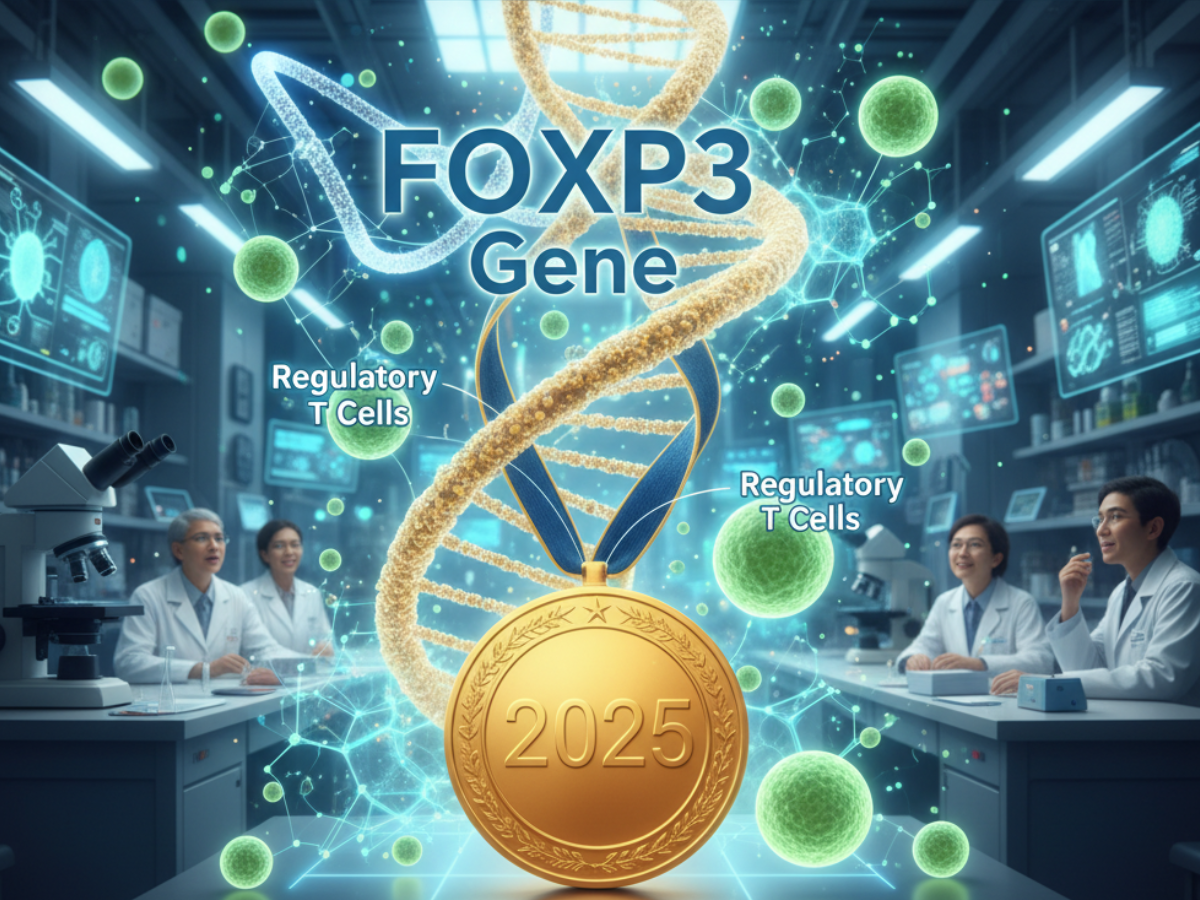
The Nobel Prize in Physiology or Medicine 2025, goes to three eminent scientists Mary E. Brunkow, Fred Ramsdell and Shimon Sakaguchi, who pioneered research on regulatory T cells. Their innovative experiments have enabled comprehension of why the immune system maintains balance and is not always attacking one’s tissues. This is changing the face of treatment in autoimmune diseases, cancer and organ transplantations, opening new doors in medicine.
What is the T Cells: Body’s Immune Warriors
Plants are very important immune components the organ’s natural soldiers that distinguish and eliminate threats like viruses, bacteria and cancer. The white cells that originate in the bone marrow and mature in the thymus gland comprise many different types that perform specialized functions. Many T cells attack aggressively however, one unique type is regulatory T cells and performs the task of balancing an out-of-control immune response.
ALSO READ: Nobel Prize 2025: Categories, Winners & Global Impact | Announcements Begin October 6
What disease is linked to mutations in the Foxp3 gene?
The one seminal finding connected the mutations in the Foxp3 gene with the intense immunological disarray in the state of defect in Foxp3 where the body loses its capacity to modulate immune responses and leading to such conditions as IPEX syndrome a rare but deleterious autoimmune disorder. The immune system of IPEX subjects attacks multiple organs incorrectly which shows the importance of this gene in the immunity regulation field.
What gene is crucial for regulatory T cell development?
Foxp3 is the heart of the development of regulatory T cells master switch gene directs the origination and functioning of those peacekeeping cells. The Molecular mechanisms governing regulatory T cell biology were uncovered due to the work of Brunkow and Ramsdell explaining how Foxp3 mutations lead to failure in immune tolerance and autoimmunity.
ALSO READ: Who is Mary Brunkow: 2025 Nobel Winner Pioneering Peace in the Immune System
Discovering regulatory T cells
The discovery of Foxp3, Shimon Sakaguchi will have made the primary contribution in 1995 by defining regulatory T cells themselves. He showed that the immunity tolerance was established not only centrally with in the thymus but also maintained by these specialized cells that circulate through the whole organism and this revolutionized the understanding of immune self-tolerance.
Who won the 2025 Nobel Prize in Physiology or Medicine?
Mary E. Brunkow, Fred Ramsdell and Shimon Sakaguchi were in unraveling the mysteries of immune regulation. Brunkow hails from Princeton University and is currently running innovative research at the Institute for Systems Biology. Ramsdell is also associated with UCLA, pushes the limits in clinical applications as scientific advisor. Sakaguchi is a distinguished professor from Osaka University, continues to shine in immunology worldwide.
These discoveries leave medicine with huge tools in the fight against autoimmune diseases, improving cancer therapies and enhancing transplant success.
Disclaimer: This article uses publicly available information for educational purposes only and does not replace professional medical or scientific advice.