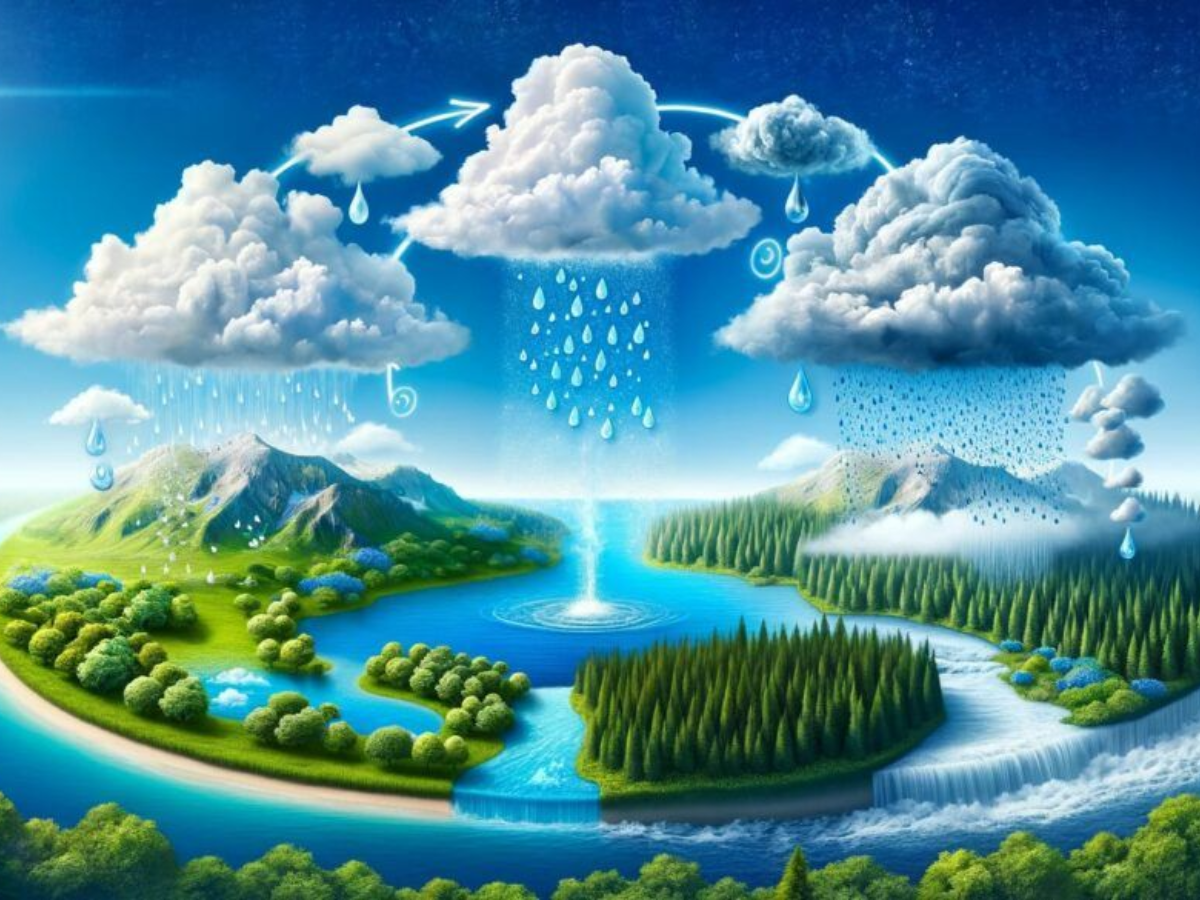
Water is the primary reason all life exists and the water cycle the other name of the hydrological cycle is nature’s intricate system to distribute it. This journey of water around the planet is never ending and sustains not just ecosystems but also supports agriculture, human consumption and climate stability. Invisible in action, it is this that drives many of Earth keeping systems alive.
What is Evaporation?
Evaporation cycle begins with the sun’s heating rays energizing water bodies like oceans, rivers and lakes. Increased temperature would gain sufficient energy for water molecules to escape into the atmosphere as vapor a process known as evaporation.
This stage carries out an important moderation of climate through heat absorption and cooling of the surface of the Earth aside from contributing moisture into the air and marking the beginning of cloud formation and subsequent events of the weather.
ALSO READ: Science of Color: How Light, Vision & Brain Create the World we See
How Clouds Craft in the Sky?
Once airborne, water vapor begins to cool as it goes higher in altitude. This cooling causes vapor to fall back into liquid droplets that aggregate to form clouds-considered a process called condensation.
These droplets would be very small but will combine in huge masses to form clouds. The more cooling of air and more condensation occurs. This stage in the water cycle is crucial for preparing for return of water to surface.
What is Precipitation?
These clouds become too saturated and begin precipitating under the force of gravity and are converted into forms such as rain, snow, sleet, or hail called precipitation. Noteworthy to mention are the conditions under which they occur rain occurs for larger droplets of water, snow occurs when vapor crystallizes, sleet forms when raindrops freeze midair and hail forms when strong storm updrafts continuously freeze water droplets and layer them.
This stage refreshes all the inland freshwater sources rivers, lakes and groundwater reserves that are necessary for both natural ecosystems and humans.
ALSO READ: India-Japan High Speed Rail Revolution with AI-Powered Transport | From Tracks to Tech
How Water reaches the Ocean?
Upon reaching the surface water follows one of two primary tracks. The water will flow across the land surface into rivers, streams and finally ends at the oceans and has this process called runoff. Infiltration on the other hand allows water to seep through soil recharge underground aquifers.
These two pathways are very much requisite for life maintenance from moisture soaking through soil into plants to communities that rely on wells for freshwater. This water further supports underground ecosystems and locks water for postponed retrieval.
How is the Transpiration in Plant Function?
Another often overlooked part of the cycle includes transpiration which is defined as the release of water vapor into the atmosphere. Plants take up water through their roots but give a fraction of that out into the air as vapor through pores within their leaves. This process keeps plants cool, helps move nutrients around the plant and contributes more moisture to the atmosphere.
It is this process of transpiration and evaporation that is known as evapotranspiration, which would figure significantly in local and global climate regulation.
ALSO READ: NASA’s Upcoming Launch | Triple Spacecraft Missions to Decode the Sun’s Influence on Earth
Why the Water Cycle Matters More Than Ever?
The water cycle is far more than just natural processes; it is life support. It conducts the weather such that all biodiversity could thrive in it and leave water where it matters the most. Supporting agriculture, replenishing freshwater stocks and croaking atmospheric dynamism the impact is massive.
The altered temperatures and incidence of rain great enough to destabilize this delicate system are most pronounced within the context of climate change. Informed, science based water management will be crucial for continued agriculture, supply of safe drinking water and habitat conservation.
This movement of water forms the silent rhythm of Earth: driving life, shaping landscapes, and regulating balance. Recognizing this makes up the complexity in protecting the very resource that sustains us all.
ALSO READ: Why is the Sky Blue: The Science Behind Nature’s Most Beautiful Illusion