
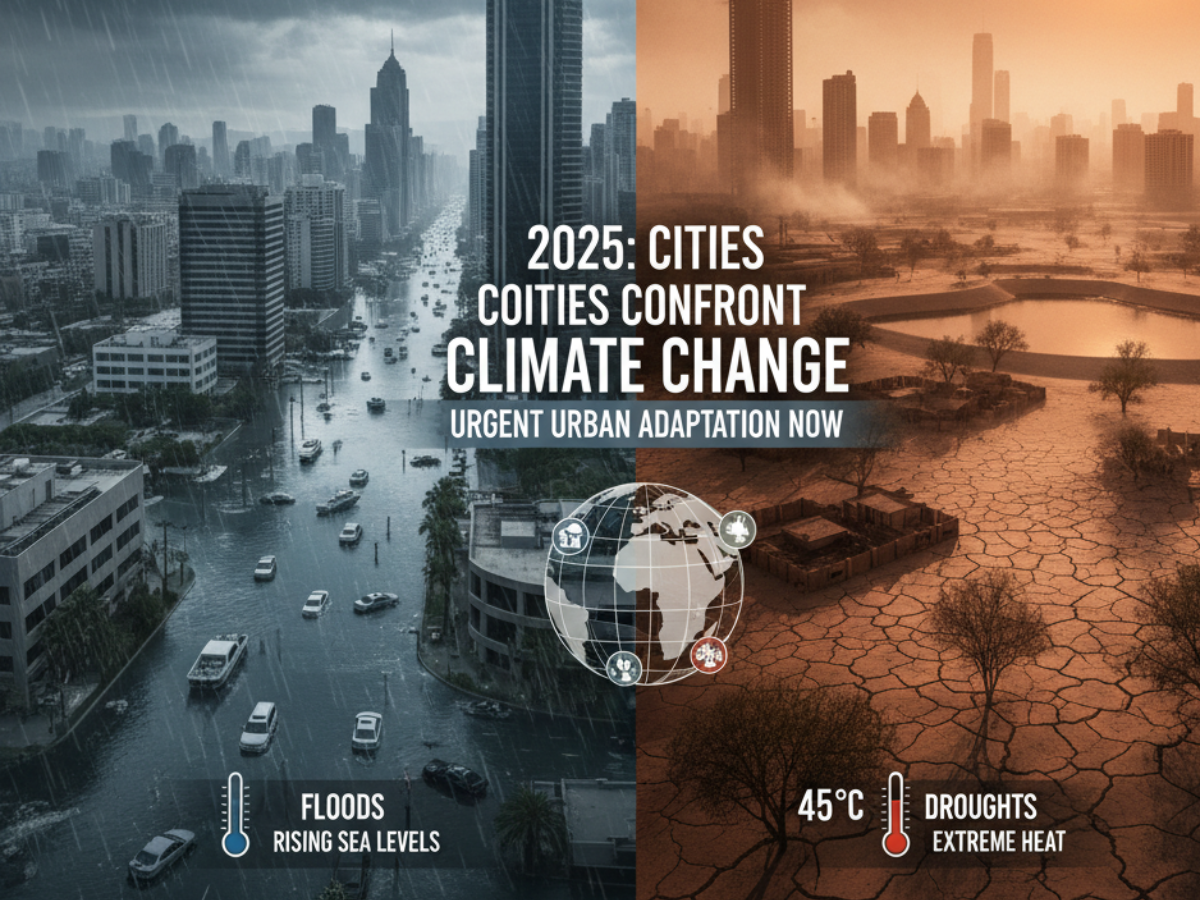
In 2025, cities of the world increasingly experience hazards according to escalating climate change factors, floods, droughts, heatwaves and higher sea levels. Rapid urbanization, decaying infrastructure and social disparities make matters even worse these vulnerabilities impact primarily the marginalized.
Climate risks have further manifested themselves as cities grow, making mitigation very urgent to save billions of urban residents and keep cities livable and resilient.
What are Climate Change & Urban Impact in 2025?
The Effects of climate change are increasingly visible at extreme weather events are caused by flood, prolonged drought and heat with the daily life disruption is provided to public safety and infrastructure damage. Low-level coastal cities and very populous urban areas are at greater risk by this knowing these vulnerabilities is very important for governments and urban planners in adapting to themrealistic views.
ALSO READ: Asteroid 2024 YR4 Could Hit the Moon in 2032 | NASA Plans Extreme Move
What are Extreme Flooding & Drought in Cities?
Research shows that nearly 17% of major cities worldwide experiences climate whiplash, defined as rapidly switching floods within droughts. Cities like Jakarta, Hangzhou and Addis Ababa are threatened with severe water-related challenges affecting hundreds of millions access to clean water and sanitation. The South Asia and eastern Africa remain hotspots on extreme water variability underscoring the need for proactive urban planning and emergency preparedness.
How is the most vulnerable South Asian & African Cities?
Mumbai, Kolkata, Dhaka, Nairobi, Khartoum, Faisalabad and Lahore are some of these cities most affected by climate hazards with the rapid expansion of populations in combination with poor infrastructures and inefficient urban governance worsen the whole scenario of vulnerability. Coastal floods, inundation by rivers and droughts threaten livelihoods and public health and climate adaptation strategies are fundamental to sustainable urban living.
What are infrastructure Challenges in European Cities?
The European cities such as Madrid, Paris and Barcelona, are highly threatened. Their water and waste systems have aged in along dry spells, intensifying the risk of drought and shortages of water. Updating infrastructure and investing in sustainable urban water management are essentials in reducing climate-related stresses on cities.
ALSO READ: Northern vs Southern Lights: What Makes These Polar Wonders So Different?
What are clear necessity for Urban Climate Adaptation?
Such should be the cases for thorough-going comprehensive climate adaptation actions which include improved drainage systems, water conservation, disaster preparedness and resilient public health infrastructure. The engineering solutions can be supplemented with ecological restoration towards urban resilience such as evidenced in Delhi’s stormwater management plan.
Call for Global Cooperative Action
Addressing urban climate risks requires collective action at international levels, funding and sharing of data and info. The Governments, multilateral organizations and private stakeholders must unite in action to ensure that vulnerable cities are habitable and resilient as climate impacts intensify which would then mean much for urban centers.
ALSO READ: Why the Moon is Rusting & Turning Red: Earth’s Role Explained by Science
Disclaimer: This article is based on current data and reports. Climate risks and urban vulnerabilities may evolve with new research and changing environmental conditions.