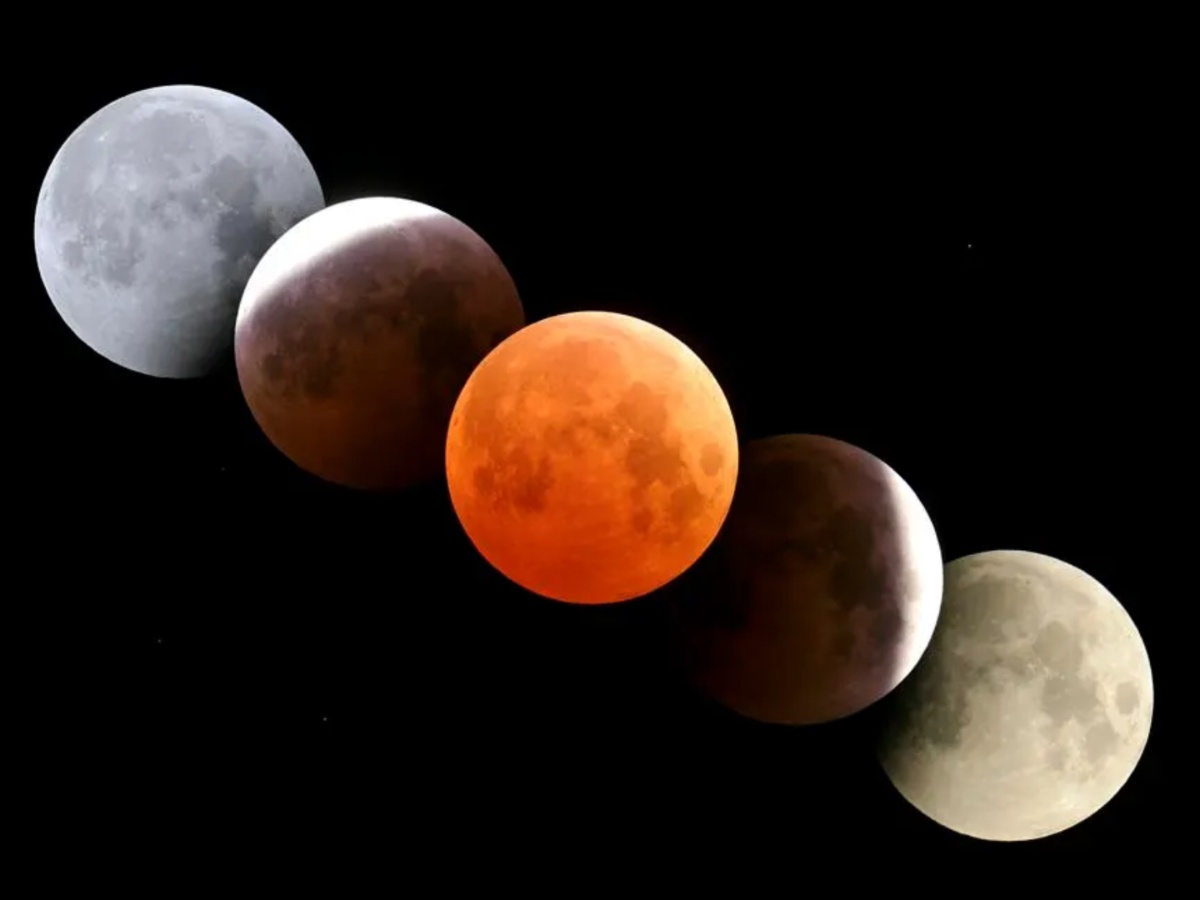
Skywatchers in India and all over the world are in for an amazing treat on the night of September 7-8, 2025 and a total lunar eclipse, also called a Blood Moon, will turn the Moon a reddish color. This happens when the Earth comes right between the Sun and the Moon, blocking sunlight and creating a stunning visual while the eclipse will be visible to more than 7 billion people, across Asia, Africa, the Americas, Europe, and Oceania and with 82 minutes of totality, it’s a rare chance for astronomy fans, photographers, and anyone who loves stargazing.
Date, Type, and Visibility
The eclipse starts on Sunday night, September 7, and goes into early Monday, September 8. People in India and worldwide can see it either fully or partially. Unlike solar eclipses, this one is totally safe to watch with the naked eye—no special glasses or telescopes needed. With a total duration of over five hours, this is one of the longest lunar eclipses in recent years.
Read More: Blood Moon Rising: Everything You Need to Know About the 2025 Lunar Eclipse
Lunar Eclipse Timings in India (IST)
According to Drik Panchang, here’s when the eclipse phases happen in India:
- Penumbral Eclipse Begins: 9:12 PM (Sep 7)
- Partial Eclipse Begins: 10:09 PM (Sep 7)
- Total Eclipse Begins (Blood Moon): 11:01 PM (Sep 7)
- Maximum Eclipse: 11:41 PM (Sep 7)
- Total Eclipse Ends: 12:22 AM (Sep 8)
- Partial Eclipse Ends: 1:14 AM (Sep 8)
- Penumbral Eclipse Ends: 2:11 AM (Sep 8)
The total eclipse lasts 1 hour 21 minutes, and the entire event runs for 5 hours 24 minutes.
Sutak Rules and Significance
In Hindu tradition, Chandra Grahan is spiritually important. The Sutak period starts nine hours before the umbral eclipse and is considered inauspicious. For Delhi:
- Sutak begins at 12:19 PM (Sep 7) and ends at 1:26 AM (Sep 8)
- For children, elderly, and sick people starts at 6:36 PM
During Sutak, people usually avoid cooking, eating, or doing auspicious activities. Instead, chanting mantras, meditating, or reading scriptures is encouraged. Temples often remain closed and reopen after purification rituals.
Why This Eclipse is Special
This eclipse is extraordinary because almost everyone on Earth can see it. With 82 minutes of totality, it’s one of the longest of the decade while scientists will study the Moon’s red glow to learn more about Earth’s atmosphere and dust levels. For many, it’s also a culturally and spiritually meaningful event.
- Watching and Photographing the Blood Moon
- Pick a place with a clear, open sky and low light pollution.
- Arrive early to watch the partial eclipse leading up to totality.
- Binoculars or telescopes will give a closer view of the red Moon.
- For photos, use a tripod, ISO 800–1600, and experiment with exposure.
- Including landscapes or city skylines makes pictures more creative.
- Capture multiple phases to document the full eclipse.
Scientific and Cultural Importance
For scientists, this eclipse is a great chance to study the Earth’s atmosphere. In Hindu culture, it’s also a time for reflection, fasting, and cleansing and around the world, people will come together in awe, sharing this amazing experience that blends science, culture, and spirituality.
Read More: Blood Moon vs Corn Moon: What Makes September’s Lunar Show Special
The Total Lunar Eclipse on September 7-8, 2025, isn’t just a Blood Moon—it’s a huge celestial event and but its long duration, wide visibility, and cultural importance, it’s something everyone should try to watch.