
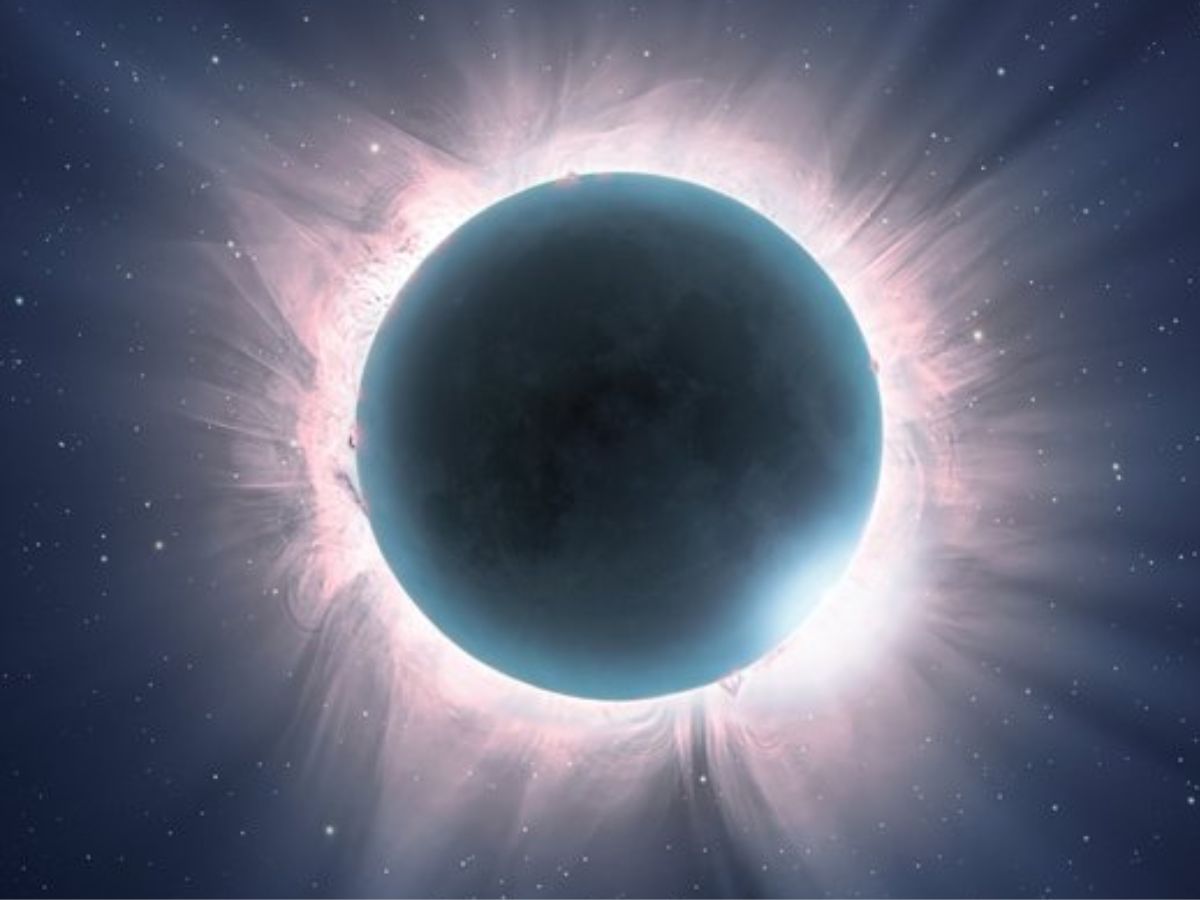
A partial solar eclipse is expected to take place on Sunday, September 21, 2025. NASA, the United States’ space and aeronautics agency, has confirmed this event. The eclipse will begin at 23:59 IST (Indian Standard Time), reach its peak at 01:11 IST, and end by 03:23 IST. During this time, the Moon will move between the Earth and the Sun, partially covering the Sun as seen from certain locations on Earth. However, India will not experience this eclipse.
Countries Where the Eclipse Will Be Visible
This partial solar eclipse will mainly be seen in the Southern Hemisphere. The key countries and regions where people will be able to witness the eclipse include:
-
Australia
-
New Zealand
-
Antarctica
-
Parts of the Pacific Ocean
-
Parts of the Atlantic Ocean
These areas will experience varying levels of the Sun being covered by the Moon, with the maximum eclipse blocking up to 85% of the Sun at around 01:11 IST.
Also Read: Solar Eclipse September 2025: Where It Will Be Seen & What India Needs to Know
Timing and Visibility
According to EarthSky.org, the eclipse will begin at 17:29 UTC (23:59 IST), peak at 19:41 UTC (01:11 IST), and conclude by 21:53 UTC (03:23 IST). The best viewing times will be during local sunrise in the regions mentioned above, especially over the South Pacific, New Zealand, and parts of Antarctica. People in these locations will be able to observe the Moon gradually covering the Sun before the shadow moves away from Earth.
Why India Will Not See the Eclipse
The visibility of a solar eclipse depends on geographical location. While India witnessed the total lunar eclipse earlier in September 2025, this solar eclipse won’t be visible from India, including the capital, New Delhi, as confirmed by TheSkyLive.com. The Sun and Moon’s alignment for this eclipse does not coincide with the Indian region.
However, this event holds cultural importance as it coincides with the final day of Pitru Paksha (Shraddh period), a time in the Hindu calendar dedicated to remembering ancestors. Usually, eclipses involve specific rituals and restrictions in India, known as the Sutak period. Since this eclipse won’t be visible, no such restrictions will apply on September 21, though some people may observe symbolic practices for spiritual reason
Although this partial solar eclipse is a significant astronomical event in 2025, it won’t be visible in India. Countries like Australia, New Zealand, and parts of Antarctica will be able to witness this rare celestial phenomenon. With the maximum eclipse covering up to 85% of the Sun, it promises to be a remarkable sight for people in the Southern Hemisphere. Meanwhile, in India, this day will quietly coincide with Pitru Paksha without any special observances directly linked to the eclipse.
Also Read: Solar Eclipse 2025: Do’s & Don’ts You Should Know