
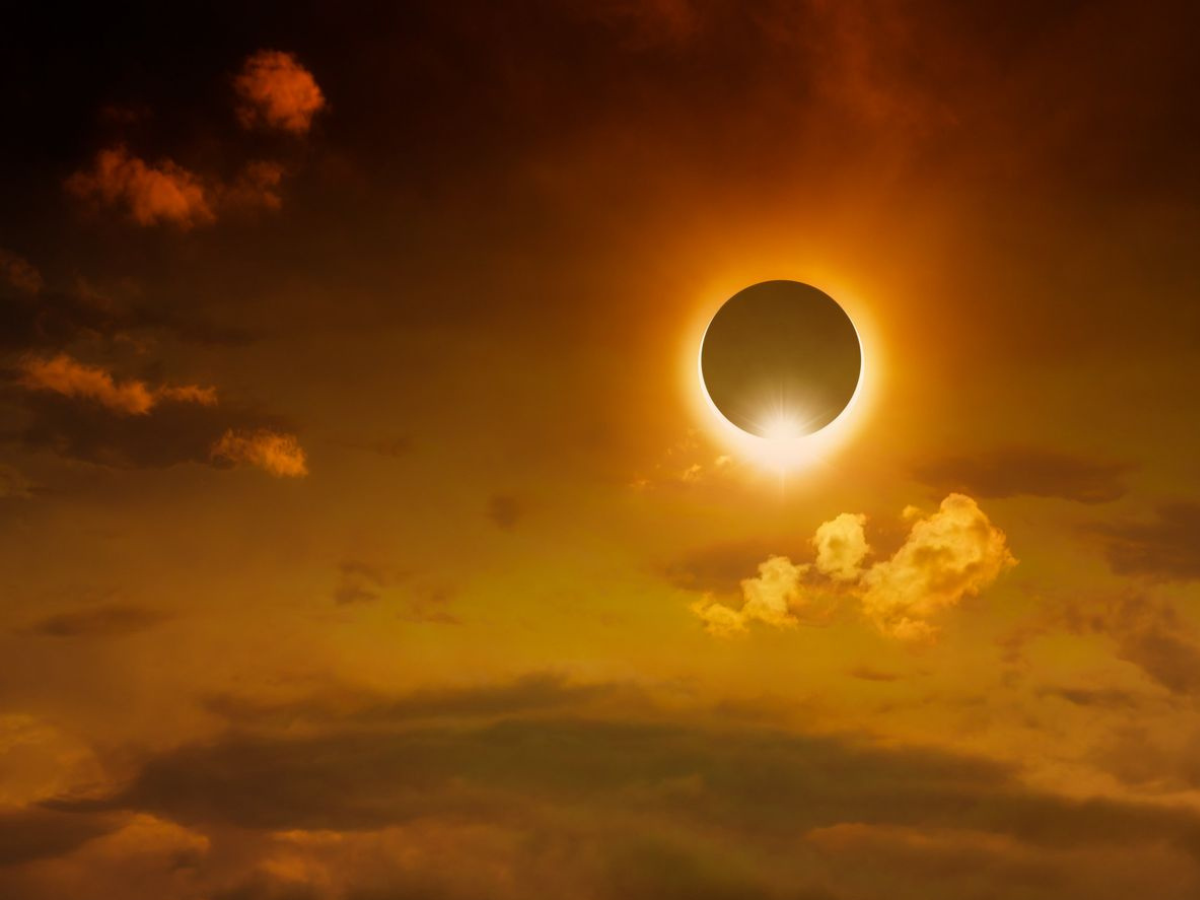
The last solar eclipse of 2025 is expected to be a partial one that will occur on Sunday, September 21. In the course of this event, the Moon will interpose itself between the Earth and the Sun thereby preventing only a partial obscuration of sunlight.
How Long & When Will It Be Visible?
The eclipse is expected to start near 17:29 UTC (10:59 pm IST), reach maximum at around 19:41 UTC (1:11 am IST) and end at about 21:53 UTC (3:23 am IST). This means a total duration of about 4 hours 20 or 25 minutes although it can vary according to your location. There are zones and limits for watching where these eclipses can be seen.
Greatest viewing will be in parts of the Southern Hemisphere and territories include New Zealand in the south, eastern Australia, Pacific Islands and most parts of Antarctica. No one in India, in most parts of North and South America, in Africa, Europe or in many northern sections will see the eclipse.
ALSO READ: Surya Grahan September 2025: Date, Time & Spiritual Significance of Solar Eclipse
Why This Eclipse Is Special?
The eclipse is special because it occurs just before the September equinox when day and night are nearly equal across the world. This timing adds extra symbolic and scientific interest. Also, almost 80% of the sun being covered in some places like southern New Zealand is a mesmerizing factor.
How Safety & Cultural Consider?
Even during the times when only part of the sun is obscured directly looking at it without proper protection can damage your eyes and thus, never forget to use certified solar filters or eclipse glasses. Culturally India will not be seeing the eclipse, Sutak or periods of ritual purity will not be considered.
ALSO READ: Solar Eclipse September 2025: Date, Safety Tips & What Pregnant Women Should Know
Best View Locations for the Solar Eclipse
Skywatchers in the Southern Hemisphere enjoy the front-row seats to this year’s last solar eclipse particularly in remote islands and high-latitude regions such as southern New Zealand, Christchurch and Invercargill will experience maximum 72 % solar coverage. Research stations like Mario Zucchelli and McMurdo stations in Antarctica will experience long periods of the eclipse under crystal-clear skies.
Pacific countries like American Samoa, Samoa, Tonga, Tuvalu and the Cook Islands have early-morning vistas with moderate partial obscuration. The coastal regions of eastern Australia will also witness the spectacle shortly after sunrise.
ALSO READ: Solar Eclipse 2025: Do’s & Don’ts You Should Know