
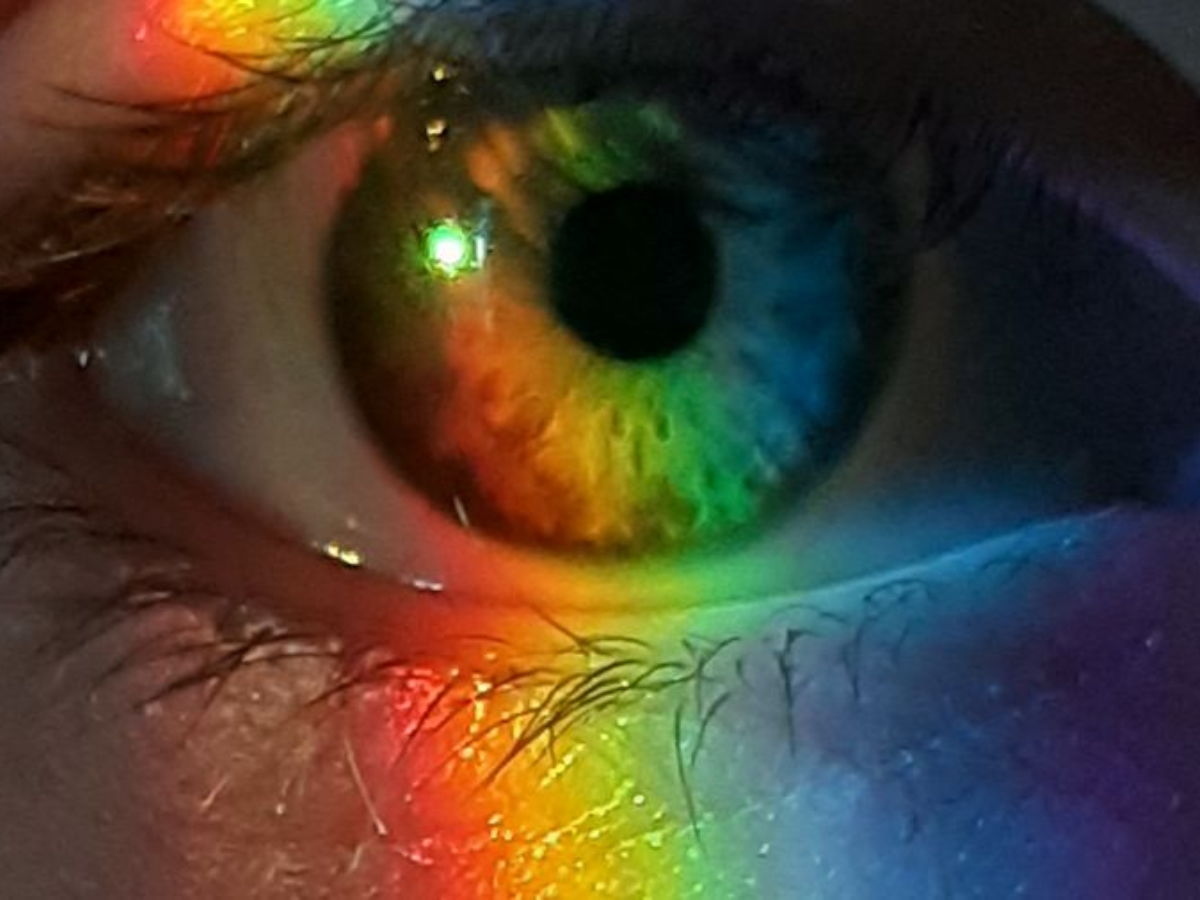
Light, materials and the human eye create an amazing phenomenology called color. All of this light is electromagnetic radiation, but the human eye can only respond to some narrow band, and which is called the visible spectrum thus producing colors bright enough for us to see and can fascinate us with its mechanic although complicated.
What are the Electromagnetic Spectrum and Visible Light
Light includes a variety of electromagnetic radiations from the longest wave radio to the shortest gamma rays which we cannot see. The colors that we see fall within a narrow band called visible light which has wavelengths ranging from about 380 to 700 nanometers. This is further reflected in the familiar colors of the rainbow although these three do not emerge from the rainbow of existing colors red, green and blue. In painting, green is a secondary color, but in light physics these three are called primary colors. By varying the intensities of these primaries, the eye sees many colors.
When three colors are equally mixed, they become white light. Every color has its own wavelength for instance; red has the longest and violet the shortest. When light hits an object, certain wavelengths are absorbed while others are reflected or scattered. For example, an object appears blue because it reflects blue wavelengths but absorbs the rest. Black absorbs all wavelengths which is why dark clothing absorbs most heat.
ALSO READ: Why is the Sky Blue: The Science Behind Nature’s Most Beautiful Illusion
What is Hue, Saturation and Brightness in Color?
Color is more than shade it has three principal aspects hue, saturation and brightness. Hue is the color family red, yellow, green, etc. It is essentially the identity of that specific color.
Saturation is about how pure or intense that hue is fully saturated color is bright and clear, while adding its white or gray pastel or dulls that color.
Brightness indicates how light or dark a color is depending on the amount of light energy. Together, these elements define the whole experience of color as we observe it.
What is the Biology Behind Seeing Color?
Seeing color begins when light reflected from an object enters the eye and then reaches the retina. The retina consists of two major categories of photoreceptors rods and cones. Rods are very numerous but do not detect color, they are for nighttime viewing and allow us to see in darkness.
ALSO READ: India-Japan High Speed Rail Revolution with AI-Powered Transport | From Tracks to Tech
The cones are providing color vision and respond to red, green or blue light. These specialized cone cells are found tightly packed in high numbers in the center of the retina and the fovea where sharp colorful sight occurs.
How our Brain Translates Color Signals?
Coloring is dependent on how the brain processes signals sent by the eye. Activation of cones in light sends electrical impulses through the optic nerve to the center of vision in the occipital lobe.
Information from each eye is processed in opposite hemispheres of the brain and creating the picture that we see. The brain’s interpretation enables it to detect many subtle hues and shades from the simple waves of light.
What are differences in Color Perceptions Among Individuals?
Not everyone sees the same color because of differences in biology and functioning of the brain. Research claims that women can see more colors than men and they are less likely to have color vision deficiency. The prevalence would be one out of twelve men experiencing some difficulty in colors while only one out of two hundred women are affected.
ALSO READ: Blood Moon: Why the Moon Turns Red During the Rare September 7 Eclipse
Understanding the Color Vision Deficiency
Color blindness happens when one or more of the types of pigments in the cones are either absent or dysfunctional thus failing to distinguish some hues from others. The most frequent of these are red-green deficiencies and which may range somewhere between poor sensitivity and total inability to see these colors.
Less frequently seen are blue-yellow deficiencies, and the rarest condition of all is monochromacy where no color perception is achieved. These variations would be responsible for the differences in behavior when one is seeing and interpreting colors the effect on the daily life of a person might be slight but in essential ways.
Color is a fusion of physics, biology and psychology that is in constant motion. The kind of expedition from light waves to the blues and reds that we esteem reveals the wonder and complexity of human vision.
ALSO READ: Cosmic Cannibalism: Dark Predators Matter Turn Planets into Black Holes Theory