
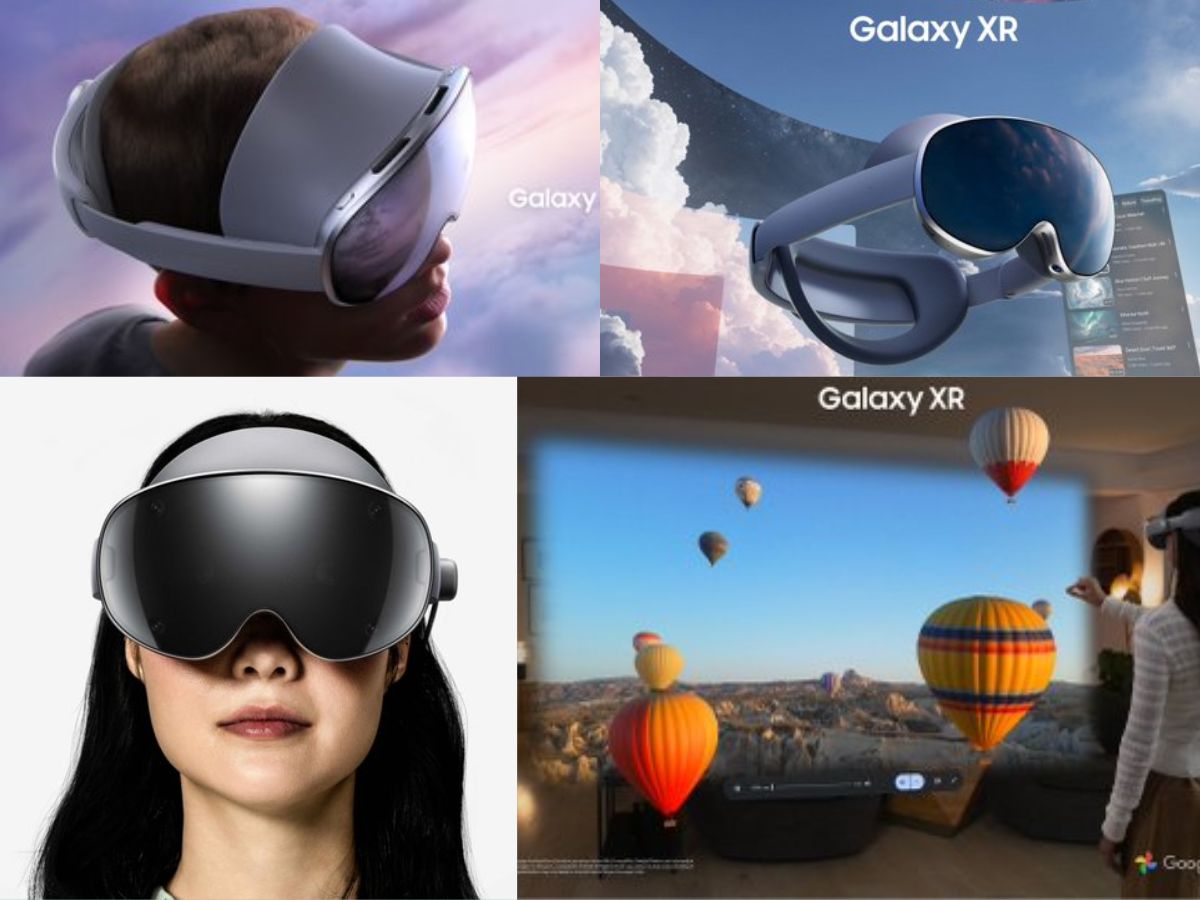
Tech giant Samsung has officially entered the extended reality (XR) market by launching its new headset, the Samsung Galaxy XR. Developed in collaboration with Google and Qualcomm, the headset is set to challenge the dominance of Apple’s Vision Pro. The Galaxy XR will cost $1,799, approximately ₹1,57,921, offering a more accessible yet powerful alternative to Apple’s premium device.
Samsung Galaxy XR: Key Features
- The Galaxy XR features a 4K micro-OLED display with a refresh rate up to 90Hz, delivering sharp and smooth visuals.
- At the heart of the device lies the Snapdragon XR2+ Gen 2 chipset from Qualcomm, built to handle demanding XR applications.
- Integrated into the headset is Google’s Gemini AI assistant, which enables natural interactions via voice, vision, and gesture controls.
- The headset is designed for comfort, weighing approximately 545 grams and featuring a detachable battery pack for longer use during XR sessions.
Android XR Platform
The Galaxy XR operates on Android XR, a new operating system created by Google and Samsung specifically for extended reality devices. This platform supports immersive versions of familiar apps like Google Maps, YouTube, and Google Meet.
This open-platform approach contrasts with Apple’s more closed ecosystem, potentially making the Galaxy XR a flexible choice for developers and users alike.
Strategic Implications
By entering the XR market with strong partners, Samsung aims to offer a more open and accessible alternative to the Apple Vision Pro. The partnership with Google brings AI and software excellence, while Qualcomm provides XR-optimized hardware. Analysts see this as a strategic move that could disrupt a segment currently dominated by Apple and Meta.
This launch could mark the start of a broader XR ecosystem led by Samsung, Google, and Qualcomm—including future lighter form factors and smart glasses.
XR Ecosystem Beyond Headsets
While the Galaxy XR captures headlines today, Samsung and Google appear to be building an ecosystem for tomorrow. The launch signals the start of a multi-device strategy that could include smart glasses, workplace XR solutions, and deeper AI integrations. The Galaxy XR is just the first step—a foundation for wider XR adoption across entertainment, productivity, and enterprise.
Galaxy XR Launch Sets the Stage
With its competitive price, advanced features, and strategic partnerships, the Samsung Galaxy XR is positioned to challenge Apple in the XR space. The collaboration between Samsung, Google and Qualcomm aims to shape the future of extended reality—and the war for eyewear starts now.