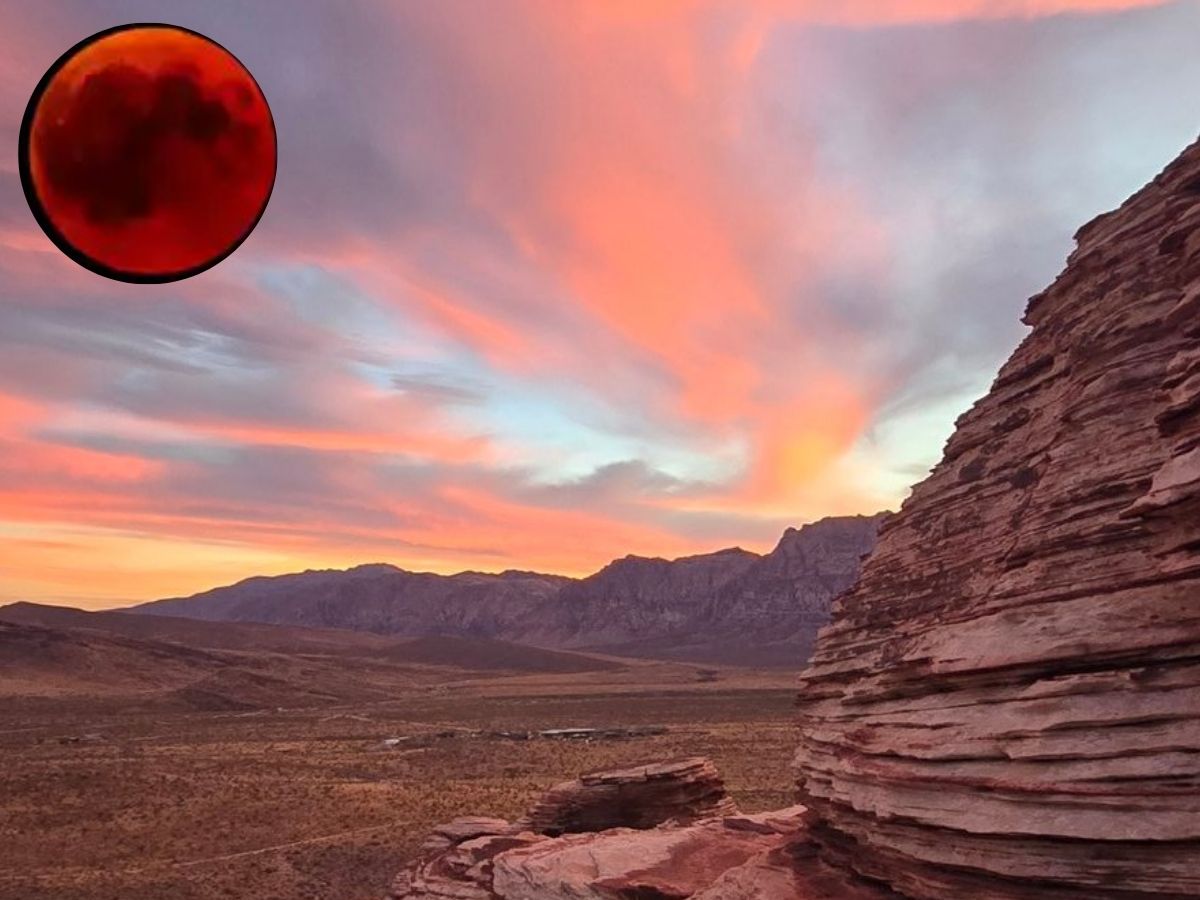
Skywatchers across the globe witnessed a rare total lunar eclipse on the night of September 7 and 8, 2025, a celestial event in which the Full Moon passed near the center of Earth’s dark umbral shadow. This slow-moving eclipse was visible from multiple continents, including Antarctica, Australia, Asia, Europe, and Africa, and offered a spectacular show for millions of observers.
Understanding the Earth’s Umbra
Every total lunar eclipse is unique. The Earth’s umbra, or shadow, is influenced by a variety of factors, including weather conditions and atmospheric pollution, which means the red hue of the Moon can vary slightly each time. Currently, the umbra is covering nearly half of the Moon, and over the next 30 minutes or more, it will gradually cover the entire lunar surface, producing a distinctive red glow that makes each eclipse a one-of-a-kind spectacle.
The umbra is the darkest part of Earth’s shadow, shaped like a long cone that stretches deep into space. Its circular cross-section becomes most noticeable during a lunar eclipse. As the Moon passed through the umbra, it gradually darkened, producing the characteristic red and blue hues. A timelapse composite image from Zhangjiakou City, China, captured the curved shadow clearly. During the total phase (totality), the Moon remained fully within Earth’s umbra for approximately 83 minutes, giving astronomers and enthusiasts ample time to observe the phenomenon.
Why the Moon Turns Red and Blue
The Moon glows red during totality due to sunlight refracted by Earth’s atmosphere, which bends and scatters light into the umbra. At the very edge of the shadow, the Moon displayed a distinct blue rim. This effect occurs because sunlight passing through the upper stratosphere is filtered by ozone, which scatters red light and allows blue light to pass.
Interestingly, experts note that emerging rays from the Sun, especially ultraviolet (UV) and high-energy components that reach Earth indirectly, can be potentially harmful to unprotected observers using optical devices for prolonged periods. While lunar eclipses are generally safe to view with the naked eye, those using telescopes or binoculars without proper filtering should exercise caution to prevent eye damage.
Scientific Significance and Public Viewing
This eclipse provided scientists with a unique opportunity to study Earth’s atmosphere in real time. The changing colors and the gradual movement of the umbra reveal details about atmospheric composition, ozone concentration, and light scattering. For the public, it offered a rare chance to experience the grandeur of space. Observers were reminded of the immense scale of the cosmos and the subtle interplay of light, shadow, and atmospheric effects.
Safety Advisory
Although lunar eclipses are generally safe, experts advise avoiding direct observation of emerging rays through optical devices without protective filters. Prolonged exposure to these rays can pose eye hazards, especially from ultraviolet and high-energy light refracted through the atmosphere. Using proper eclipse glasses or filtered telescopes ensures a safe and enjoyable viewing experience.