
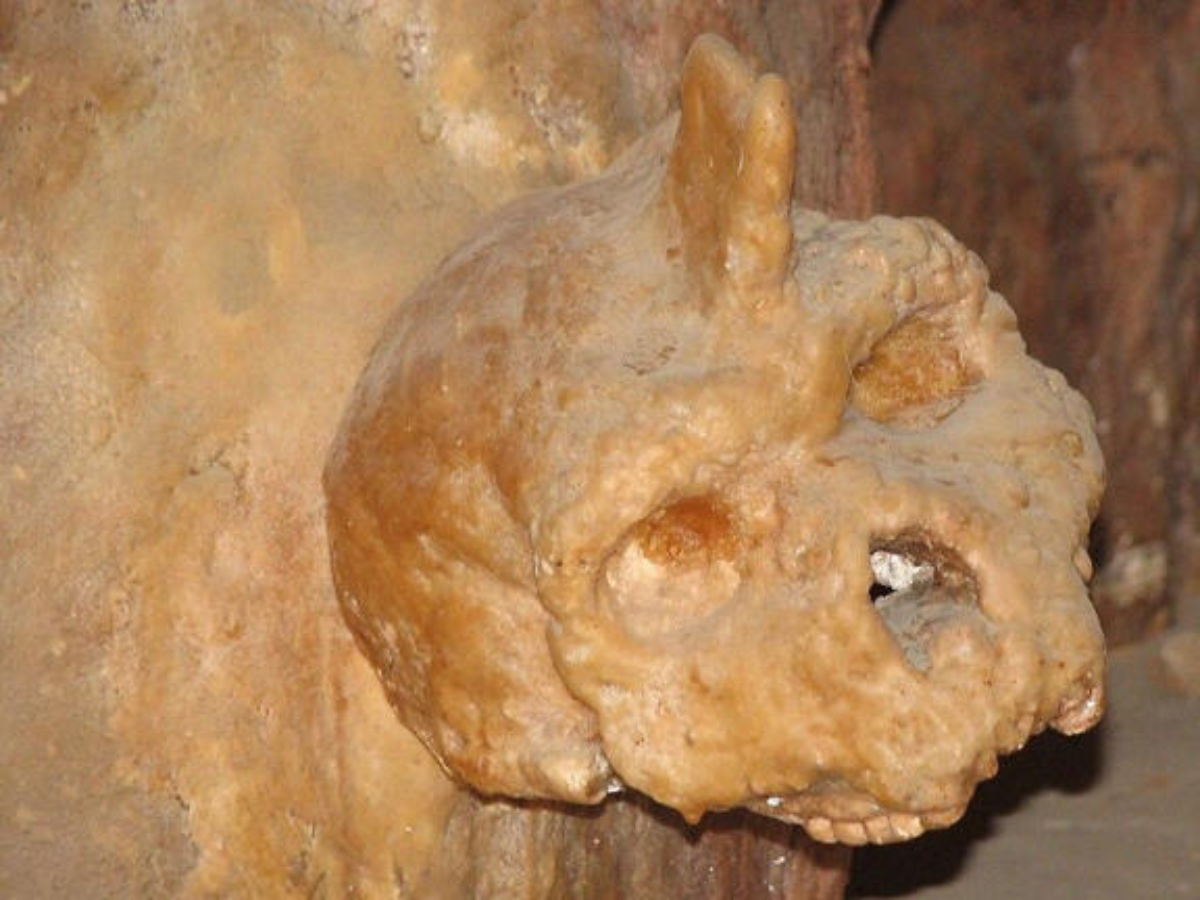
In 1960, a fossil find of rare quality lit up all Europe. A human like skull was discovered embedded in the walls of Petralona Cave in northern Greece at a distance of about 50 kilometers from Thessaloniki. This cranium, later dubbed “Petralona man,” quickly came to be one of the hottest contested finds in anthropology. For decades, experts have labored to unravel considerable mystery regarding age and the species for which estimates varied from 170,000 years to 700,000 years.
Modern dating of the Skull by Science
The time ensuring mystery broke when scientists carried out uranium thorium dating of the fossilized skull scope, a very precise process that utilizes deposits of calcite along the specimen and which revealed that the skull is around 286,000 years old. This result shows that the individual lived during the Middle Pleistocene and during a period that many human ancestors were evolving in parallel.
Journal of Human Evolution appropriate information states, “This implies that the Petralona skull belonged to Homo heidelbergensis, a species that is considered to be the common ancestor of both Neanderthals and modern humans.
ALSO READ: CO2 Rich Planet Birth Disk Detected 5,545 Light Years Away by NASA’s James Webb Telescope
Distinct Lineage of Human Evolution
The highly robust morphology and sturdy build of the skull indicate male adult status. It further postulates a population that lived in Europe with rising Neanderthals but was less advanced than Neanderthals or Homo sapiens and the Petralona man represented a more primitive population that nonetheless shared the European landscape with emerging Neanderthal groups.
Findings such as the one discussed above were such preliminary revelations on how several lineages of humans interacted under one existence before modern humans came to prominence. Remarkably, the fossil has very close similarities to the Kabwe skull, found in Zambia, which is also attributed to Homo heidelbergensis and dated to almost the same period as this one.
ALSO READ: Concorde 001 Creates History: 74 Minute Longest Solar Eclipse Captured at 2,500 km/h
Importance of the Petralona Cave
Petralona Cave is highly important on both geological and historical grounds. Formed in limestone during the Upper Jurassic, this cave exhibits an extensive karstic network that stretches for hundreds of meters. Besides the celebrated skull, the cave has provided fossil remains from prehistoric animals, making it a prized possession for both geologists and anthropologists.
This modern rediscovery that illuminates the skull’s identity is a fine example of how modern techniques will resolve scientific contentions deemed solvable. It deepens the appreciation of humanity’s long evolutionary journey.
ALSO READ: Alyssa Carson: The Girl Who Wanted to Go to Mars but Will Never Return to Earth