
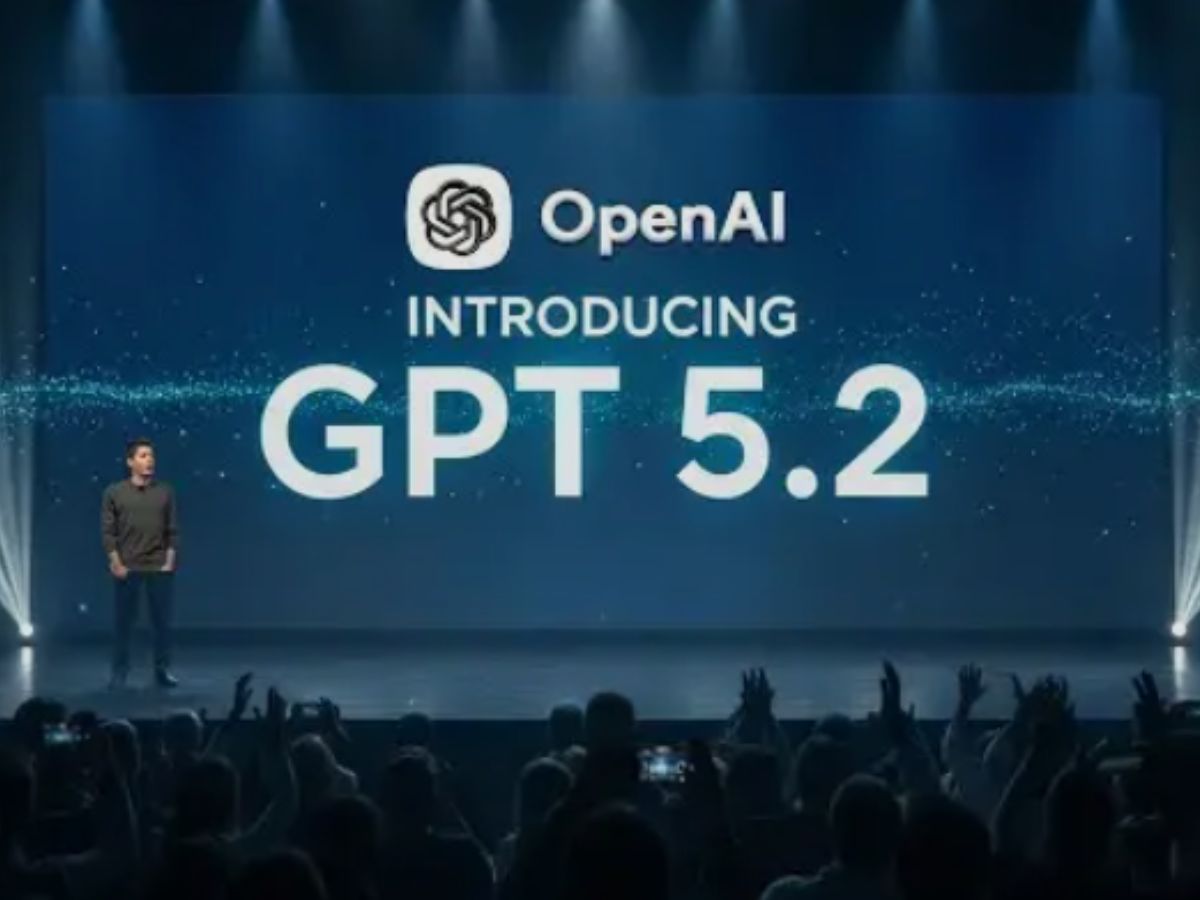
The AI competition between tech giants has entered a new phase with OpenAI’s launch of its GPT-5.2 model on Thursday. The release comes after CEO Sam Altman reportedly declared an internal “code red” earlier in December, pausing non-essential projects to accelerate development and directly counter the advances of Google’s recently launched Gemini 3, as OpenAI also secures a landmark $1 billion investment from Disney.
What Prompted the “Code Red” and Launch?
The rapid development cycle was triggered by Google’s November unveiling of Gemini 3, which claimed top positions on several industry performance benchmarks.Reports say Altman ordered teams to shift their focus immediately, creating a “code red” mood inside OpenAI to speed up the release of its next model.
Even with rising competition, Altman played down Gemini 3’s effect in a CNBC interview, saying it impacted OpenAI’s metrics less than expected. The GPT-5.2 launch is OpenAI’s move to regain its edge and user momentum.
Also Read: Gambling Tax Relief? Fight Continues as Trump Mulls End to Federal Tax on Gambling Wins
What Are the Key Improvements in GPT-5.2?
OpenAI says GPT-5.2 delivers major improvements in several important areas, with an emphasis on real-world, cost-effective use. The main upgrades include:
- Improved General Intelligence: Better reasoning and problem-solving across a wider range of tasks.
- Enhanced Coding Capabilities: More advanced and reliable code generation and debugging.
- Superior Long-Context Understanding: Stronger capacity to handle, retain, and think through very long documents or conversations.
- Boosted Productivity Tools: The model is explicitly better at creating spreadsheets, building presentations, and handling complex, multi-step projects, aiming to deliver more direct economic value to business and professional users.
What is the Disney Connection?
At the same time, Disney announced a $1 billion investment in OpenAI and agreed to let OpenAI use its major characters—like those from Star Wars, Pixar, and Marvel—in the Sora AI video tool. This partnership signals a massive push into AI-generated entertainment and content creation, potentially allowing users to create custom videos featuring iconic characters and opening new frontiers (and debates) in media production.
Your Questions Answered: GPT-5.2 Launch FAQs
Q: Will older GPT models be discontinued?
A: No. According to OpenAI, GPT-5.1, GPT-5, and GPT-4.1 will continue on the API, showing a strategy of offering multiple models for different needs and costs.
Q: When and how can I access GPT-5.2?
A: The rollout started Thursday, December 11, 2025. GPT-5.2 Instant, Thinking, and Pro versions will first be offered to paid ChatGPT users, such as Plus, Team, and Enterprise plans. Free-tier access usually comes later.
Q: How does the Disney deal change the AI landscape?
A: It’s a breakthrough for creative and entertainment AI. It gives OpenAI access to unique IP, a major new revenue source, and a strong corporate partner, while also sparking questions about copyright, creative control, and the future of human-driven animation and film.
Q: Is the AI “arms race” heating up?
A: Absolutely. The “code red” response and accelerated launch cycle demonstrate that competition is now the primary driver of innovation pace. While users see rapid advancements, AI development is increasingly controlled by a few large companies, raising questions about market concentration and prioritizing commercial gains over ethics and safety.