Nuclear powered rockets is once confined to Cold War laboratories and science fiction, are moving closer to real-world use with the first in space test of a nuclear thermal propulsion engine planned for 2026, space agencies are weighing promise against risk.
Faster journeys, heavier payloads and more flexible missions are on the table, but so are concerns about safety, radiation and nuclear responsibility.
The Department of Energy and NASA made it official.
Nuclear Thermal Propulsion is no longer a science project.
This is the moment chemical rockets start looking like steam engines.
Nuclear Thermal Propulsion doesn’t burn fuel.
It cheats physics the old-fashioned way.
Liquid… pic.twitter.com/H5uaMVxxxh
— ICR’s News Source Center (@icresource) January 2, 2026
What is the Nuclear Thermal Propulsion
Nuclear thermal propulsion or NTP, replaces chemical fire with nuclear heat. Instead of burning fuel, these engines use a compact nuclear reactor to heat liquid hydrogen. The superheated hydrogen rushes out of a nozzle and producing thrust.
The physics is straightforward, but the engineering is not. Inside the engine, uranium atoms split, releasing immense heat that pushes materials to their limits.
Why Nuclear Rockets Attract Attention
The appeal of NTP lies in efficiency Nuclear thermal engines can deliver nearly twice the performance of today’s best chemical rockets. That means spacecraft can travel farther with less fuel or carry more equipment on the same mission. Hydrogen, being extremely light, accelerates quickly and makes this efficiency possible. For deep-space exploration, that difference matters.
How Nuclear Engines Would Be Used Safely
Nuclear rockets would never launch directly from Earth using reactor power. The plan is a two-step approach. A conventional rocket lifts the spacecraft into orbit. Only after reaching space does the nuclear engine switch on.
ALSO READ: Baba Vanga 2026 Predictions: World War 3, AI Dominance & Aliens Contact | Everything You Need to Know
This method is designed to limit the risk of nuclear material being involved in a launch accident, though critics argue no system is entirely risk free.
What NTP Means for Mars Missions
Mars is where nuclear propulsion could make its biggest impact. NTP could cut travel time by roughly a quarter, reducing astronaut exposure to cosmic radiation and long stretches of weightlessness. The technology also allows more flexible launch windows, easing mission planning. In emergencies, higher performance could even help crews return home faster.
NASA, DARPA & 2026 Test
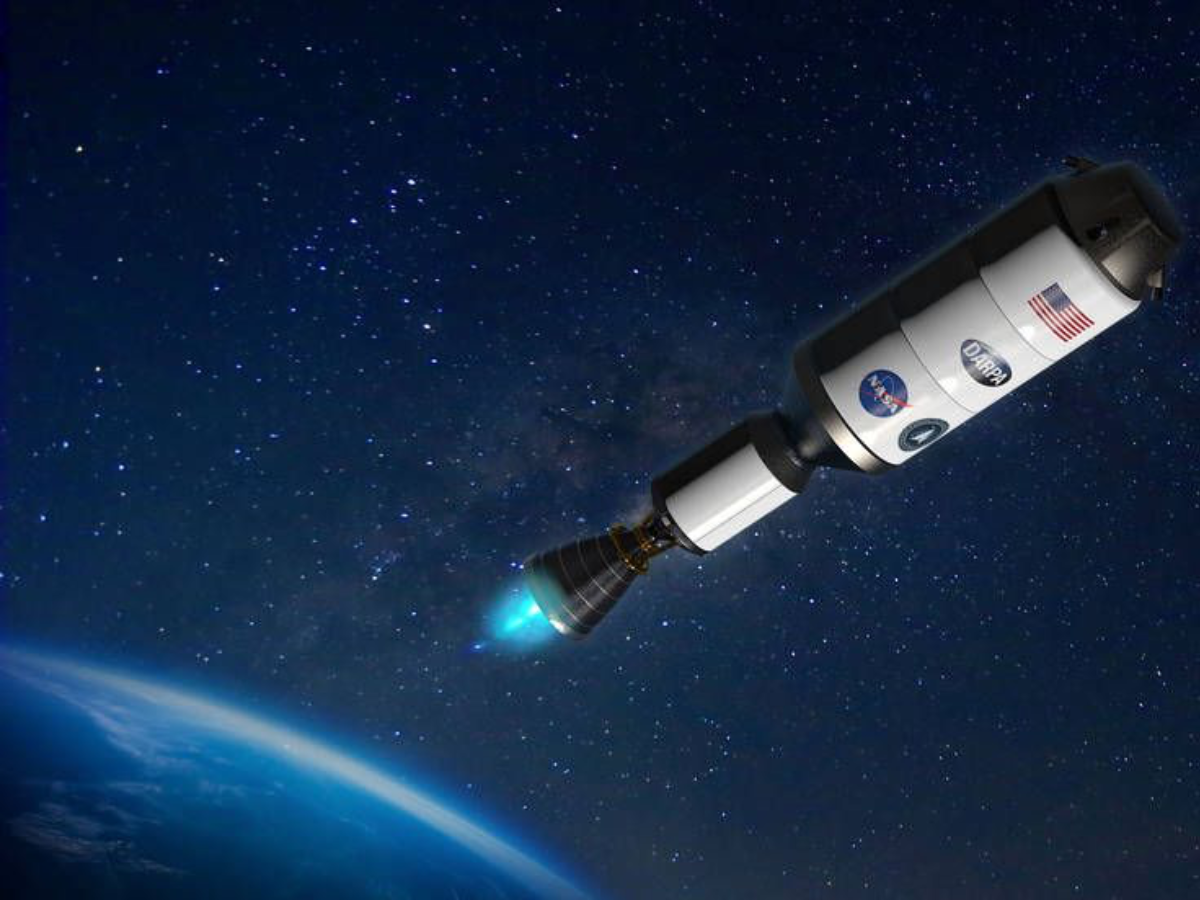
The most concrete progress is coming from the United States. NASA and DARPA are jointly developing the DRACO mission, short for Demonstration Rocket for Agile Cislunar Operations. The goal is to activate a nuclear thermal engine in Earth orbit, possibly in early 2026. Lockheed Martin is building the spacecraft, while BWX Technologies is handling the reactor with a successful test would mark a historic first.
ALSO READ: What is a Supermoon? Full List of 2026 Supermoon Dates & Everything You Should Know
Nuclear Thermal Engines: Global Efforts Beyond the US
Elsewhere, progress is slower but steady. India’s ISRO is researching nuclear power systems that could support propulsion in the future, though a full NTP rocket remains years away. In the UK, companies like Pulsar Fusion are exploring nuclear fusion propulsion is a more powerful but far less mature alternative for now, fission based NTP leads the race.
Nuclear Thermal Engines Politics & Future
Nuclear rockets come with serious challenges. Using uranium raises security and proliferation concerns, prompting efforts to rely on low-enriched fuel. Radiation shielding, reactor orientation and robust fuel design are critical safety measures.
Beyond engineering, political approval, environmental regulation and international trust may prove just as difficult. The 2026 test will not settle every question, but it will reveal whether nuclear propulsion is ready to leave theory behind.
ALSO READ: What is the Wolf Supermoon? Everything You Need to Know About 2026’s First Full Moon
Disclaimer: This article discusses ongoing research and proposed technologies and does not imply guaranteed outcomes or operational deployment timelines.