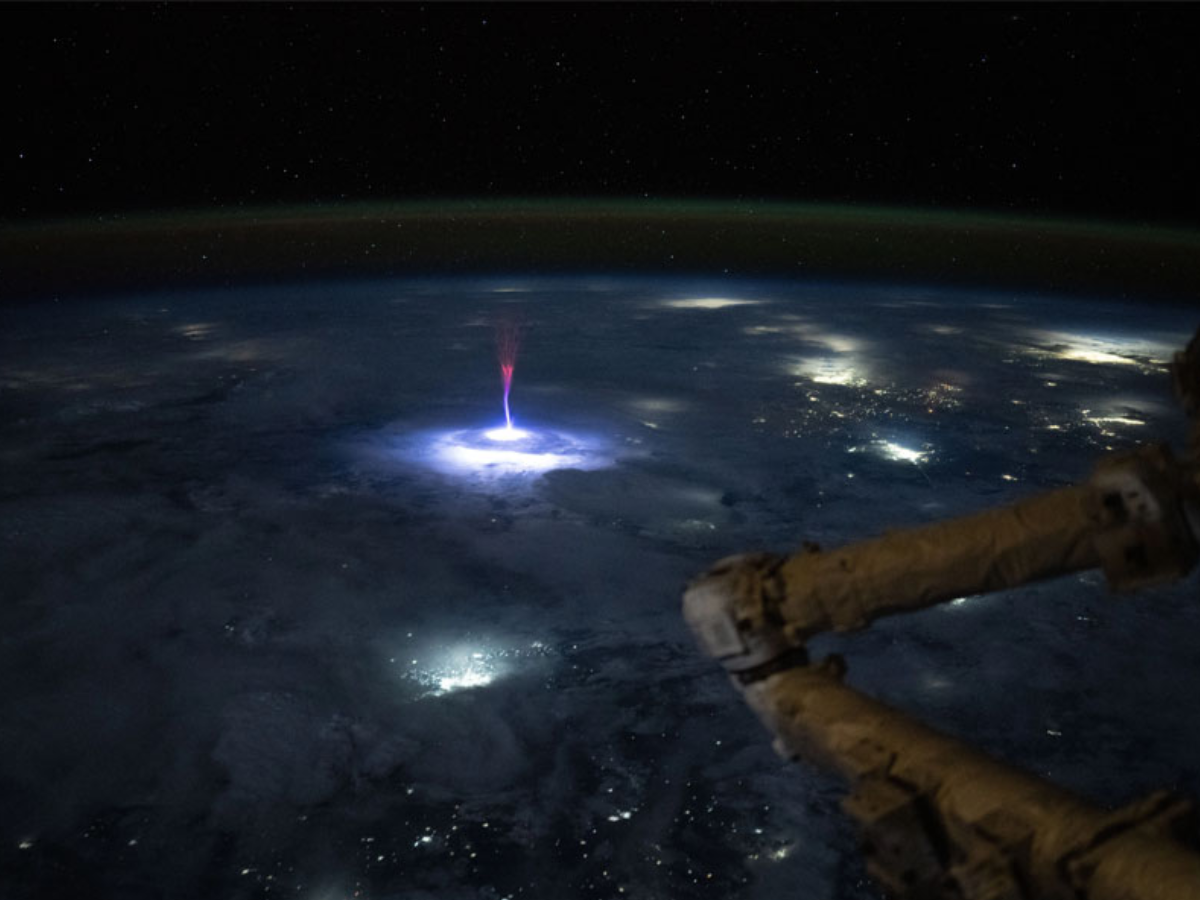
The gigantic jet lightning phenomenon is an increasingly common phenomenon of powerful electric shooting from thundercloud into the upper atmosphere. Scientists have not disappeared with it because of its vivid colors and even the illegitimate and mysterious accession.
What is a Gigantic Jet Lightning?
Gigantic jet lightning is a spectacular and unusual type of discharge from thunderstorms that culminates high up into the atmosphere and specifically into the ionosphere. Gigantic jets are distinguished from the more familiar bolting, which occurs between clouds or from clouds to the ground but arcs above the storm cloud, shooting from 50 to 90 schools or roughly 31 to 56 miles above the storms.
Still more recent in discovery about 25 years, gigantic jets are perhaps one of the most mysterious phenomena in atmospheric sciences behavior and source exploration remains ongoing in their investigation.
ALSO READ: Zone of Silence: Inside Mexico’s Mysterious Place Where Technology Fails
What Makes Gigantic Jets Unique?
Gigantic jets are extreme vertical height and their vibrant colors. Not only they travel downward to Earth they jet upward, spanning the distance between the thunderstorm and space in a brilliant display. The sheer monumental size, intense brightness and speed distinguish them from their lightning cousins.
While regular lightning flickers erratically in the storm, gigantic jets appear as slender and sharply focused columns of electric discharge. Their stark red, white and blue hues add to their distinction and provides scientists with clues about their composition and the processes within those bolts.
Who Discovered Gigantic Jets?
The first observations of gigantic jets were officially recorded in the late 20th century. The phenomenon had been hypothesized earlier but the actual visible confirmation came much later advances in imaging lightning and satellite observations.
Astronauts on board the International Space Station have captured the clearest and most dramatic of these shows, thereby verifying their existence and collecting data. Astronaut Nicole Ayers saw a gigantic jet in early July providing for a great visualization as lightning’s multicolored strokes streaked across the background of Earth’s atmospheric glow.
Why Are Scientists Interested in Gigantic Jets?
Gigantic jets are of interest to scientists because they form an important piece of the giant puzzle that deals with the upper atmosphere and electric environment of the Earth. They belong to a larger category of Transient Luminous Events (TLEs) transitory bursts of light occurring above thunderstorms, including but not limited to red sprites and blue jets.
ALSO READ: Science Behind Rainbows: Are They Disappearing from India | Complete Guide
Studying these events might yield a better understanding of the effects of thunderstorms on atmospheric chemistry, energy transfer and even on global electrical circuits. Gigantic jets could be harnessed to improve weather and climate forecasting models thus enriching weather and climate predictions.
Why Do They Glow Red, White and Blue?
The bright colors that arise in gigantic jets are produced because the discharges have interacted with the very different layers of the atmosphere. The red glow is most commonly due to the excitation of nitrogen molecules at lower altitudes in the ionosphere through the action of the discharge current. Blue and white streaks result from the ionization of other gases at various higher altitudes in the atmosphere.
This color spectrum provides very important information to scientists regarding the electrical properties and altitude at which jets occur. Analysis of these colors will enable researchers to infer the physical conditions and manifestations taking place during these amazing spectacles.
They can Affect Communications or Weather Forecasts?
Gigantic jets reach well into the ionosphere and the region most important for radio wave propagation, research is being conducted to determine whether these events might interfere with communication systems. The ionosphere disturbances possibly produced by jets might cause devastation to the signals of GPS, radio and satellite communications.
Their understanding relative to weather systems may improve storm monitoring and forecasting models. The specific unknowns involving the effects of gigantic jets on weather forecasting and telecommunications will be fully assessed through ongoing investigations.
ALSO READ: Life of a Comet: What Makes Comets Light Up Our Night Skies From the Kuiper Belt to Earth’s View