
NASA plans to launch its ESCAPADE (Escape and Plasma Acceleration and Dynamics Explorers) mission on November 10 from Cape Canaveral Space Force Station, Florida.
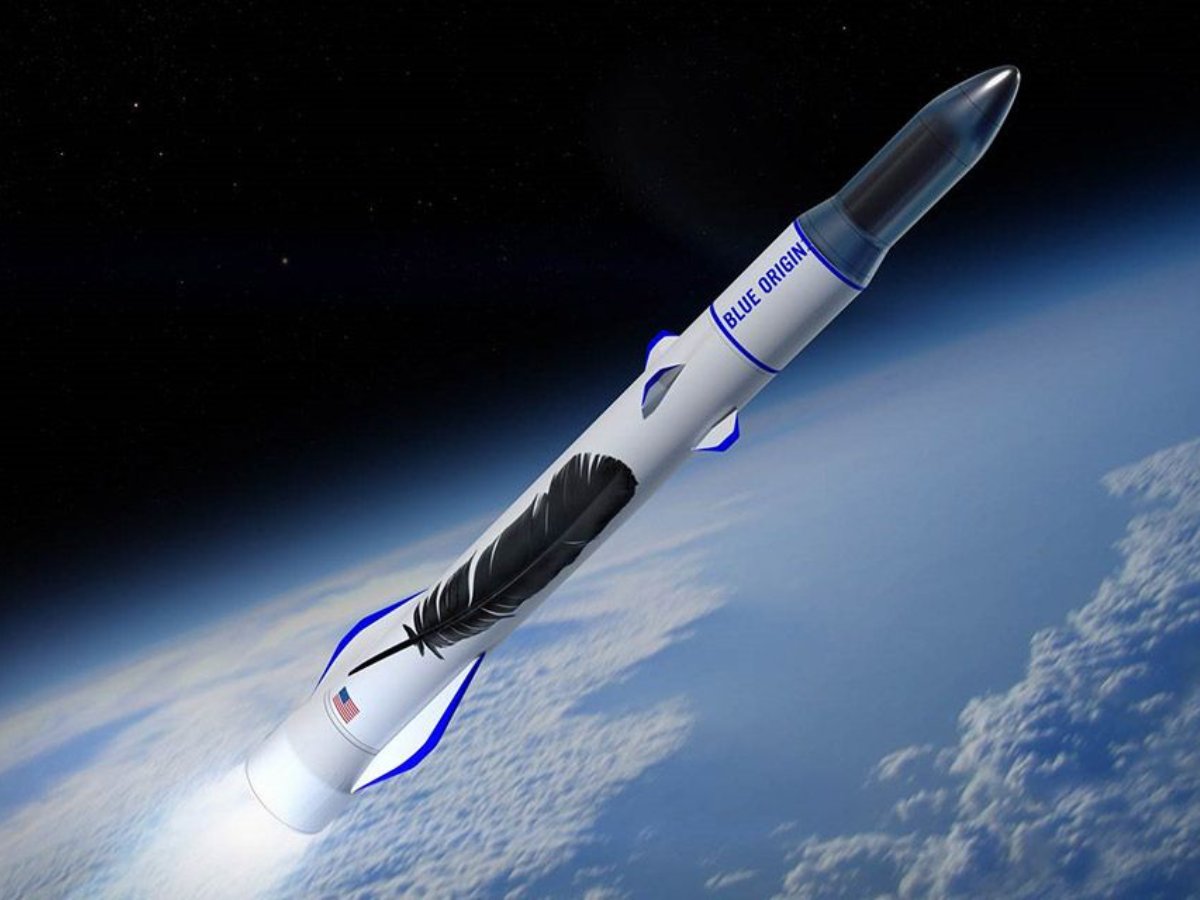
It will be hoisted aloft aboard Blue Origin’s powerful New Glenn rocket to start a new era of exploration at Mars. The dual-spacecraft mission, scheduled for launch at 1:15 am IST Monday, will help scientists learn how Mars lost its atmosphere.
What is NASA’s ESCAPADE mission?
Composed of two identical spacecraft aptly named Blue and Gold, ESCAPADE is designed to study the magnetosphere of the Red Planet and track the gradual escape of atmospheric particles into space. In so doing, it will help scientists piece together how Mars transitioned from a once warmer and world to the barren desert it is today.
ALSO READ: James Watson Dies at 97: The Nobel Laureate Who Discovered DNA’s Double Helix
The mission employs a unique launch and loiter approach, sending the spacecraft first to the Earth-Sun Lagrange Point 2 as a stable gravitational zone 1.5 million kilometers away before making its way to Mars in 2026.
Journey to Mars: A Two-Year Cruise
The twin probes having left L2, will arrive in Martian orbit by 2027. Flying in tandem will study Mars magnetic interactions and mechanisms of atmospheric escape, giving scientists a dynamic, two-point view of Mars space weather.
The findings from this mission will be used to model how the solar wind influences the Martian atmosphere. This is part of NASA’s SIMPLEx program which seeks to achieve ambitious science with smaller, less expensive spacecraft.
ALSO READ: Golden Comet C/2025 K1 (ATLAS) Defies the Sun & Dazzles Astronomers
Blue Origin’s New Glenn Rocket: A Second Big Test
For Blue Origin, this flight is not just a launch and it’s a technological showcase. The New Glenn rocket stands at 321 feet tall and is designed to carry heavy payloads to orbit and return home for reusability.
In fact, it will square off directly against SpaceX’s Falcon Heavy. This will be the second flight of New Glenn, as the company attempts once again to land the first-stage booster on its recovery ship, Jacklyn, stationed in the Atlantic. A recovered booster would be a milestone towards sustainable commercial spaceflight.
A New Chapter in Space Collaboration
ESCAPADE is more than a scientific mission; it’s a symbol of increasing collaboration between NASA and private industry. The mission underlines a future wherein government and commercial partners in deep space exploration come together, merging NASA’s scientific know-how with Blue Origin’s engineering ingenuity.
If successful, ESCAPADE will unlock secrets of Mars atmosphere and also help pave the way for a more cost-effective and reusable mission across the solar system.
ALSO READ: ISRO Announces Mars Landing Mission: Mangalyaan-2 to Launch in 2030
Disclaimer: This article is based on verified NASA and Blue Origin reports. Timings and mission details are accurate as per official announcements.