
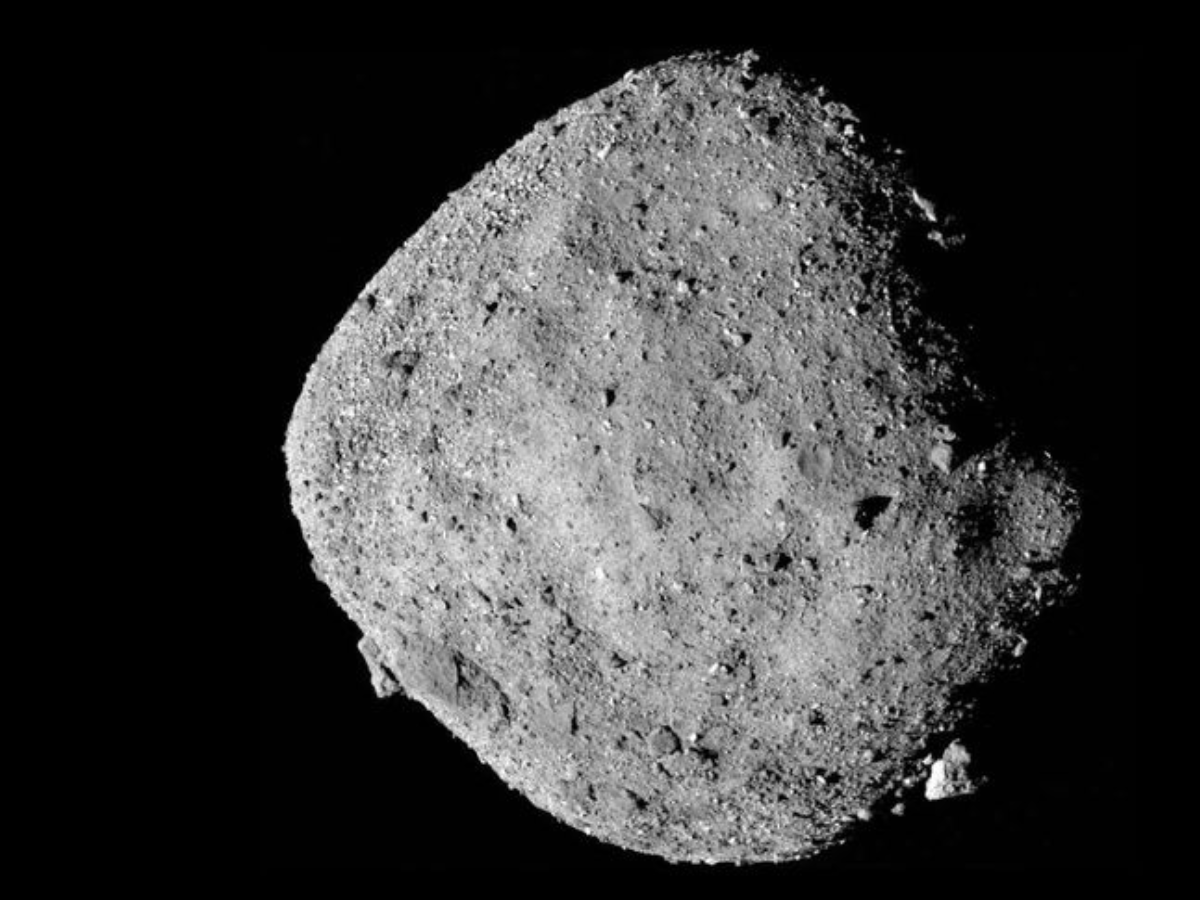
The history of our solar system is kept in cosmic dust and a small asteroid named Bennu was able to preserve this history for some billions of years.
Tiny particles that were collected from Bennu are providing scientists with extraordinary insights on the processes of star and planet formation and far back in time even before our Sun existed.
What Are the Samples from Bennu Hiding?
In 2020, through a precision touch and go operation NASA’s OSIRIS-REx mission had successfully taken samples from Bennu. Those precious materials contain primordial stardust, complex organic molecules from interstellar space and minerals synthesized within Bennu’s progenitor body from interactions with water and heat.
Approximately 80% of Bennu is made from minerals formed when cosmic dust met liquid water, which preserved chemical signatures from long extinct stars. Grains of this asteroid are a key testament to an early cosmic environment and the mechanisms that gave birth to planets.
ALSO READ: Who is Amit Kshatriya? NASA’s Associate Administrator and COO Shaping Space Missions
Age and Composition: Grains Older Than the Sun
Recent publications in prestigious scientific journals such as Nature Astronomy and Nature Geoscience confirm that some of the dust particles from Bennu date back to before the existence of our Sun. Presolar grains are extremely tiny most less than a micrometer and they can only be recognized through their unique chemical signatures.
According to Pierre Haenecour of the University of Arizona who studied these particles, Bennu is like a time capsule that stores the earliest materials ever laid down since the beginning of the solar system. Some of these grains survived the tremendous impact-induced grinding that broke apart the parent asteroid of Bennu millions of years ago and thus provides a view into an ancient cosmic past.
What are Barren Surface Features Revealing Asteroid Evolution?
The barren surface of Bennu relates a graphic tale of space weathering induced by incessant solar winds and micrometeorite bombardment. Bennu’s outermost layer Lindsay Keller of NASA’s Johnson Space Center explains, has perhaps been exposed to cosmic radiation for a max of 7 million years, a factor responsible for producing small-scale craters and melted rock formations.
ALSO READ: September 2025 Eclipse: What to Know About the Rare Lunar and Solar Eclipses Coming
When compared to Ryugu samples obtained through Japan’s Hayabusa 2 mission, they have a clearer view of the impact processes that may be significantly altering surface features on asteroids than we previously thought.
Why The Discovery of Bennu Is a Breakthrough?
While meteorites that fall to Earth give us a small context of cosmic history and they seldom preserve a complete context. These wild samples of OSIRIS-REx were carefully measuring the environment of Bennu for over a year before it began collecting samples, a crucial environmental context that enhances the scientific interpretation.
Jessica Barnes of the University of Arizona emphasized that without sample return from bodies in space there is almost no universal way to piece together our origins. The dust inside Bennu is much more than just debris and it is a record of star formation, collisions in space and memory of the universe.
ALSO READ: Chandra Grahan 2025: Rituals, Timings & Precautions for the Final Eclipse of the Year