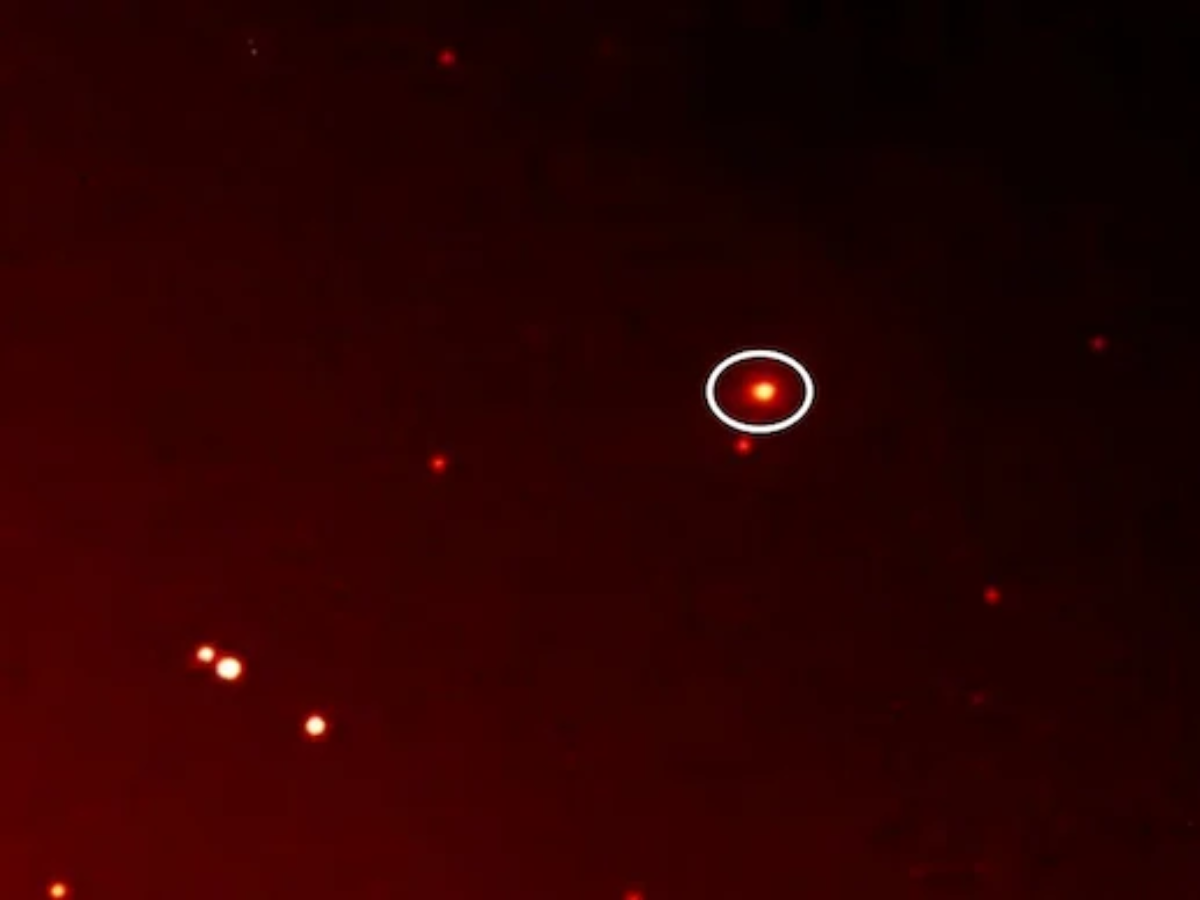
Following the recent US government shutdown with normal operations resuming, it was time for Nasa to shift its attention to this interstellar visitor that has already caused intrigue globally.
For the first time, the space agency will present new images and close-up observations of comet 3I/ATLAS is an important milestone for researchers who study such visitors that come from far beyond our cosmic backyard. A live briefing at the Goddard Space Flight Center on November 20 will showcase never before seen visuals and fresh scientific insights garnered by several missions.
Why 3I/ATLAS Matters
3I/ATLAS was discovered on July 1 by the ATLAS survey in Hawaii and rapidly gained attention as only the third confirmed interstellar object to enter our solar system. It follows on from the now-famous pair 1I/’Oumuamua and 2I/Borisov.
Early observations show that it behaves like a highly active comet, throwing off gas and dust as sunlight warms its surface. Even so, its rapid spin and striking brightness have inspired wild online theories with some speculating that it might be artificial.
ALSO READ: How the Sun Escaped Its Birth Cluster: New Clues from the Solar System’s Edge
Scientists at Nasa have dismissed these claims, pointing out that its motion, speed and chemical signatures align with natural bodies from deep space.
A Safe but Scientific Close Encounter
The path of this comet gives researchers an unusual opportunity. It flew about 19 million miles from Mars in October and will drift within 170 million miles of Earth, a safe distance but close enough for clear, precise observations.
Its hyperbolic orbit confirms it is not bound to our Sun and will never return, which raises the value of every scrap of data collected during its short visit.
ALSO READ: Who Is Vikram ‘Vik’ Bajaj? The MIT Scientist Now Leading Project Prometheus With Jeff Bezos
What Scientists Hope to Learn
But what really makes this comet of particular interest to researchers is its composition. Interstellar material offers a direct glimpse at the building blocks that formed around other stars, making these objects invaluable in understanding how planetary systems take shape.
High-resolution imagery and spectral readings provided by the James Webb Space Telescope, the Hubble Space Telescope and ground-based facilities are expected to reveal details of 3I/ATLAS’s surface chemistry, its dust production and the behavior of its coma as it moves past the Sun.
A Rare Chance to Study Another Star’s Debris
As the anticipation mounts, to scientists, 3I/ATLAS is more than a curiosity and it is a fragment of another system altogether that has traveled through space for millions or billions of years before crossing paths with our own.
Indeed, new images released over the coming days will likely our understanding of how such objects evolve and may answer many of the remaining questions regarding the origins of material emanating from outside our solar system.
ALSO READ: What Caused the Cloudflare Outage? Why X, ChatGPT & Other Top Websites Went Down Today
Disclaimer: This article is based on current scientific information and upcoming NASA disclosures. Findings may evolve as new data and analyses become available.