
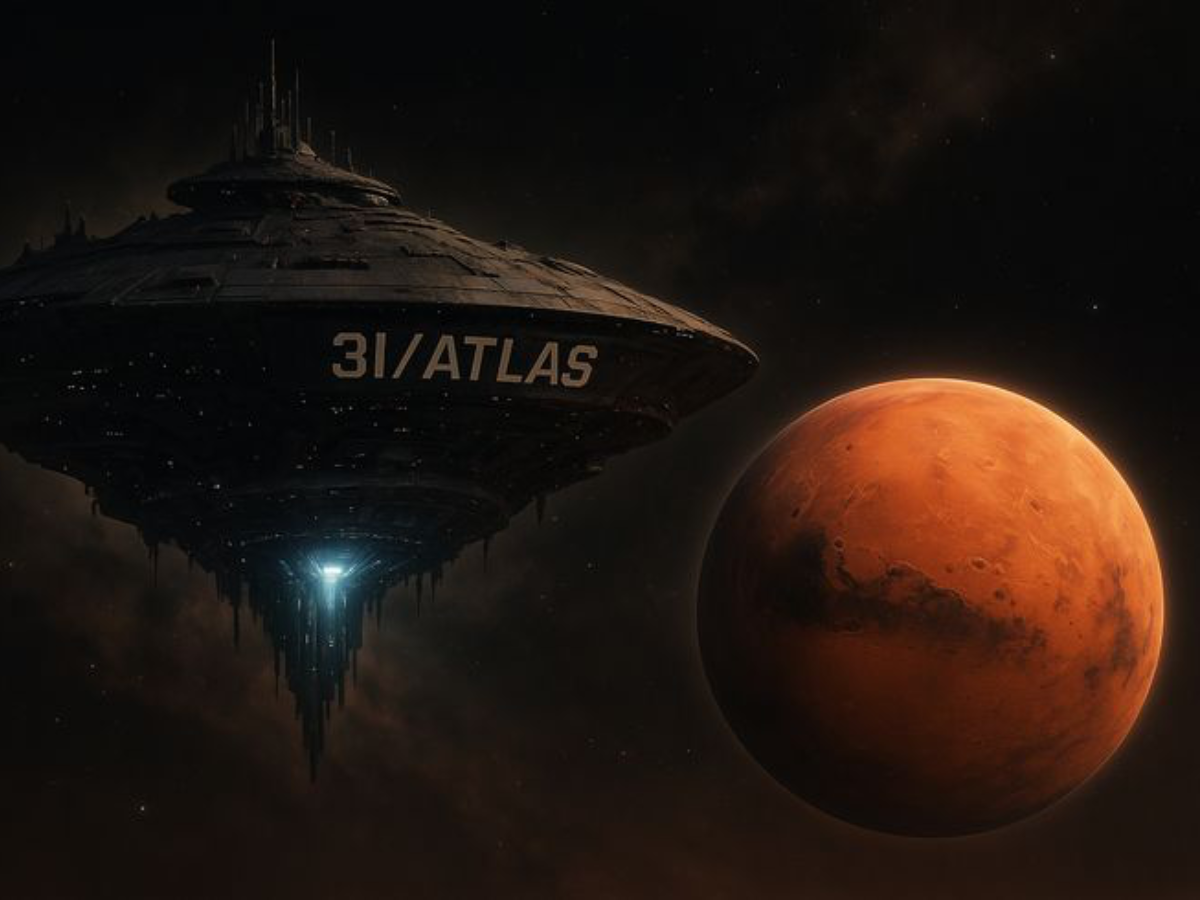
A growing storm is brewing in the scientific community over NASA’s silence regarding 3I/ATLAS, an interstellar comet currently passing through our solar system. The agency’s lack of data release has triggered criticism from astronomers and lawmakers raising questions about transparency, bureaucracy and the public’s right to information with the comet edging closer to visibility from Earth, the pressure increases on NASA to disclose its observations before this rare visitor disappears forever.
How is the Demand for Data: Avi Loeb
Harvard astrophysicist Avi Loeb has been among the most outspoken critics of NASA’s secrecy. He says that holding on to data regarding 3I/ATLAS undermines scientific progress and wastes precious time that could be used in data analysis of its properties. Loeb thinks early access to the data could help researchers uncover crucial insights into how such interstellar objects form and interact with our solar system.
ALSO READ: Earth Has a New Cosmic Partner: Meet Quasi-Moon Arjuna 2025 PN7
Adding more political weight to the matter, Congresswoman Anna Paulina Luna wrote an official letter to Acting NASA Administrator Sean Duffy on October 31. She urged the agency to disclose all images captured by the Mars Reconnaissance Orbiter and the Perseverance rover during the comet’s close flyby on October 2–3. Luna underlined the fact that such data are crucial to furthering humankind’s understanding of interstellar phenomena.
What NASA Is Not Saying
Despite repeated calls, so far NASA has not released any official imagery or data from the MRO or the rover. The only confirmed picture of 3I/ATLAS near Mars came from the European Space Agency.
That secretiveness has helped feed online speculation and frustration among scientists eager to study this unprecedented event. To many, this is emblematic of a broader issue: how government bureaucracy can slow the pace of discovery in space science.
ALSO READ: Alien Tech or Military Game-Changer? How Quantum Radar Might Spot Stealth Jets & UFOs
How to Spot 3I/ATLAS from Earth
The good news for skywatchers is that 3I/ ATLAS is now visible from Earth. According to astronomers, the comet can be seen near the planet Venus and the bright star Spica in the constellation Virgo with a pair of binoculars or a telescope.
Stargazing apps like SkySafari, Sky Tonight or Stellarium will come in handy in spotting its position. This is a very rare celestial occurrence with the third time that scientists have recorded an interstellar object’s entry into our solar system after the famous Oumuamua in 2017 and Borisov in 2019.
ALSO READ: Who is Jacob Frey? Wife, Career, Net Worth & Vision of Minneapolis Mayor
Disclaimer: This article is based on publicly available reports and expert opinions. It does not represent any official NASA statement or confirmation.