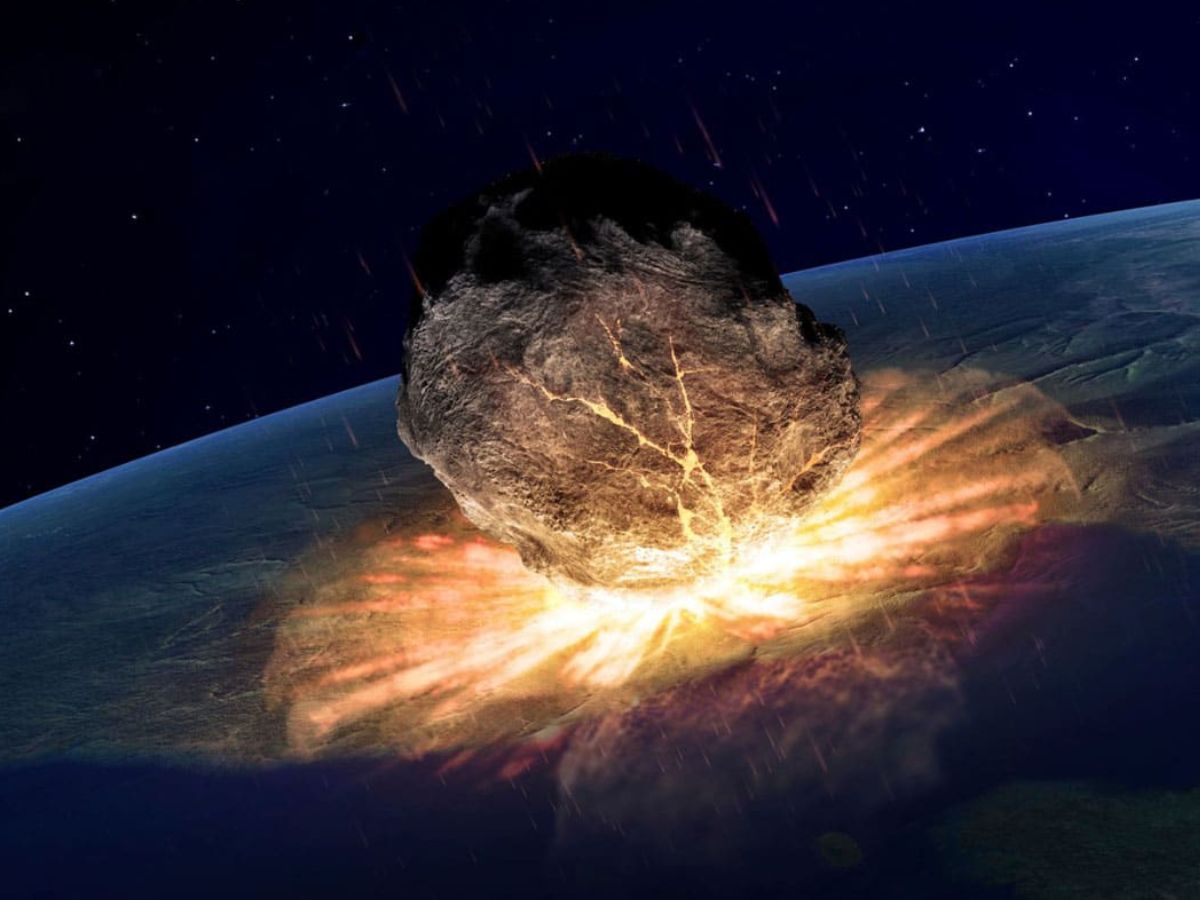
About 80 miles off Yorkshire’s coast, buried deep beneath the North Sea, lies the Silverpit crater. For decades, scientists debated whether it was formed by a dramatic asteroid impact or the slow movement of underground salt deposits. Recent research now confirms the asteroid theory.
Asteroid Strike 43 Million Years Ago
Scientists believe that over 43 million years ago, an asteroid roughly the size of York Minster crashed into the sea, creating the crater. The 160-metre-wide asteroid triggered a 100-metre-high tsunami, a devastating event for early mammals in the area. While significant, it was far smaller than the asteroid that wiped out the dinosaurs 66 million years ago.
Significance of Silverpit
Although much smaller than Mexico’s Chicxulub crater, Silverpit is the only known impact crater near present-day UK waters. Its well-preserved state makes it a vital site for understanding how asteroid impacts have shaped Earth.
New Evidence and Research
Uisdean Nicholson, a sedimentologist from Heriot-Watt University, led the research team. “Getting the proof was definitely an exciting moment,” he said, describing the study as “a needle in the haystack approach.” Using seismic imaging, microscopic rock analysis, and numerical modelling, Nicholson’s team presented the strongest evidence yet for an asteroid origin.
Also Read: Surya Grahan 2025: Timings & Best Places to Watch the Solar Eclipse on 21 September
Discovery and Early Debate
The crater was discovered in 2002 by petroleum geoscientists who noted a two-mile-wide depression surrounded by a 12-mile-wide ring of circular faults—common features of impact craters. Initial reports suggested an asteroid strike, but many scientists disagreed. Prof John Underhill said, “It’s a less glamorous explanation, but that’s what the scientific data is saying.”
In 2009, a Geological Society debate resulted in an 80-20 vote against the impact theory, showing a scientific preference for simpler explanations over spectacular ones.
Rare and Important Crater
Nicholson explained, “Asteroid impacts are thankfully rare, with none recorded in human history. The craters they leave behind are also uncommon, as plate tectonics and erosion erase nearly all evidence. There are about 200 confirmed impact craters on land and only 33 identified beneath the ocean.”
Silverpit’s exceptional preservation offers insight into past asteroid impacts and helps predict potential future collisions. “We can use these findings to understand how asteroid impacts shaped our planet throughout history, as well as predict what could happen should we have an asteroid collision in future,” Nicholson said.