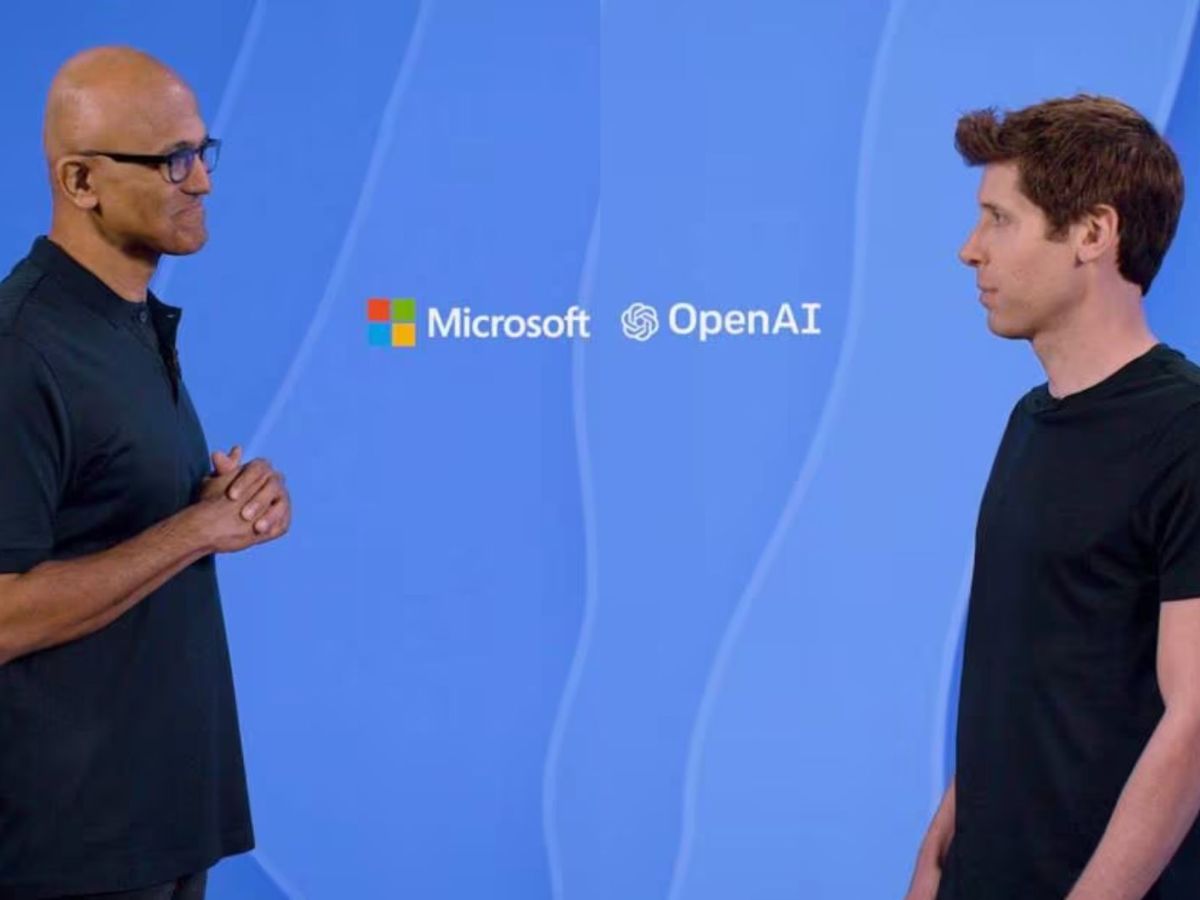
Microsoft has introduced its 2 new AI models, MAI-Voice-1 and MAI-1 and with this, the business enters the very competitive AI race by lessening its reliance on OpenAI.
This decision represents a significant change, as with these models, Microsoft hopes to show that it can compete with industry leaders like OpenAI, Google, and xAI while still producing potent technologies internally.
MAI-Voice-1: Fast & Efficient Audio Generation
MAI-Voice-1 is Microsoft’s new natural speech generation model. The company says it can create one full minute of audio in less than a second. It runs on just a single GPU, making it one of the most efficient speech models in the market.
This model is already part of Microsoft’s Copilot features. It powers Copilot Daily and the new Podcast feature, and the company is also adding it to Copilot Labs. With this step, Microsoft is showing that it wants to make AI more practical and accessible for everyday use.
ALSO READ: Petralona Skull Mystery Solved: 300,000-Year-Old Fossil Confirmed as Hominid After 60 Years
MAI-1 Preview: Foundation Model in Testing
Microsoft has released a large-scale foundation model called MAI-1 Preview in addition to MAI-Voice. It is currently available for public testing on the AI model benchmarking site LMArena. Currently, MAI-1 Preview holds the 13th spot on the leaderboard. This puts it behind advanced models like GPT-5, Gemini 2.5 Pro, DeepSeek R-1, and Grok-3.
The model was trained using 15,000 NVIDIA H100 GPUs. While this is far fewer than the 100,000 GPUs used by some rivals, Microsoft believes smart data selection helped boost performance.
Learning From Open Source
Microsoft AI Chief Mustafa Suleyman explained the company’s strategy. He said, “Increasingly, the art and craft of training models is selecting the perfect data and not wasting any of your flops on unnecessary tokens that didn’t actually teach your model very much.”
ALSO READ: Concorde 001 Creates History: 74 Minute Longest Solar Eclipse Captured at 2,500 km/h
This statement shows how Microsoft is trying to maximize efficiency while keeping costs lower than its competitors. Suleyman also confirmed that Microsoft is already working on the next generation of AI models. These will be trained in massive data centres powered by Nvidia’s new GB200 chips.
Microsoft Carving Its Own Path
For years, Microsoft leaned on OpenAI’s GPT models to power Copilot and other AI products. But with MAI-Voice-1 and MAI-1 Preview, the company is proving that it does not want to stay in OpenAI’s shadow. Instead, it wants to develop its own AI ecosystem, balancing partnership and independence.
Microsoft wrote in a blog post, “We have big ambitions for where we go next. Not only will we pursue further advances here, but we believe that orchestrating a range of specialized models serving different user intents and use cases will unlock immense value. There will be a lot more to come from this team on both fronts in the near future.”
ALSO READ: CO2 Rich Planet Birth Disk Detected 5,545 Light Years Away by NASA’s James Webb Telescope
Future of Microsoft AI
By entering the AI model race, Microsoft is signalling a clear message: it wants to be seen as a leader in AI development rather than only as OpenAI’s backer.
While its models are not yet at the top of the leaderboard, their efficiency and cost-effectiveness give them an edge. If Microsoft succeeds, this move could change the balance of power in the AI industry.