
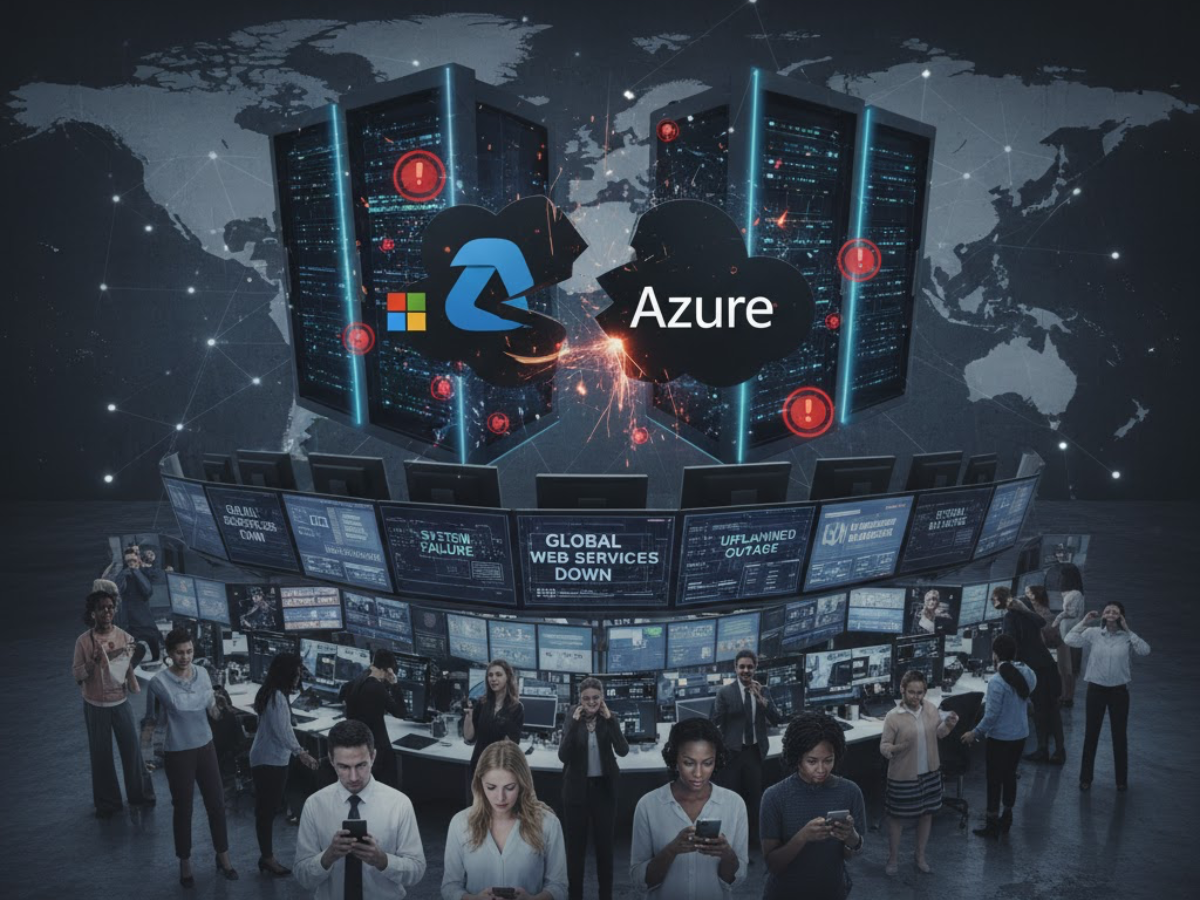
Scarcely a week since Amazon Web Services (AWS) experienced one of the biggest internet outages in living memory, Microsoft’s Azure platform also had its turn, unleashing extensive outages across the web. The double whammy laid bare the vulnerability of the world’s digital backbone with everything from airline systems to social media sites going dark for a moment.
Microsoft’s Azure Glitch Disrupts Key Platforms
On Wednesday, Microsoft 365, Outlook, Minecraft and a number of other Azure-supported services had their users locked out or prevented from loading content. Microsoft later established that a configuration update was responsible for the outage, impacting Azure’s global content delivery network as well as its Front Door service.
ALSO READ: OpenAI Restructures into $500B Public Benefit Corporation Under Microsoft Deal
In a statement on its status page, the firm explained that it was redirecting traffic and reversing the buggy update to return services to operation. Downdetector data revealed more than 18,000 Azure-related issues at the height of the outage, falling to fewer than 5,000 in the afternoon as services gradually returned to operation.
AWS Under New Criticism Following Back-to-Back Outages
The Azure outage was quick on the heels of a significant AWS outage the week before that had brought down Reddit, Snapchat and many e-commerce and banking websites. AWS is the biggest cloud services provider globally underpins a gigantic chunk of the world’s web infrastructure, and the timing of two back-to-back outages has reopened questions of over-reliance on a small group of cloud giants.
Companies & Users Globally Impacted
Dozens of well-known services, such as LinkedIn, Duolingo, Starbucks, Costco and Alaska Airlines were affected by either the Azure or AWS outages. Alaska Airlines confirmed the Microsoft outage had impacted its online reservation system and mobile app on top of previous technical problems that had already resulted in flight delays.
ALSO READ: Aliens Watching Earth? Study Claims 1940s Nuclear Tests to Mysterious Sky Objects
Even users of OpenAI, Facebook and YouTube experienced intermittent issues due to cascading network effects propagating across the internet.
How is the Larger Picture with Dependence & Digital Fragility
These dual disruptions reveal the increasing reliance of global businesses on centralized cloud infrastructure. Although Microsoft and Amazon both had most services up and running in a matter of hours, the disruptions highlighted the way a single settings change can cascade its way through the digital economy. As governments, companies, and individuals rely more on the cloud, resilience rather than innovation will have to be the next big focus.
ALSO READ: Why October 30 Could Be the Most Powerful Day in Decades: Cosmic Alert
Disclaimer: This article is based on publicly available reports and statements. It does not represent official comments from Microsoft or Amazon.