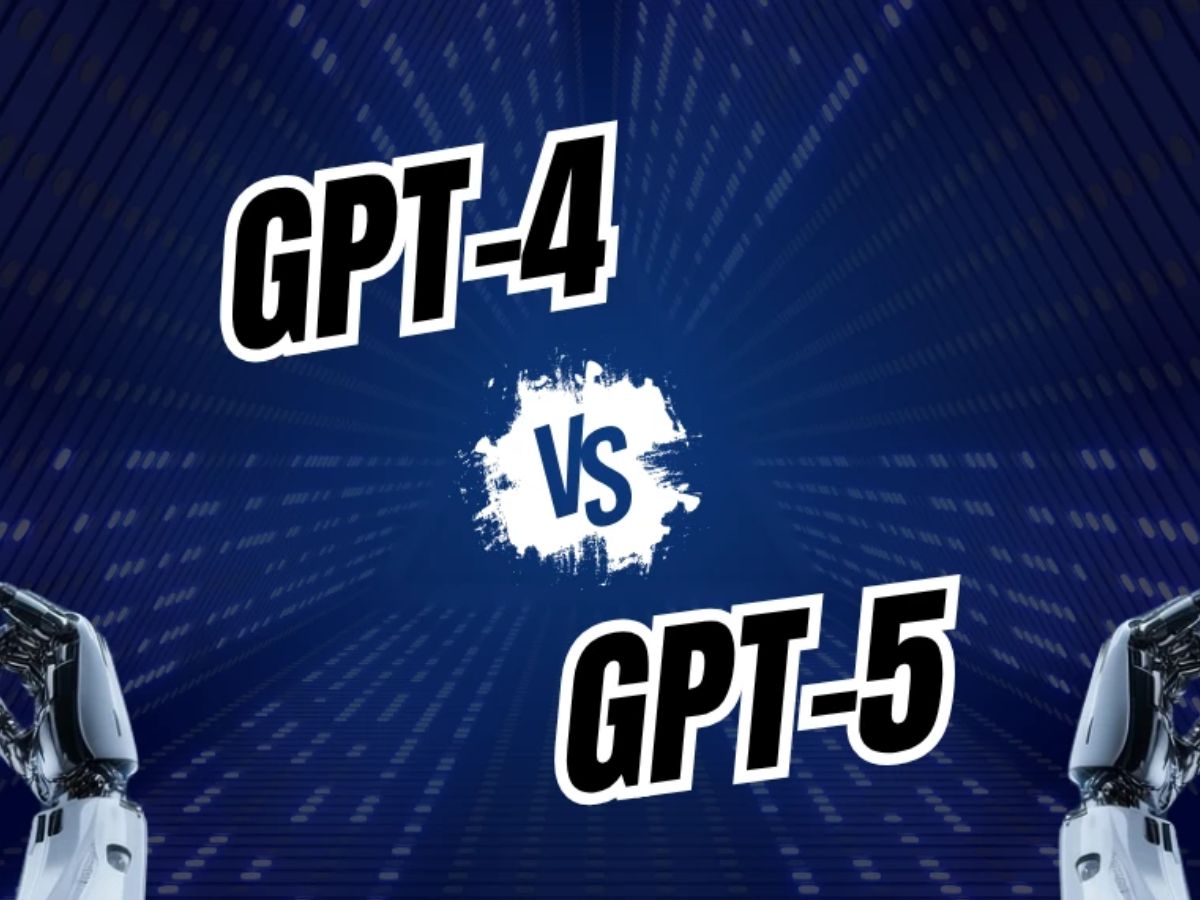
OpenAI has officially rolled out GPT-5, and it’s not just an upgrade, it’s a leap. From enhanced reasoning to tier-wide accessibility, here’s how the new model compares to GPT-4, and what it means for users, developers, and the future of generative AI.
The New AI Brain in Town
After months of speculation and anticipation, OpenAI finally pulled the curtain back on GPT-5 on Thursday, announcing it as the company’s most powerful and advanced AI model to date.
Compared to GPT-4, which previously powered the paid version of ChatGPT, GPT-5 brings a range of meaningful improvements. Most notable is its superior reasoning ability. GPT-5 can “think before speaking,” a design improvement that enables it to internally evaluate context, consider options, and produce more accurate, trustworthy responses, according to personal reports from OpenAI and CNBC.
This cognitive leap means GPT-5 hallucinates less, speculates rarely, and is more upfront about its limitations. That in itself is revolutionary in a future where information produced by AI is used more and more.
What Makes GPT-5 Smarter?
The new model was trained to recognize when tasks are incomplete, and it doesn’t rush to guess. Michelle Pokrass, OpenAI’s post-training lead, told CNBC that the development team emphasized “safe completions”—a technique where the model delivers high-level but secure answers, especially for sensitive or risky queries, without falling back on complete refusal or vague hedging.
Another standout area is performance. GPT-5 is reportedly significantly faster than GPT-4 across the board. Whether it’s writing, coding, tutoring, or even health-related tasks, the model executes with agility. In one live demonstration, GPT-5 built a French-learning web app complete with flashcards and quizzes from just a single prompt—within seconds. The model even offered multiple design themes, underlining its growing design and UX fluency.
Also Read: ChatGPT-5 Launches: OpenAI’s Most Powerful AI Yet
Integrated Powerhouse with Multi-Tool Access
GPT-5’s interface now merges every core OpenAI tool into a seamless experience: users can browse the web, generate images, interact via voice, and use creative tools like Canvas—all within the same environment. In GPT-4, the majority of the tools were dispersed among many features or apps, lacking this synergy.
Moreover, GPT-5 has already been deployed across Microsoft’s suite, including Microsoft 365 Copilot and Azure AI Foundry, deepening OpenAI’s partnership with the tech giant and expanding GPT-5’s enterprise reach.
Pricing Tiers: Free to Pro, and Developers in Between
OpenAI is making a daring step in AI accessibility by making the most recent reasoning-capable model available to free-tier users for the first time. Users on the free plan can use GPT-5 until their usage hits a cap, after which they are downgraded to GPT-5 mini. Plus-tier users benefit from higher usage limits, while Pro-tier users enjoy unrestricted access to GPT-5.
Additionally, OpenAI has made available three performance-graded versions—GPT-5, GPT-5-mini, and GPT-5-nano, through API; each is priced for a particular use case. For developers, the full GPT-5 comes in at $1.25 per million input tokens and $10 per million output tokens. In comparison, the GPT-5 nano version, now one of the cheapest on the market, is just $0.05 per million input tokens and $0.40 per million output tokens. That undercuts competitors like Gemini 2.5 Flash in the race for affordability at scale.
Why This Rollout Matters
Beyond the tech specs and price points, GPT-5 represents OpenAI’s ongoing evolution toward accessible, reliable, and multi-purpose AI. By offering the most advanced reasoning tools to free users while giving developers low-cost, high-speed models, OpenAI is making its ecosystem more inclusive and commercially viable at once.
It’s a shift from closed innovation to open impact, balancing sophistication with safety and capability with cost-efficiency. The arrival of GPT-5 might not just redefine how we interact with chatbots—it may redefine how we build, learn, and create across disciplines.