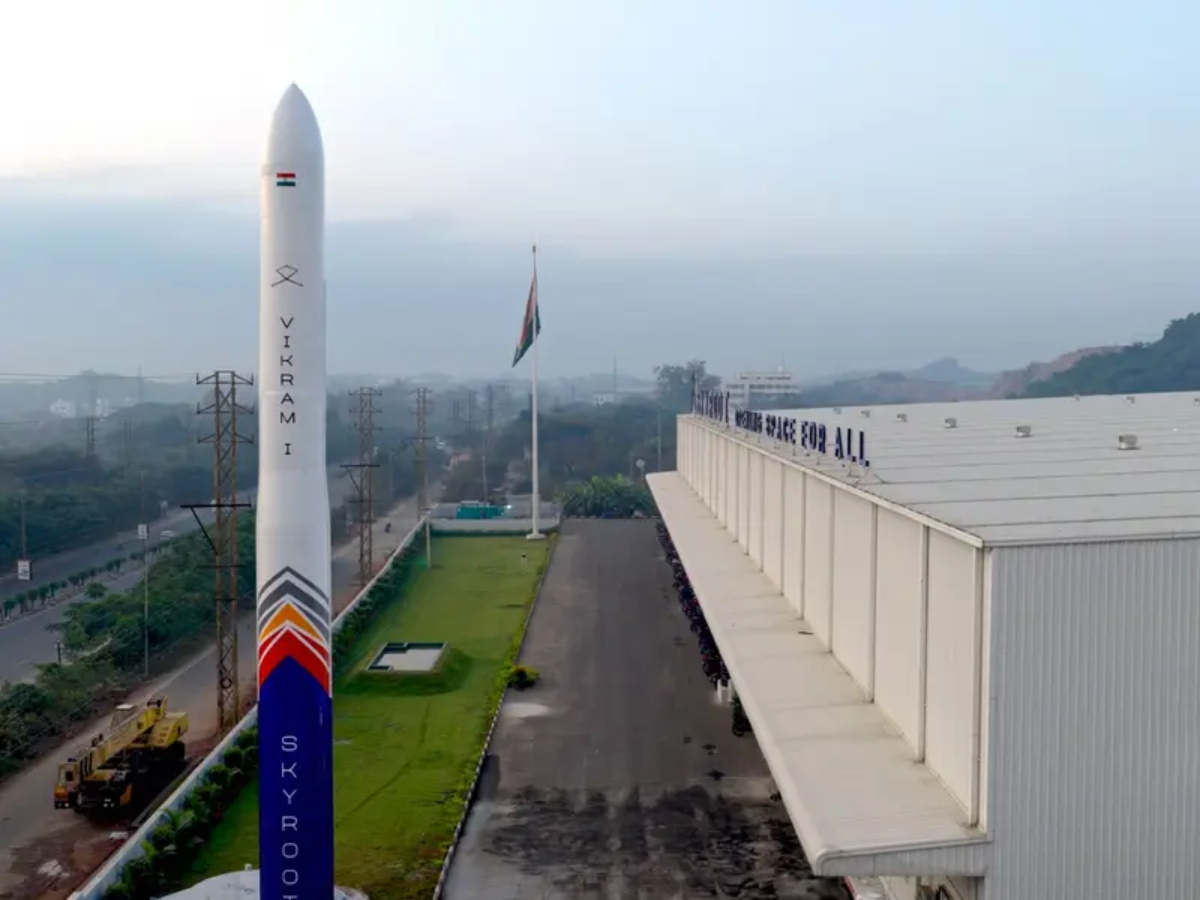
The Indian private space launch ecosystem is readied for a moment which can reshape its future. Skyroot Aerospace, which is the most prominent space company in the country, is all set to launch their Vikram-I launch vehicle into orbit in 2026.
With this launch, if successful, Skyroot Aerospace can achieve a record of launching a privately developed launch vehicle into space from the iconic launch pads in Sriharikota.
Skyroot: A Small Beginning With Big Intentions
Skyroot launched in 2022 with a simple suborbital named Vikram-S, which had a simple goal: to prove a launch vehicle. They never attempted an orbiting launch but successfully demonstrated a launch vehicle’s capability to function.
The event offered a revisit of ISRO’s early days with a new, up-to-date goal in mind: providing a global quick and light access to space solution.
Delays, Pressure & The Road To 2026
Skyroot unveiled the seven-story Vikram-I in 2023, estimating an inaugural launch in a year’s time. Plans changed when they ran into some setbacks in their designs given their ambitious timeline since a decade-long rocket launch project can’t be accomplished in such short time.
As stated by CEO Pawan Kumar Chandana, “The toughest phase is in our first launch and all systems need to be thoroughly tested. The model they have unveiled in late 2025 is the one which will undertake this task finally.”
ALSO READ: Yearender 2025: 7 Deadliest Terror Attacks That Shook the World
Importance of the First Orbital Test
“The first three missions will be developmental missions, which is common in the launch service industry,” said a company press release. Even ISRO does this for new launchers,” added Rohit Reddy, co-founder of Skyroot.
Vikram-I has a payload capacity of 300 kilograms to a 500-kilometer orbit; however, this maiden launch will have a light payload.
Competition in a Crowded Market
The Radius Skyroot plans to commence mass production of rockets, targeting production at a monthly pace. Skyroot considers Rocket Lab’s Electron and ISRO’s ‘SSLV’ to be rivals in this micro-launching segment, both of which have an established record of successful launches in space.
What Must Happen Before Liftoff
Before embarking on this mission, they have to undergo vibration tests, final briefings with ISRO, and interface tests with Sriharikota launch systems. As soon as the new space launch facility in Tamil Nadu is up and running, Skyroot plans to initiate sun-synchronized launch services.
Skyroot’s emergence, among other Indian companies in this industry, symbolizes space reforms initiated in post 2020 in this sector in order to allow participation in a market valued in hundreds of billions of dollars.
ALSO READ: US President Trump Links Rob Reiner’s Death to ‘Trump Derangement Syndrome’ Controversy
Disclaimer: This article is for informational purposes and reflects available details about Skyroot’s upcoming launch plans at the time of writing.