
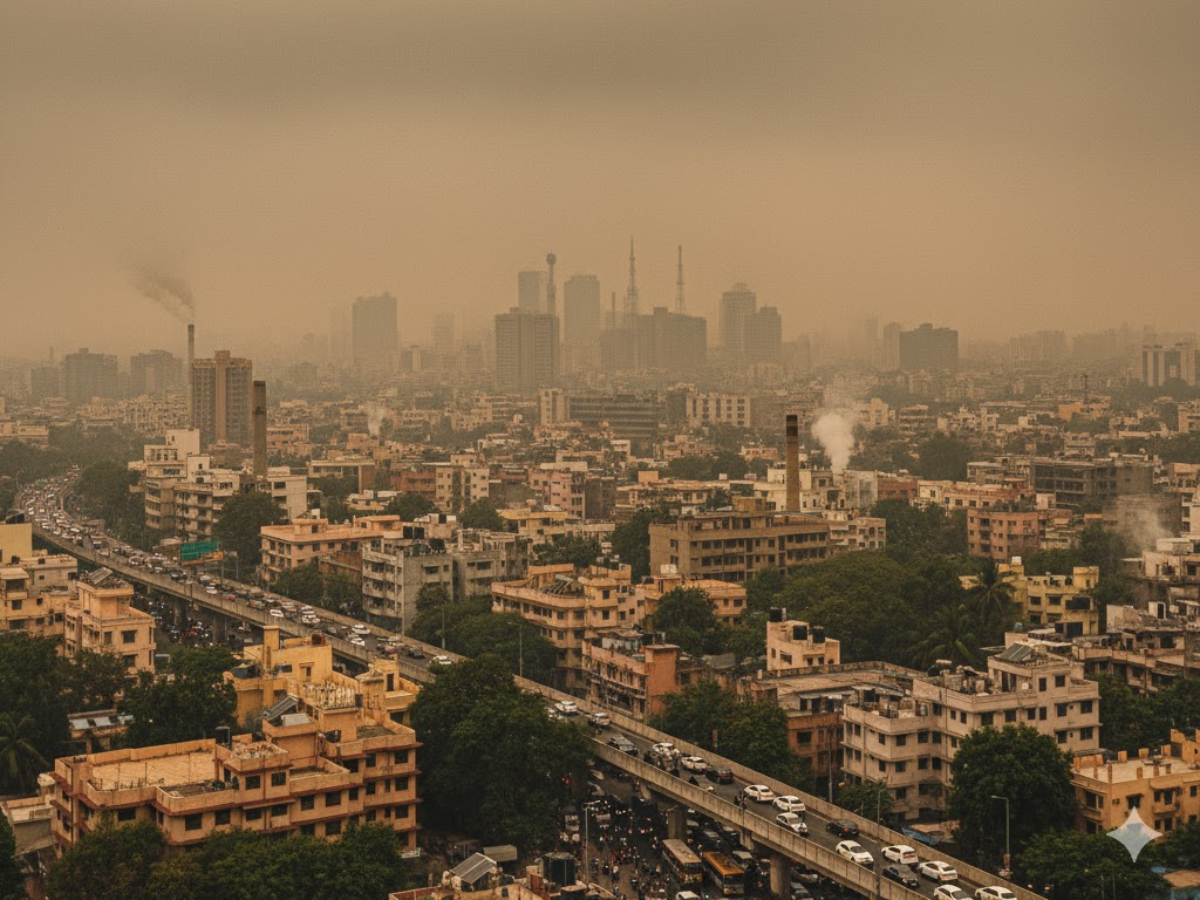
India is steadily losing its sunshine hours and this trend has alarmed environmental scientists and meteorologists. The detailed study of the researchers of Banaras Hindu University, Indian Institute of Tropical Meteorology (IITM) and India Meteorological Department (IMD) has shown that there has been an uninterrupted decline in solar radiation all over India from 1988 to 2018.
From data collected from 20 meteorological stations and nine regional zones it is inferred that the availability of sunshine has generally decreased all over the country except for a slight stabilization in northeastern stations. The article, published in Nature on October 2, stated that the change occurred seasonally and in all honesty and affected most parts of India basically all year round.
Aerosol Avalanche: India’s Urban Fallout
This study identifies the major culprit soaring aerosol concentrations resulting from fast urbanization, industrial activities and fossil fuel burning which all started in earnest in the early 1990s. Another way to perceive this is that in the time when the Indian economy was taking off environmental governance was well behind.
ALSO READ: Urban Climate Change 2025: How Cities Are Adapting to Extreme Weather| Floods & Droughts
By very swiftly implementing clean air standards and sustainable technologies, China and Japan prevented their emissions from exceeding the critical threshold. India’s pollution from cars, from coal-burning power plants and from biomass burning remained unconstrained, allowing enormous accumulations of aerosols to develop. These tiny particles such as to scatter and absorb sunlight before it could reach the ground.
Clouds, Condensation & the Cloaking of the Sun
The increase in aerosols has also meant the formation of thicker clouds and longer persistence under normal circumstances in the atmosphere, warm clouds are formed in a natural balance of humidity and particulates, which results in rain and dissipate by itself with time.
ALSO READ: Why the Sky Changes Color: The Science Behind Blue Skies & Sunsets
But due to excess aerosols, the number of cloud droplets increases, although the droplets are smaller in size. Little clouds have their lifetimes extended, becoming highly reflective and shutting out hours of direct sunlight in the process thus, the air is getting dirtier, while the skies remain overcast almost too stubbornly.
A Wake-Up Call for India’s Environmental Policy
This silent destruction of sunlight is more than just a meteorological aberration it is a red flag with less solar radiation forces agriculture, renewable energy generation and even human health. The findings highlight the need for urgent revision of India’s environmental policy, the establishment of strong air-quality standards and the enhancement of clean energy technologies.
What China and Japan did as a result of unwavering and bold initiatives India must now strive to do before the fading of this dusk like sky becomes a permanent variable within the subcontinent’s climate.
ALSO READ: Africa Is Splitting: What the East African Rift Means for Earth’s Future
Disclaimer: This editorial is based on published research and offers interpretative insights; it is not a substitute for scientific or governmental sources.