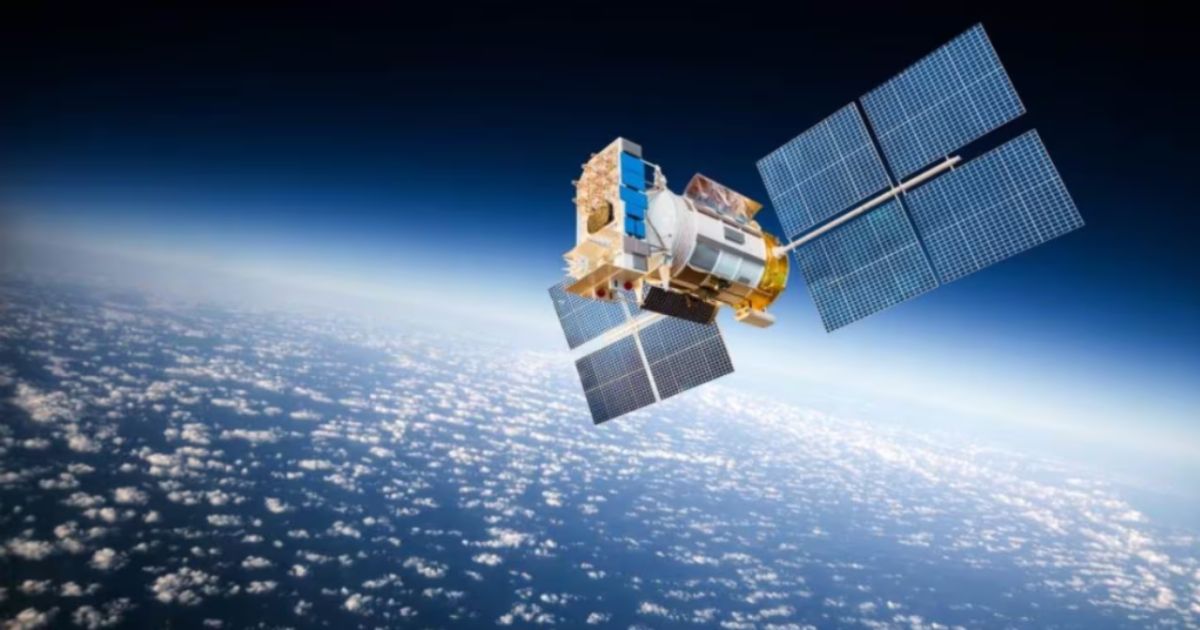
India’s domestic satellite navigation system, NAVIC (Navigation with Indian Constellation), hangs in the balance. Government statistics reveal that of the 11 satellites, four are still working. Of these, two have crossed or are reaching the end of their planned life. One has partially malfunctioned. NAVIC, created by ISRO to be used in military and civilian applications, is India’s equivalent of GPS, GLONASS, Beidou, and Galileo.
India’s desi-GPS satellites known as #ISRO NAVIC are near-defunct..
Of 11 satellites launched, only 4 are providing core PNT services. Of these 4, 1 has completed end of planned life, 1 has partial equipment failure.
Govt admitted this in Parliament, & RTI by @SolidBoosters pic.twitter.com/WDvm6kaTfg
— Sidharth.M.P (@sdhrthmp) July 24, 2025
But the close to non-existent condition of its fleet raises grave concerns for India’s strategic abilities. With critical failures already documented, the requirement for emergency satellite replacements has never been higher.
Strategic System on Life Support
NAVIC was a strategic imperative. India initiated the system following the refusal of the US to provide GPS access in the 1999 Kargil war. While GPS and others provide global coverage, NAVIC is designed for India and a 1,500 km circle around it. The system aids the military, drones, guided bombs, civilian navigation, agriculture, fleet tracking, fisheries, emergency services, and IoT applications.
Currently, however, there are only four satellites — IRNSS-1B, 1F, 1I, and NVS-01 — providing Position, Navigation, and Timing (PNT) services. IRNSS-1B, deployed in 2013, has already exceeded its 10-year lifespan. IRNSS-1F will also finish its term next year and has a partial atomic clock failure. Only IRNSS-1I, deployed in 2018, and NVS-01, deployed in 2023, are stable. This vulnerable condition jeopardizes both civilian utilities and military preparedness.
First Generation: A Series of Failures
ISRO had placed nine first-generation IRNSS satellites from 2013 to 2018. One, IRNSS-1H, had a failure at launch. Of the remaining eight, five — 1A, 1C, 1D, 1E, and 1G — have experienced complete atomic clock failure. These clocks, procured from the Swiss company SpectraTime, are essential for providing accurate PNT services.
IRNSS-1F, though still operational to some extent, is down with two of its three clocks. IRNSS-1B has already exceeded its life expectancy. Only 1I, which was launched in 2018, remains fully functional and is scheduled to remain operational through 2028. The excessive number of premature failures has put even the performance of 1I in doubt.
Second Generation Also Off-Track
ISRO started launching the second-generation NVS series in 2023 to replace the ageing IRNSS fleet. The first satellite, NVS-01, launched in May 2023, is operational. But NVS-02, launched in January 2025, did not enter its scheduled orbit after its onboard engine malfunctioned and did not fire. It is stranded in its transfer orbit and is not usable.
ISRO has not stated the reason behind this failure. This delay and uncertainty could set back the whole plan of replacing NAVIC further.
ISRO Faces Tight Timeline, Mounting Pressure
The Indian government asserts that three additional NVS satellites — NVS-03, 04, and 05 — will come on stream before the end of 2026. But this is an ambitious schedule. The 19-month delay between NVS-01 and the unsuccessful NVS-02 launch is indicative of the slow pace. With each failure, ISRO is now required to perform root cause analyses, redesign systems, and re-create hardware — a time-consuming process.
Compounding concerns, ISRO has managed only two launches in the first seven months of 2025. Both missions failed. The first was NVS-02. The second, a PSLV-C61 mission, saw the rocket fail mid-flight, destroying the EOS-09 Earth observation satellite.
Urgency for Reform and Recovery
To save NAVIC, ISRO has to move fast. It needs to enhance rocketry and satellite reliability. More frequent launches and improved mission certainty are crucial. Delaying now jeopardizes not only strategic dislocation but also public-funded expenditure wastage.
Unless immediate corrective actions are taken, NAVIC may crumble entirely. That would reduce India’s freedom in satnav and undermine military readiness.