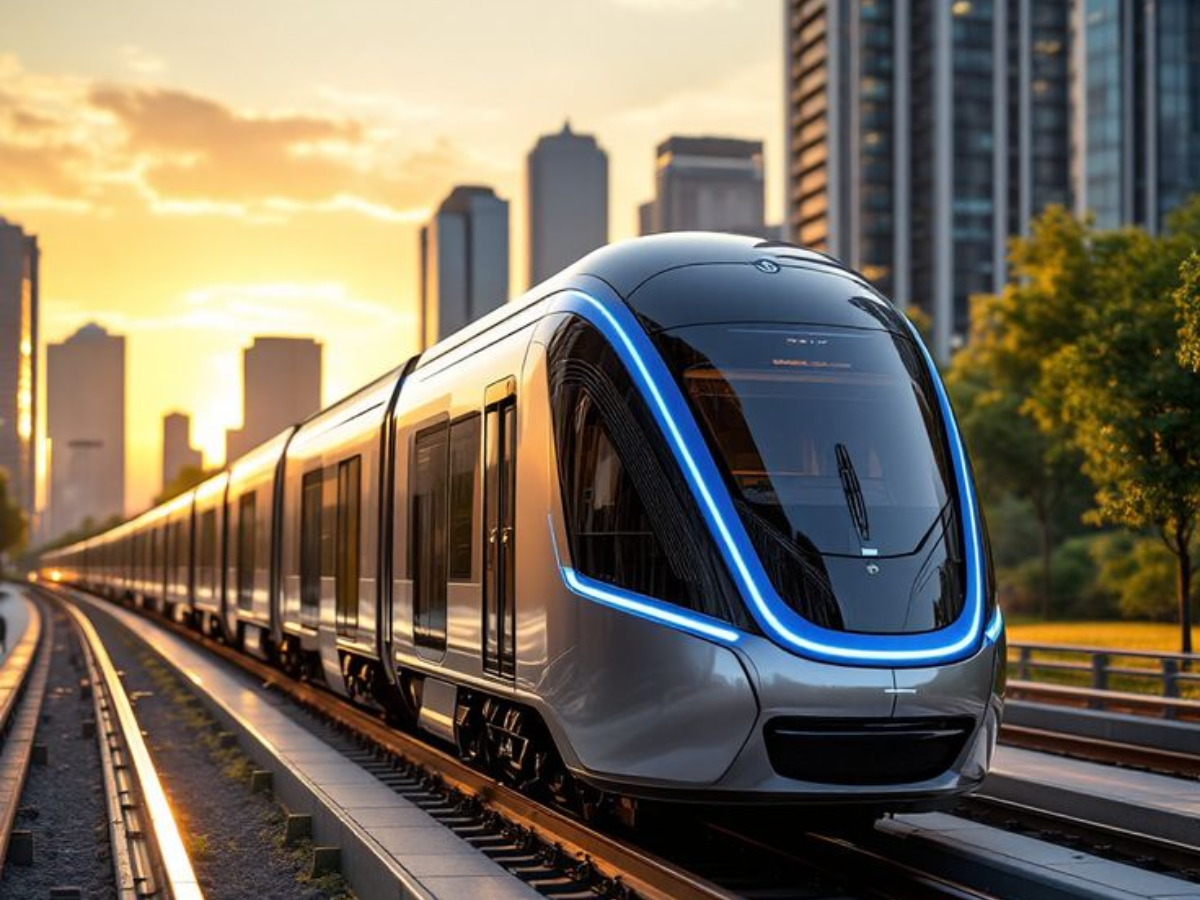
Recent visit of Indian Prime Minister Narendra Modi to Japan was more than a diplomatic mission and it symbolized a momentous epoch for Indian rail transport. Arising from the Mumbai – Ahmedabad bullet train project, the two countries have entered into the foundation of a 7000-kilometre high-speed rail network.
With Japanese Shinkansen technology and engineering powering this corridor and it is poised to fundamentally revamp the mode of commute for the Indians pivoting macroeconomic and urban contexts across the nation.
The flagship bullet train between Mumbai and Ahmedabad is expected to be put to service very soon and heralds the advent of a truly interlinked and futuristic rail age in India.
ALSO READ: AI Discovers Sustainable Alternatives to Lithium for Next-Gen Batteries | Know How
What is AI-Powered Safety from Tracks to Stations?
On the safety enhancement side, the Indian Railways infrastructure building agenda is getting assistance through the introduction of Artificial Intelligence. An important one is the Machine Vision Inspection System (MVIS) an AI-based operational platform capable of real-time inspection of rolling stock, identifying faults like hanging or missing components under trains while moving, thus minimizing the need for manual checks and ensuring timely maintenance for accident avoidance.
Railways have announced the establishment of permanent holding zones at 60 major railway stations for crowd management after a disheartening stampede incident at the New Delhi Railway Station during a religious pilgrimage. The Railways will be deploying AI detection technology to predict crowd behavior and manage crowd flow. Visual cues in the form of color-coded areas and arrow marked paths as instructions will assist in smoother movement of passengers.
ALSO READ: How AI Is Redefining Tech Jobs: Insights from Google Engineer Harsh Varshney
Automated Intrusion detection systems are also installed in sensitive habitats, including Assam to notify loco pilots whenever elephants are detected on tracks. These are supplemented with honeybee buzzers at the railway crossings to safely discourage any animals from coming onto the tracks.
What is AI Smart Stations & Surveillance?
Digital intrusive makeover at all Indian stations is happening. Recently initiated in 74,000 coaches and 15,000 locomotives, CCTV camera installations add Artificial Intelligence AI-driven surveillance tools for the detection of anomalous activity multitudes of settings and including poor light and fast ground conditions are within the system’s scope.
Facial recognition systems will enhance security and drastically reduce wait times for verification and boarding at prominent terminals such as New Delhi, Howrah, CSMT and Secunderabad. Under trial in Sealdah, Kolkata the systems will facilitate identification of people through some sophisticated video analytics ensuring enhanced safety at transit hubs.
ALSO READ: NASA’s Upcoming Launch | Triple Spacecraft Missions to Decode the Sun’s Influence on Earth
How AI in the Hands of the Traveler?
AI is directly slated to improve the passenger experience, even beyond the infrastructure in the future, influencing real-time travel alerts, delay predictions with route optimizations and dynamic ticketing suggestions to smoothen the passenger journey.
“Railways are becoming the living lab of AI deployment in public infrastructure,” believes AI expert Ankush Sharma from California. “AI is turning discovery into practical impact enabling safer, faster and greener journeys.” His work looks at how AI can support smarter cities through predictive systems and autonomous transport networks.
The rail future of India is being built at an address where engineering meets AI where AI not only runs the trains but also builds trust, safety and speed for the nation.
ALSO READ: Surya Grahan September 2025: Date, Time & Spiritual Significance of Solar Eclipse