The theory of global warming potentially leading to the onset of an Ice Age might appear to be something out of a science fiction flick, evidence found in geology indicates a complexity in the way the Earth’s climate system functions through a series of feedback loops. Some of the most unexpected factors controlling it are found in the Earth’s oceans in the form of phytoplankton is one of its smallest inhabitants.
What is Ice Age Paradox
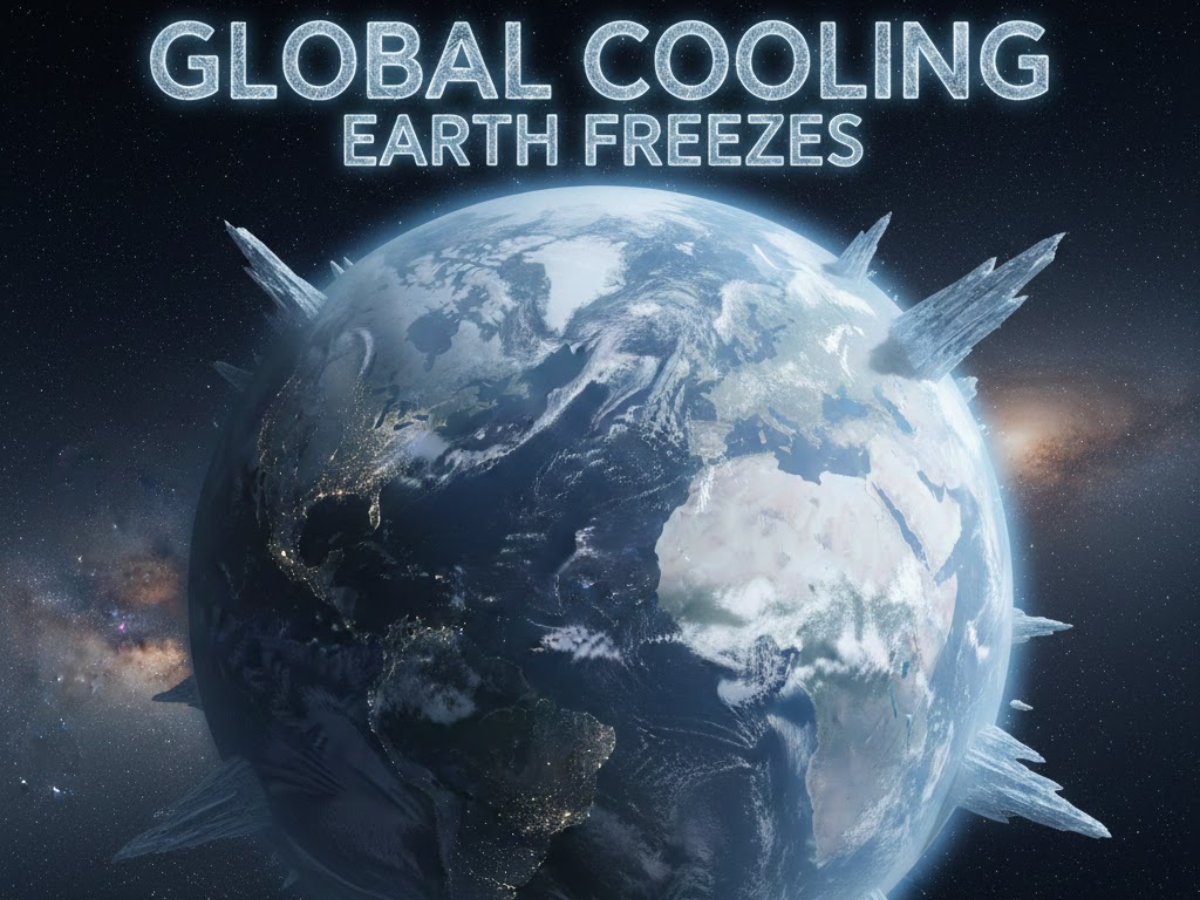
The Ice Age Paradox refers to the counterintuitive idea that global warming or rising temperatures could, under certain conditions, trigger a sudden and severe cooling of the Earth, potentially leading to an Ice Age.
This paradox occurs because Earth’s climate is governed by complex feedback loops. For example:
-
Phytoplankton blooms in oceans can absorb large amounts of carbon dioxide when nutrient levels rise and reducing greenhouse gases in the atmosphere.
-
Reduced greenhouse gases weaken Earth’s thermal blanket, lowering global temperatures.
-
Albedo effect expanding ice sheets reflect more sunlight, further cooling the planet.
Nutrient Surges & Phytoplankton Bloom
The rising global warming enhances the hydrological cycle, resulting in high rainfall and glacier melting. These mechanisms cause erosion of rock and soil, thereby releasing nutrients such as nitrogen and phosphorus into the oceans. Phytoplankton, which need these nutrients, experience enormous reproduction.
The high photosynthesis rate leads to a reduction in the concentration of carbon dioxide in the atmosphere at a historic rate. The death of these organisms results in their sinking to the floor of the oceans, thereby reducing carbon dioxide from the atmosphere for thousands of years, a process called the biological pump.
The Overcorrection Mechanism
Although carbon sequestration by phytoplankton is generally positive, when it proceeds at the expense of sequestering greenhouse gases at a rate that exceeds the ability of the Earth’s thermal blanket to control the greenhouse effect, the result can mean that the Earth’s temperatures may drop drastically.
Indeed, observations from history reveal that the Great Ordovician Biodiversification event was a time when there was a sudden decline in the levels of carbon in the atmosphere that was accompanied by a very cool Earth.
The Albedo Feedback Loop
The decrease in the ocean’s temperature and the growth of ice sheets enhance the albedo effect. This is the phenomenon where light colored surfaces reflect the sun’s rays while darker surfaces absorb them. However, with the growth of ice cover on the poles and higher areas, as much as 90% of the sun’s radiation is reflected back into space.
This creates a cycle of reduced temperatures as more ice is produced. For a geological perspective, a warm and green earth could turn into an ice-covered earth in a matter of geological epochs.
Earth’s Climate on a Knife-Edge
The Ice Age Paradox illustrates the sensitive interplay of the Earth’s climatic systems. The interacting patterns of warming, the Earth’s ocean systems, the chemistry of the atmosphere and solar output prove to climatologists that the feedback of the Earth to changing circumstances is nonlinear rather than being incrementally linear.
Whether or not the current ocean has the potential to cause an Ice Age is in question, but historical climate trends serve as a reminder of the instability of climate. The Earth balances on a razor’s edge between tropical extremes and glacial extremes because it is essential to understand feedback mechanisms in the climate system before crossing points of no return.
ALSO READ: Christmas 2025 Celebrations Around the World: From the Vatican to India | Photos
Disclaimer: This article is based on current scientific studies and historical data and is for educational purposes; it does not predict imminent climate events.