
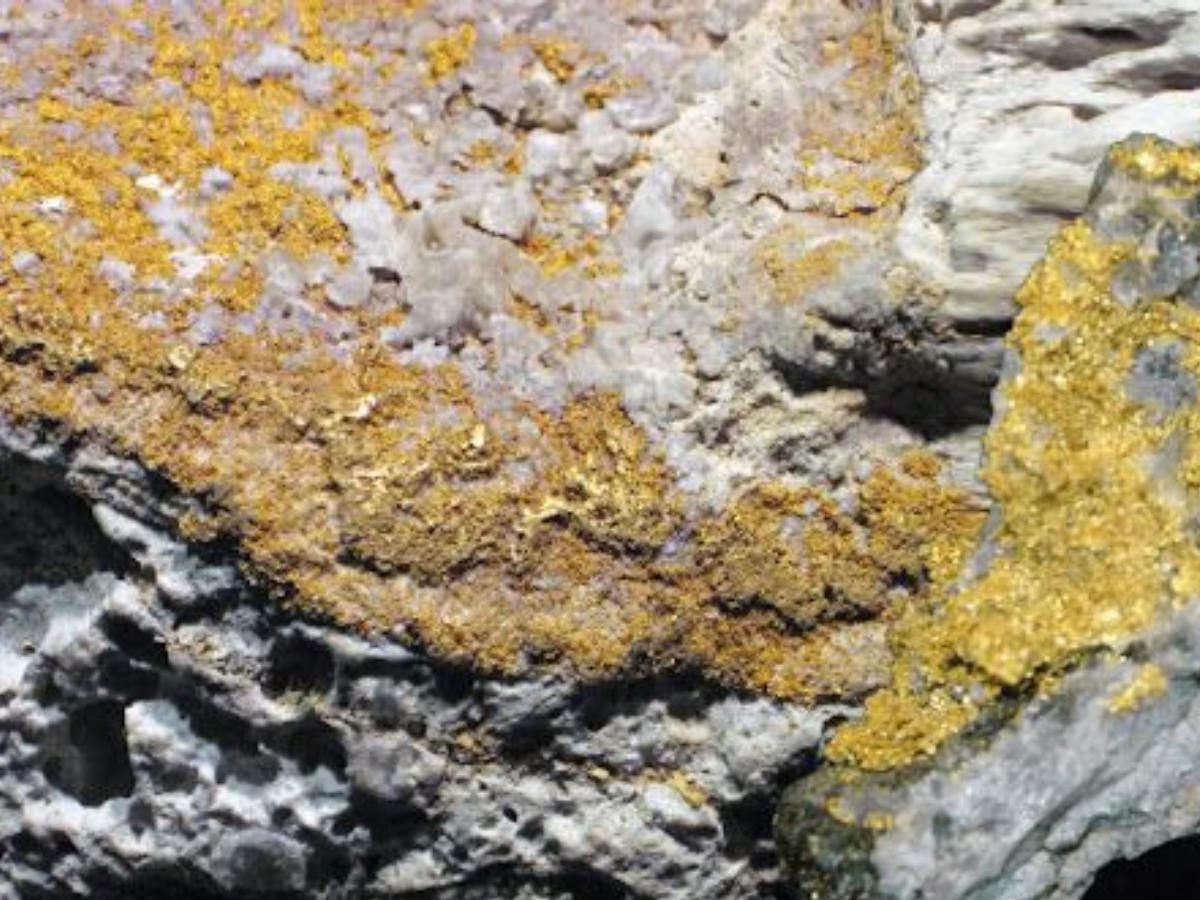
The most recent research from the University of Gottingen in Germany indicates that some of the finest processes are the traces of precious metals such as gold and ruthenium escaping from Earth’s deep interior toward the surface fixtures through volcanic activity. By analysis of lava from volcanic mounts in Hawaii, including Kīlauea and Lo‘ihi, scientists found the subtle chemical signature of that leakage material from the core. In minute amounts, these create an opening into the richest and most inaccessible place on Earth.
Earth’s core leaking Gold: Billions of Tons Locked Beneath Our Feet
Earth’s core leaking Gold could be present in Earth’s very core at around 30 billion tons, which would be worth an astounding 2.77 trillion euros. All that gold will remain untouched locked inside some of Earth’s innermost layers. Instead of being treasure nuggets, the little bits seen in an eruption are hints at molecular levels about the treasures locked in at least thousands of kilometers below the surface.
As co-author Matthias Willbold said, this is about traces, not nuggets, and thus this discovery stays scientific rather than alone economic.
Why We Cannot Mine the Core
Those estimates must make one’s mouth water, but mining the core will remain far beyond our technological capacity. It is impossible to reach metal extraction because of heat, pressure and depth. These findings are an important step in pure science, though.
ALSO READ: Primordial Black Hole: James Webb Telescope Unveils a 13 Billion Year Old Mystery
They will help researchers put the pieces together regarding the history of formation, the movement of elements and dynamic processes throughout billions of years that have shaped the planet. Current technology cannot harness this hidden treasure, but it can decode the story of Earth’s evolution.
Ruthenium: The Chemical Fingerprint
The ocean island basalts were the focus of the research: these volcanic rocks are formed when a plume of hot mantle material rises very close to the surface. Within those samples, scientists could measure high levels of a rare isotope, named 100Ru, that is a strong indicator of the Earth’s core.
ALSO READ: Blood Moon vs Corn Moon: What Makes September’s Lunar Show Special
Thus, less than 0.3 percent of core material makes its way to surface. However, although tiny, the evidence is groundbreaking: it illustrates that the Earth’s core is not sealed off but interacts, albeit with bated breath, with the outer layers.
Earth’s core leaking Gold Discovery
The traces of gold and ruthenium that escape from the Earth’s depths are not riches but knowledge. It gives scientists rare clues about the compositional nature and dynamics of that core, which remains one of the least-understood international habitats. While mining such metals may be impossible, every eruption that carries their traces acts as a naturally occurring probe into the most secret regions of the Earth. What emerges is not a treasure chest of riches but an invaluable opportunity to learn more about this planet we call home.
ALSO READ: Canada’s First Lunar Rover to Join NASA’s Artemis Moon Mission in 2029