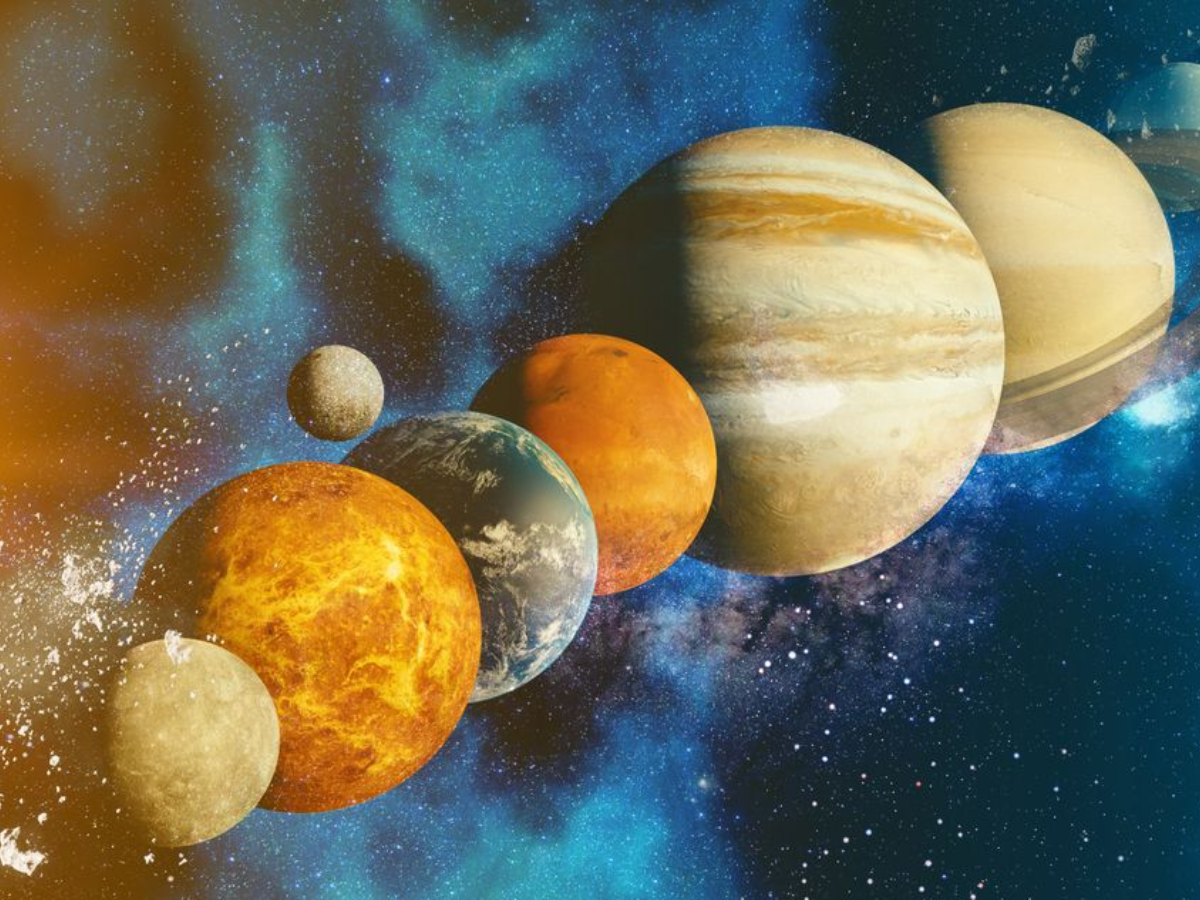
A rare planetary alignment called the planet parade is taking over the pre-dawn skies and after this it will not return until 2028. September 2025 will be a sky gazer’s delight. Worldwide is prepare for a breathtaking total lunar eclipse and a possible show of the Northern Lights and one celestial event is quietly moving.
How is Planet Parade Formed?
Five planets Venus, Jupiter, Saturn, Uranus and Neptune have formed an impressive arc in the sky in the hours before sunrise this month.
Mercury put in a brief guest appearance in August, but now it is lost in the Sun’s glare. The final dawn alignment of its kind until October 2028.
ALSO READ: September 2025 Celestial Guide: What to See in the Southern Hemisphere
How and When to Spot the Planets?
About two hours before sunrise for brilliant Venus, shining in the southeast stands Jupiter and faintly glowing in the southwest is Saturn. All three are visible readily without equipment.
Close to Jupiter will find Castor and Pollux the two brightest stars in Gemini and while Orion’s Belt points directly down to Sirius the brightest star in the night sky.
Planet Parade: Uranus and Neptune
Five planets have made their presence known as Neptune and Uranus are conspicuously absent to naked eye observations. Opposition for Neptune is on 23 September 2025, while Uranus will still be hidden in Taurus on December 5 and would reach opposition in November and making both planets threshold objects under excellent conditions and Uranus lies away from his companions.
ALSO READ: NASA’s Bennu Asteroid Reveals Stardust Older Than the Sun, Revealing Early Solar System
When will Lunar Eclipse Occur?
Total lunar eclipse occurred on 7 September and visible from large parts of Asia, Africa and Australasia. In North America, although not witnessing this event, the observers there would enjoy the rising of full Corn Moon right at dusk. It would appear as an ordinary full moon, and it follows closely after a dramatic blood moon eclipse on the other side of the globe.
What is Aurora Alert and Solar Eclipse?
NOAA (National Oceanic and Atmospheric Administration) issued an alert on the rare aurora borealis display visible from more than 15 states in the U.S. around September 5. Then, on September 22, a solar eclipse would be seen from New Zealand, Antarctica and parts of the South Pacific and the grand finale to a month packed with celestial entertainments.
ALSO READ: Lunar Eclipse September 2025: Big Changes for These Zodiac Signs