
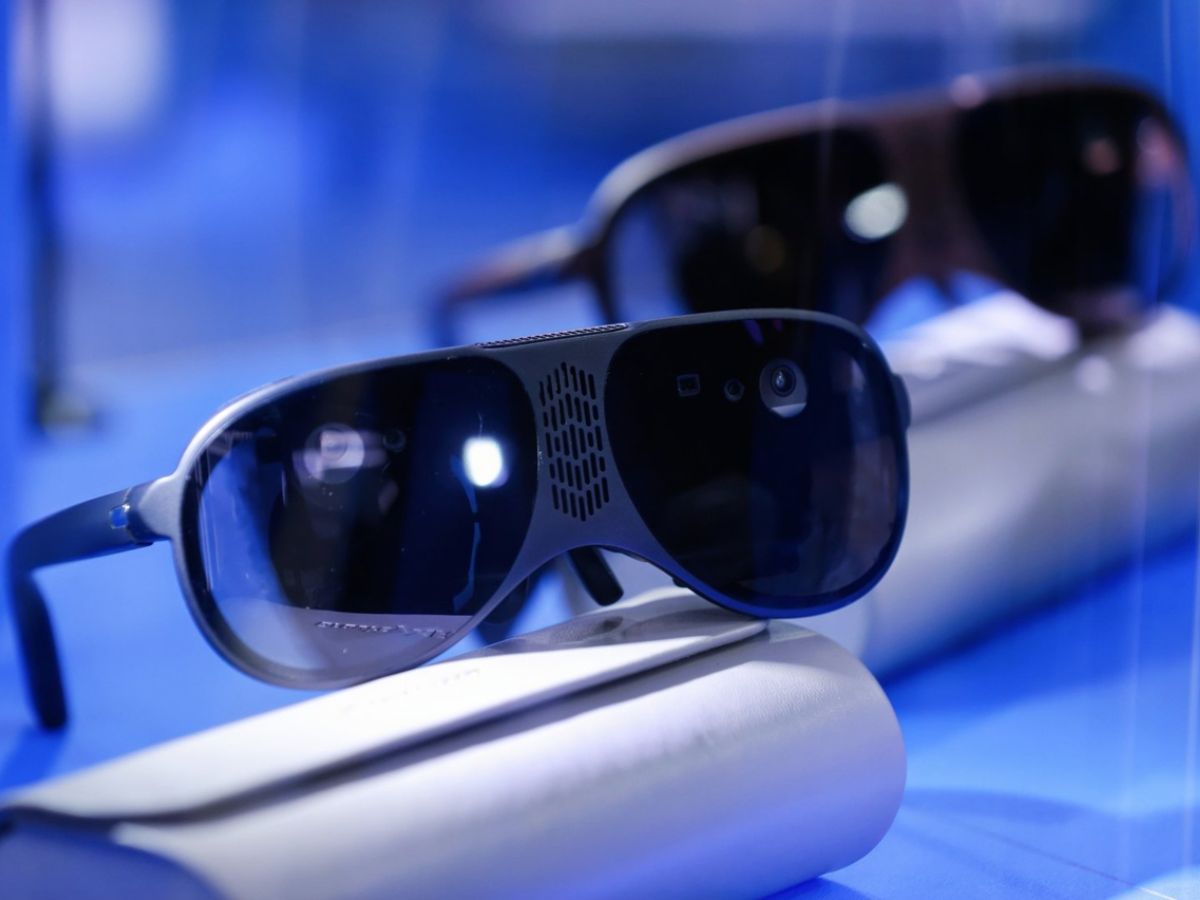
A Chinese startup has announced Jizhi G-X100. Founded by ex-Apple Inc. engineer Wang Chaohao, the company GravityXR has unveiled the Jizhi G-X100, described as China’s first full-function 5-nanometre mixed reality chip. The goal is simple: challenge Apple’s Vision Pro with a homegrown, high-performance alternative.
What is the Jizhi G-X100? Why it matters
The Jizhi G-X100 is built using cutting-edge 5 nm chip manufacturing technology. It is designed as an “all-in-one” mixed reality chip, capable of powering everything from lightweight AI glasses to full-fledged XR headsets.
According to GravityXR, the chip delivers a photon-to-photon latency of just 9 milliseconds (ms). For comparison, Vision Pro’s latency sits around 12 ms. That lower latency can make a noticeable difference, reducing motion lag, improving immersion, and reducing eye strain during AR/VR use.
The chip is reportedly very power-efficient and compact — enabling XR devices that are lighter and more wearable than many existing headsets.
Jizhi G-X100: Full XR Platform
GravityXR didn’t stop at the G-X100. The company also introduced two supporting chips: one optimised for video capture in wearables, and another tailored for low-power spatial and 3D rendering tasks. Together, they form a full-stack hardware platform for future XR devices.
This move signals that GravityXR isn’t merely building a component — it’s building the technical backbone for a new generation of XR hardware. By offering a complete in-house solution (chip + rendering + sensors), the startup hopes to draw manufacturers and device makers into its ecosystem.
Why this Could Shake up the XR world?
Performance edge: Lower latency than Vision Pro — even a few milliseconds matter in XR. GravityXR claims 9 ms vs Vision Pro’s 12 ms.
Efficiency & wearability: Because the chip is designed for efficiency, XR devices could become lighter, longer-lasting, and more comfortable — increasing adoption potential in consumer and professional markets.
Homegrown alternative: This comes amid a broader push in China for tech self-reliance and less dependence on foreign hardware. GravityXR could help position Chinese XR hardware as a viable alternative globally.
Full ecosystem approach: By offering a complete stack — from chip to rendering and sensors — GravityXR may attract device makers who want a ready solution instead of building custom platforms from scratch.
Jizhi G-X100: What to Watch?
Over the coming months, we need to watch whether manufacturers actually release XR devices powered by the G-X100 (or its companion chips). Market adoption will be the ultimate test. Also important will be real-world performance: latency, comfort, battery life, and sensor reliability — only then will we know if GravityXR can truly compete with giants like Apple.
Finally, this may spur more competition in the XR space. If GravityXR gains traction, expect other firms — both in China and globally — to accelerate their own XR chip efforts. With the Jizhi G-X100, GravityXR has thrown down a gauntlet. If the technology delivers, it could reshape the landscape of mixed reality hardware.