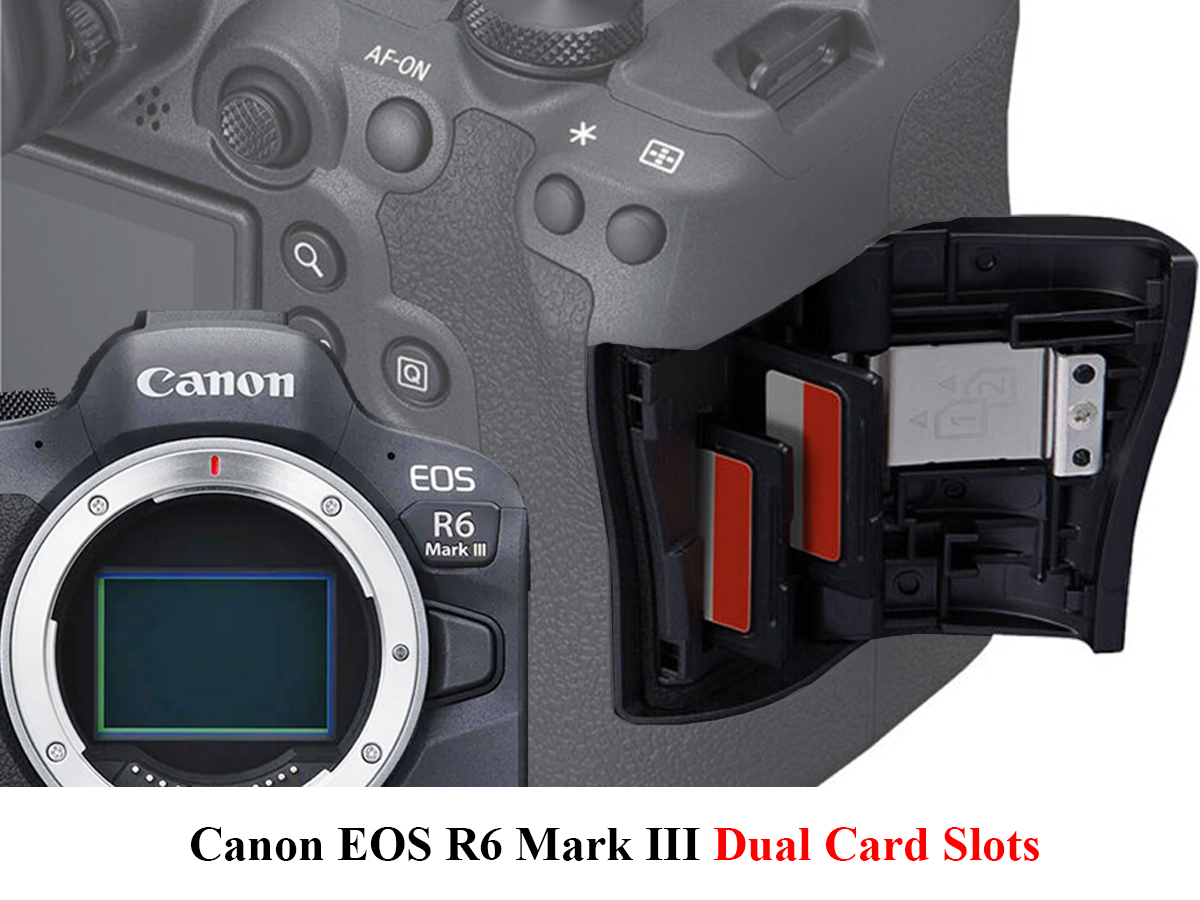
The Canon EOS R6 Mark III will be a powerful camera that will work well for both photographers and videographers. One of its best features is its dual card slot system, which makes saving and managing files easier and safer. According to some rumors about the camera will have two card slots as this is marking another benchmark of professsional camera in the full frame market.
Dual Card Slot Setup
The R6 Mark III has two card slots:
- Slot 1: CFexpress Type B
- Slot 2: SD UHS-II
This setup allows you to do different things with your files. You can create backups, separate file types like RAW and JPEG, or automatically save files to the second card when the first one is full.
Why CFexpress Type B Is Important
The CFexpress Type B slot is very fast. It is perfect for high-speed photography or recording high-quality video. If you shoot at 30 frames per second or capture large RAW files, this card ensures smooth performance without slowing down your camera.
The Role of SD UHS-II Slot
The SD UHS-II slot adds flexibility. You can use a big SD card for general shooting and reserve the CFexpress card for important or high-speed shots. You can also record to both cards at the same time to have an automatic backup.
Compatibility and Convenience
The R6 Mark III is designed to be professional but also practical. The CFexpress card handles demanding tasks, while the SD slot works with widely available UHS-II cards and even older UHS-I cards. This gives you options to save money on storage without compromising performance.
Benefits for Photographers and Videographers
The dual-slot system is very useful for weddings, wildlife photography, or video projects where losing files is not an option. You can save a RAW file on one card and a JPEG backup on the other. Videographers can record high-bitrate 6K or 4K video on the CFexpress card and use the SD card for additional storage.
Safe and Flexible Storage
Canon’s dual card slots in the R6 Mark III will make file management easier, faster, and safer. The combination of CFexpress Type B and SD UHS-II gives photographers and videographers the flexibility to handle any situation, from fast action shots to high-resolution videos.