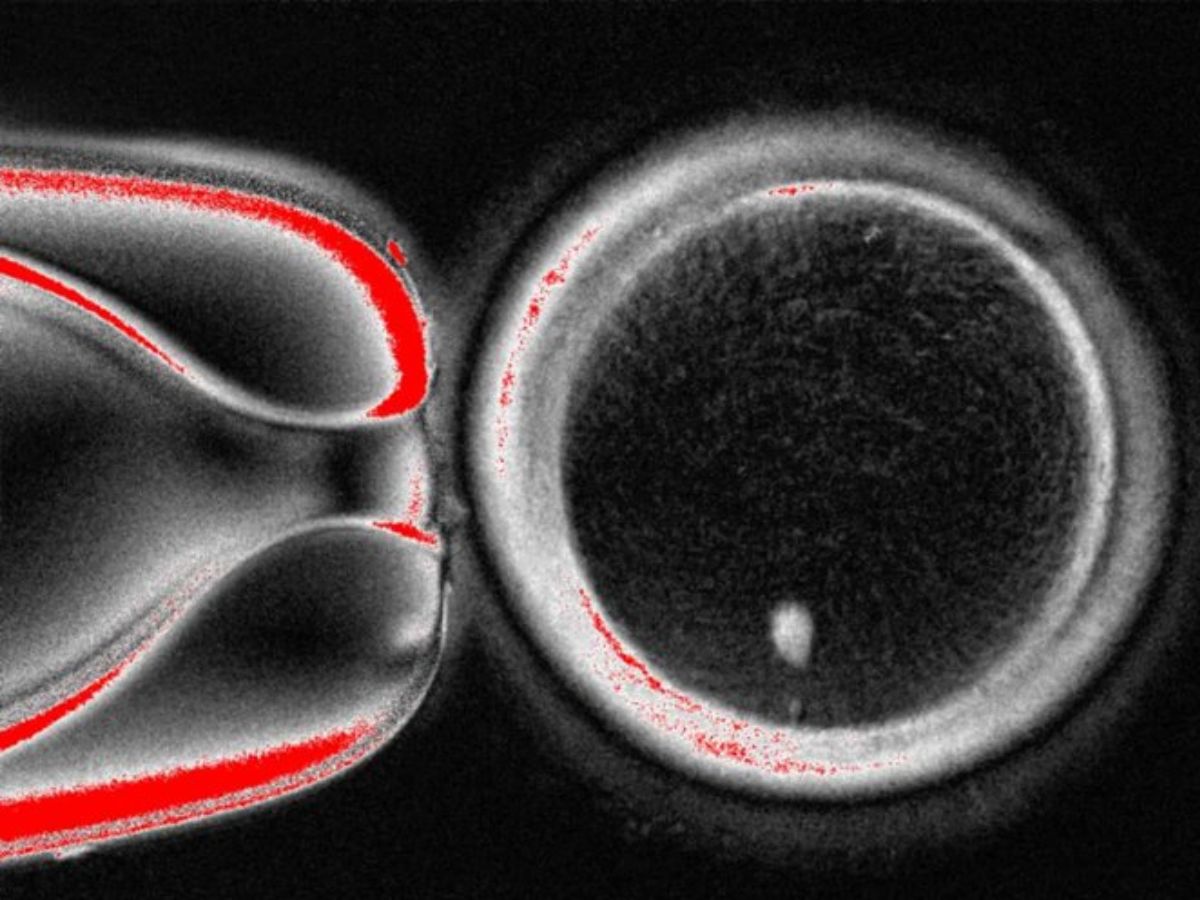
Science continues to push boundaries, and one of the latest breakthroughs is nothing short of astonishing researchers have successfully created human egg cells using skin cells. This advancement could open new doors for people who are unable to conceive naturally, including those facing infertility or same-sex male couples who wish to have biologically related children.
However, while the discovery is exciting, experts warn that it will take at least another 10 years of research before it can be safely used in humans. Ethical and legal concerns also surround the development.
Let’s understand how this process works and why it’s considered revolutionary.
How Scientists Created Egg Cells from Skin
The findings were published in Nature Communications and conducted by researchers at Oregon Health and Science University, led by Professor Shoukhrat Mitalipov.
Here’s how the method works:
-
Scientists start by taking the nucleus which carries most of a person’s genetic material from a human skin cell.
-
This nucleus is then inserted into a donor egg cell that has had its own genetic code removed.
-
Since egg cells contain chromosomes, researchers needed to reduce them to the correct number 23 instead of 46 just like in natural reproduction.
-
To achieve this, they programmed the egg to discard half of its chromosomes through a process called mitomeiosis a mix of mitosis and meiosis, which are types of cell division.
From this process, scientists were able to create 82 immature human egg cells, known as functional oocytes. These were then fertilized with human sperm in the lab and reached the early stages of embryo development.
This technique is similar to the method used to clone Dolly the Sheep in 1996.
What’s the Catch?
Despite the promising results, the success rate is currently very low. Only around 9% of the fertilized eggs developed to the blastocyst stage the phase where embryos are typically implanted during IVF (In Vitro Fertilisation).
Even then, none of the embryos were viable for actual reproduction. That’s because the chromosomes did not divide correctly, sometimes selecting two of the same type or skipping others entirely. They also failed to undergo an essential process called crossing over, where DNA naturally reshuffles to prevent genetic disorders.
Researchers confirmed that no healthy baby could result from such embryos at this stage.
Why This Discovery Still Matters
Despite its limitations, scientists consider this a major leap in reproductive technology. “We achieved something that was thought to be impossible,” Professor Shoukhrat told the BBC. If perfected, this could transform parenthood:
-
Women who cannot produce eggs including older women or cancer survivors could still have biological children.
-
Men without female partners could one day have children genetically related to both male parents.
-
A single skin cell could potentially generate unlimited eggs.
Dr Paula Amato, co-author of the study, told The Telegraph, “In theory, the technique could result in a limitless number of eggs.”
She further explained, “The skin cell DNA however can come from anyone… So, it’s a way to produce eggs genetically identical to the person providing the skin cell… A same-sex male couple could potentially have a child genetically related to both partners.”
Experts Call for Caution
Even though many scientists have praised the breakthrough, they emphasize the need for further research and strict regulations.
Professor Richard Anderson from the University of Edinburgh said the ability to create new eggs “would be a major advance” but warned that safety concerns must be addressed first.
Others, like Amander Clark from UCLA, questioned whether bypassing natural chromosome division (meiosis) would ever be safe for human development.
There are also ethical fears:
-
Could people create designer babies?
-
What if someone steals another person’s skin cells — like from a celebrity or ex-partner — to create a child without permission?
-
Could wealthy individuals attempt to clone themselves?
A New Era of Possibilities and Questions
This research marks a bold step into the future of human reproduction. While the road ahead is long and uncertain, one thing is clear science is inching closer to making the impossible possible.
As Roger Sturmey from the University of Hull said, such advancements highlight the need for “robust governance, to ensure accountability and build public trust.”
For now, the world watches closely as humanity edges toward a future where life could begin from something as simple as a skin cell.
Also Read: What Will Delhi Students Learn About RSS Under the New Rashtraneeti Programme?