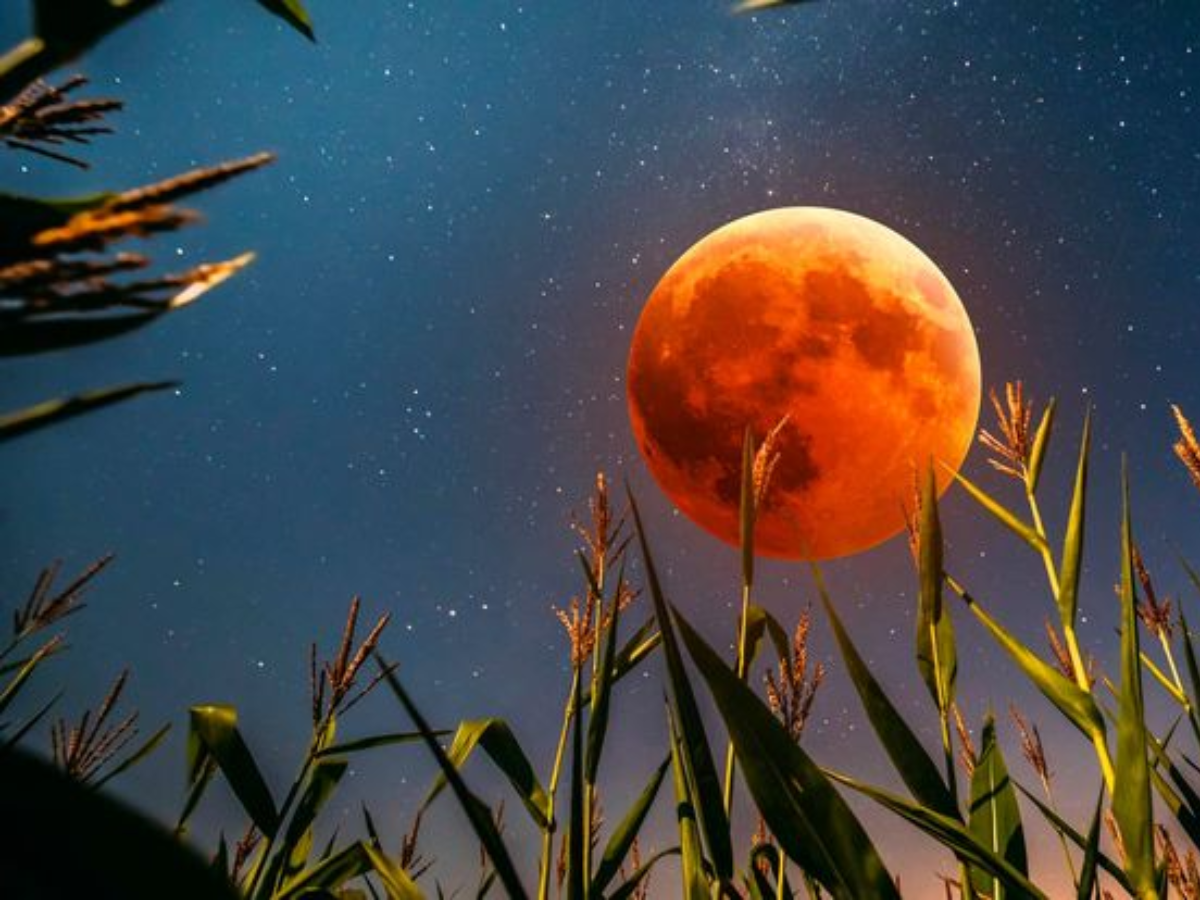
As summer winds down in the Northern Hemisphere, the night sky is about to witness one last act the show might be called the Corn Moon. This full moon shines its brilliance on Sunday and the 7th of September, 2025, when it will rise in the east with the sunset, enchanting sky watchers across North America. Those living in parts of Asia, Australia and the Pacific view a total lunar eclipse earlier that day and hence, will miss out on the charm that North Americans would enjoy seeing the moon in all its glory.
Why The Full Moon in September Is Called the Corn Moon
Full moon is named according to the agricultural calendar. By September, corn harvesting is at its peak in North America and communities used it to harvest the fields more under moonlight.
Although sometimes confused with the name Harvest Moon, that title is reserved for the full moon closest to the autumnal equinox, which this year occurs on October 7. In some cultures, September’s full moon is called Fruit Moon after seasonal harvests celebrated worldwide.
ALSO READ: Earth’s Magnetic Mysteries: 5 Zones Where Compasses Don’t Work
When To See the Corn Moon and Where
Corn Moon will officially become full at 2:10 p.m. EDT on September 7 and viewing is at dusk when it will rise above the horizon. Moonrise will almost coincide with sunset across North America, making a fantastic display.
- New York: Moonrise at 7:22 p.m. EDT (just two minutes after sunset)
- Los Angeles: 7:19 p.m. PDT
- London: September 8 Moonrise starts at 7:44 p.m. BST
ALSO READ: Blood Moon 2025: A Rare Celestial Show Coming to Night Skies Soon
Look for a place with a clear view of the eastern horizon, preferably on top of a hill or coastline.
Blood Moon Fashion Across the Globe
While North America enjoys its luminous full moon, parts of Asia, Australia and the Pacific will undergo a dramatic total lunar eclipse. The copper red hue of the moon, which appears for a good 82 minutes, comes from the Earth’s atmosphere scattering out other colors and bending red wavelengths onto the lunar surface.
The entire spectacle penumbral to total will cover over five hours and, according to estimates, reach out to about 4.9 billion people across the globe.
Solar Eclipse: What Is Next
Solar Eclipses usually come in pairs, and this is no exception. Two weeks after the lunar events in September, on September 21, 2025, a partial solar eclipse will be visible from New Zealand, Antarctica, and the South Pacific. So, while Corn Moon might stamp out the summer and it also heralds the beginning of great celestial events going into the autumn.
ALSO READ: Apple’s Biggest Deal Yet on a Popular Flagship: Here’s How You Can Save Over ₹30,000