
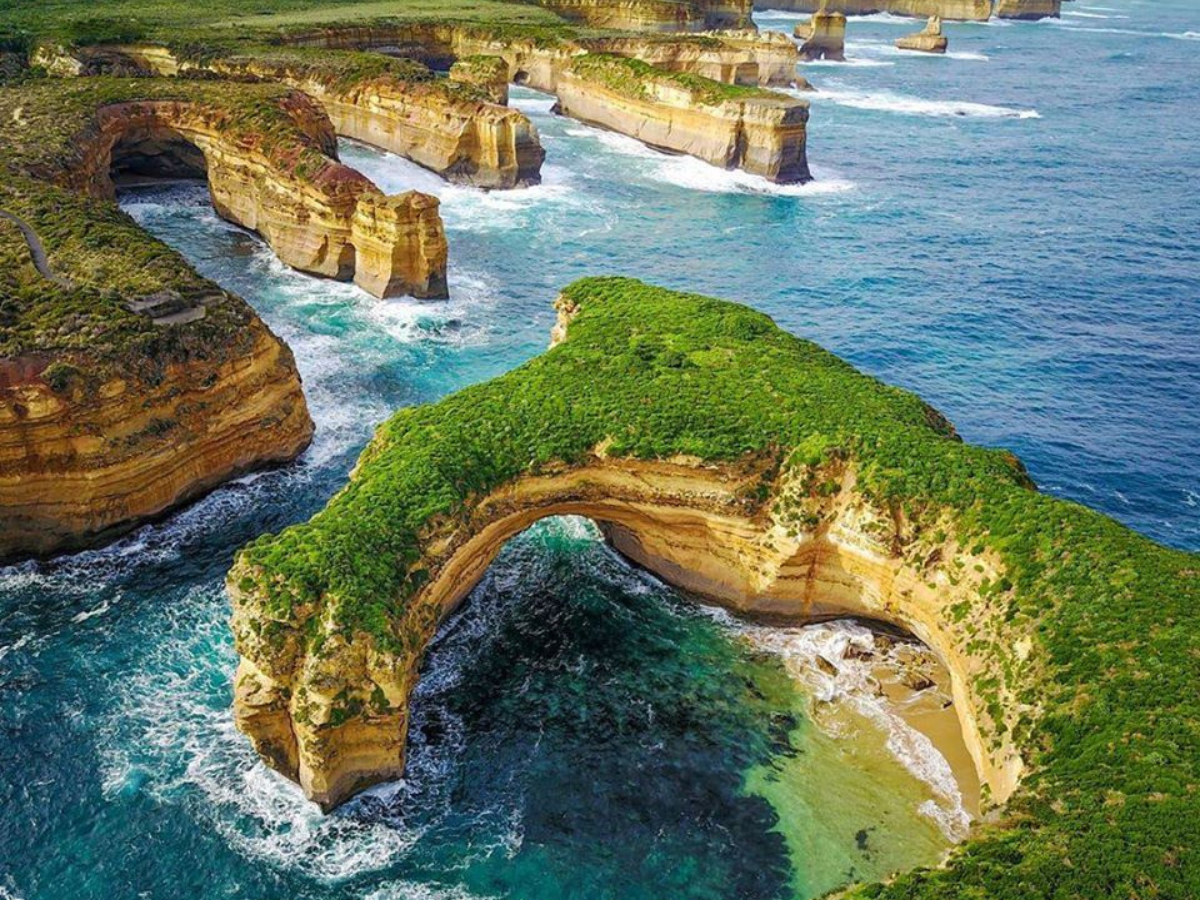
A bay is a large water body almost surrounded by land with a wide mouth opening into an ocean or sea. A bay forms on the coastline due to erosion, tectonic processes or inundation of river valleys.
The land shelter for most parts which makes bays relatively calm as compared to the open sea, which suits the conditions for ports, harbors and settlements. Some of the famous examples are the San Francisco Bay in the USA and the Bay of Bengal in South Asia.
What is the Ocean?
Oceans are continuous bodies of saltwater covering more than 70% of the Earth’s surface. They stretch over continents and hemispheres, impacting global weather, climate and ecosystems unlike bays, oceans flourish on earth.
Oceans can be divided into five distinct regions Pacifically, Atlantic, Indian, Amundsen and Southern Oceans. Their vastness allows them to control temperatures, drive ocean currents and assist millions of aquatic species.
ALSO READ: Why Assam is Known as the Tea Capital of India?
Bay & Ocean Comparison in Size & Depth?
A very conspicuous disparity between a bay and an ocean is their scale. A bay is a small, shallow body of water when compared to an ocean which can extend thousands of kilometers wide and is more than 11,000 meters deep in some places such as the Mariana Trench.
Whereas a bay is mostly considered to be a sheltered area for human activity and oceans are the largest natural repositories of water, energy and biodiversity on the earth.
ALSO READ: Do the Pacific & Atlantic Oceans Really Mix: The Science Behind
Importance to Humans & Ecology
A bays and oceans are important to human life but with varying dependence because of their temporally calm waters, bays have historically been used for trade and fishing and gave anchorage to ships.
The role of oceans is Climate regulation, oxygen generation by phytoplankton and open trade routes. A bay is the local economy and oceans are responsible for the ecological equilibrium of the entire planet.
Why the Distinction Matters?
A bay and an ocean give an understanding of how geography influences ecosystems, human settlement and even climate systems. While oceans represent an unknown large expanse and bays represent doorways where the land and sea meet in tranquil harmony. Both are interrelated elements of the Earth’s hydrosphere their natural and human uses are set apart.
ALSO READ: India or China: Which Country Leads the World in Rice Production in 2025