
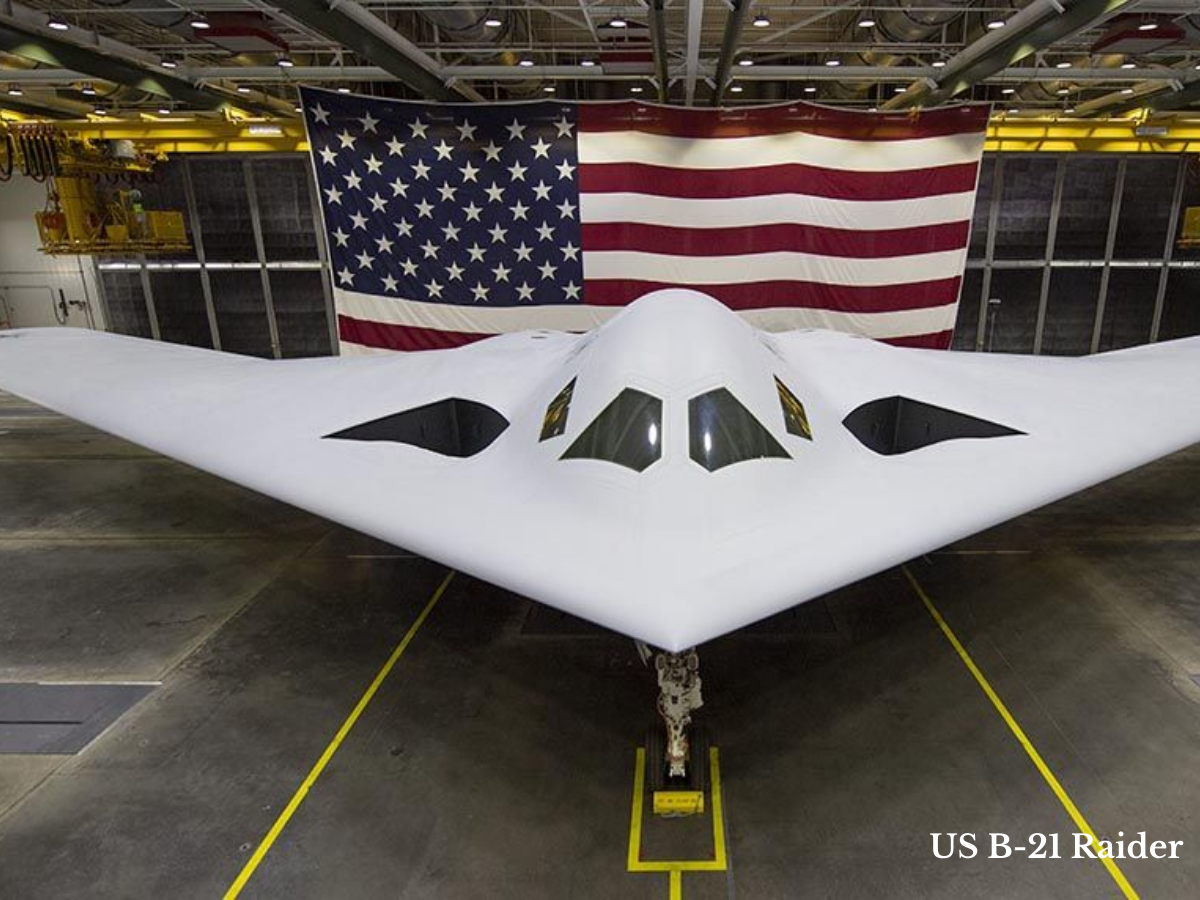
B2 Bomber the U.S. Air Force is preparing to transition from the legendary B2 Spirit to its successor and the B-21 Raider, marking the dawn of a new chapter in stealth aviation. The B2, first flown in 1989, revolutionized long-range strike capabilities with its flying wing design and radar defying technology.
But as rival nations like China and Russia enhance their advanced defense systems and the Spirit’s dominance is being challenged. The B21 is designed specifically to counter these evolving threats, ensuring the U.S. maintains strategic superiority in the skies.
B2 Bomber: Next Generation Stealth and Survivability
B2 Bomber the Raider integrates cutting edge stealth materials and refined aerodynamics, enabling it to evade modern radar systems more effectively than its predecessor. Unlike the costly and maintenance heavy B2, which costs nearly $2 billion per unit, the B21 emphasizes affordability and ease of upkeep without compromising capability.
ALSO READ: Primordial Black Hole: James Webb Telescope Unveils a 13 Billion Year Old Mystery
Its ability to penetrate heavily defended airspace while avoiding detection gives it a decisive edge in contested environments where older bombers might struggle.
B2 Bomber: Flexibility and Technological Evolution
Beyond survivability the B21 Raider is built for adaptability. Capable of carrying both conventional and nuclear payloads, it also offers increased range and mission flexibility. Importantly, the aircraft has been digitally engineered from inception, meaning its systems both hardware and software can be rapidly upgraded as technology and threats evolve.
The Air Force envisions seamless integration with future drone fleets, enabling manned unmanned teaming for more dynamic operations. This ensures the bomber will not just dominate today’s skies but remain relevant for decades to come.
ALSO READ: Canada’s First Lunar Rover to Join NASA’s Artemis Moon Mission in 2029
From the B2 to the B21: Lessons Learned
B2 Spirit remains one of the most iconic aircraft in military history. With its massive wingspan, stealth shaping and ability to deliver up to 40,000 pounds of ordnance including the formidable GBU-57 bunker buster the Spirit earned its place in multiple conflicts, from Serbia and Afghanistan to Iraq and most recently Iran in 2025.
However, the limited fleet of only 20 bombers, coupled with astronomical operating costs, restricted its long-term potential. The B21 addresses these issues by balancing affordability with capability. Plans call for at least 100 Raiders, offering the United States far greater operational flexibility than the B2 fleet ever could.
B21 Raider: Securing the Future of Air Superiority
B21 Raider is more than just a replacement aircraft it is a strategic necessity. As adversaries develop sophisticated air defense networks and expand their military footprints, the U.S. must ensure its ability to project power globally. With enhanced stealth, cost efficiency and digital adaptability, the Raider represents a future-proof solution to modern warfare challenges. Just as the B2 once symbolized America’s technological edge during the Cold War, the B-21 now steps forward as the backbone of 21st century long range strike capabilities.
ALSO READ: Blood Moon vs Corn Moon: What Makes September’s Lunar Show Special