
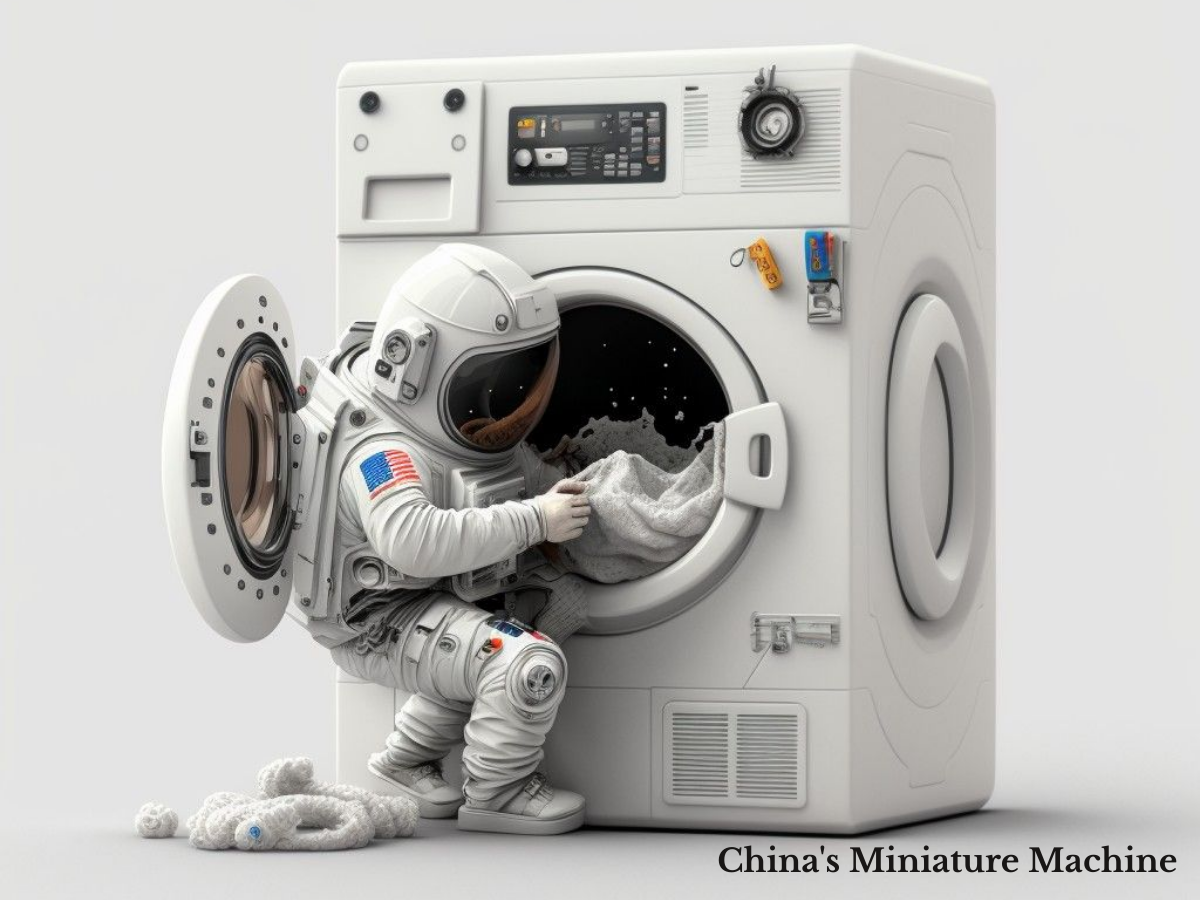
Astronauts have faced one quite mundane but utterly insufficient problem unwashed laundry and leaving them hanging in space. As there are no washing machines in either the International Space Station or China’s Tiangong station, the clothing of astronauts is worn until, finally, no more can be used. Nominally used garments then stuff cargo capsules and which burn up in the atmosphere of the Earth when detached from their cargo modules. Such a simple throwing away system is not only wasteful but also pretty impractical for long duration missions to the Moon or Mars.
China’s Miniature Machine
A team of scientists from the China Astronaut Research and Training Centre is looking to bridge this current unsolved gap, developing a compact washing machine which is free from detergent and uses mist combined with ozone for cleaning, instead of the traditional method of using water. Slightly larger than a carry on suitcase, it weighs about 12 kilograms (26 pounds), uses just 400ml of water per cycle to clean up to 800 grams of clothing and is cube shaped.
ALSO READ: B-21 Raider vs B-2 Spirit: Why the U.S. Needs a New Stealth Bomber
The system itself operates through ultrasonic atomisation, releases extremely fine mist droplets, capable of penetrating into the fabrics and displacing dirt, while the smell, which mostly comes with odour besides soiling, also eliminated through ozone. Most importantly this doesn’t need any detergent and very little water is used-an important aspect of any environment where every drop counts.
China’s Miniature Machine: The Water in Space
The problem on laundry in orbit has always been much more restrictive concerning resources of water. Space stations consider water the most precious and practically recycled from astronauts breath, sweat, urine, condensation, then purified, leaving drinking and hygiene supplies. There is nowhere else for traditional washing purposes.
Even transporting it from Earth becomes less feasible. Each kilogram of water sent into orbit will expend an enormous amount of fuel and expense. For example, researchers estimate that on a 15 year mission, a three-member crew would have to carry more than 3,300 kilograms of clothing if no laundry system existed. That big logistics burden makes any in space washing solution not just convenient, but absolutely vital for sustainability.
ALSO READ: ChatGPT Faces Global Outage: Users Report Errors Worldwide
Preparing for Lunar Martian Missions
This technology will probably be among the most critical for humanity’s future beyond low Earth orbit. Long duration missions think Artemis to the Moon and, eventually, crewed missions to Mars will all require astronauts to live off a limited supply for months, if not years. Bringing all the clothes from Earth would be unrealistic. A self-sustained laundry system would reduce the amount of cargo, costs and discomfort involved in space travel.
Other agencies have explored such things. Such as in 2021, Tide had astronauts use special space detergents for a testing aboard the ISS and in 2023, ultrasonic cleaning was considered but failed as the technique could not eradicate bacteria. If Chinese people introduced that novel system, it could jumpfrog these limitations once proved successful.
China’s Miniature Machine: Future Possibilities
China’s Miniature Machine possibility of offering freshly laundered clothes to astronauts in space may not seem much of a luxury but is nevertheless an important advance towards making possible practical long-term habitation beyond Earth. China’s ongoing development on mist and ozone technology for laundry will give us a more comfortable space travel soon if not before.
ALSO READ: Canada’s First Lunar Rover to Join NASA’s Artemis Moon Mission in 2029