
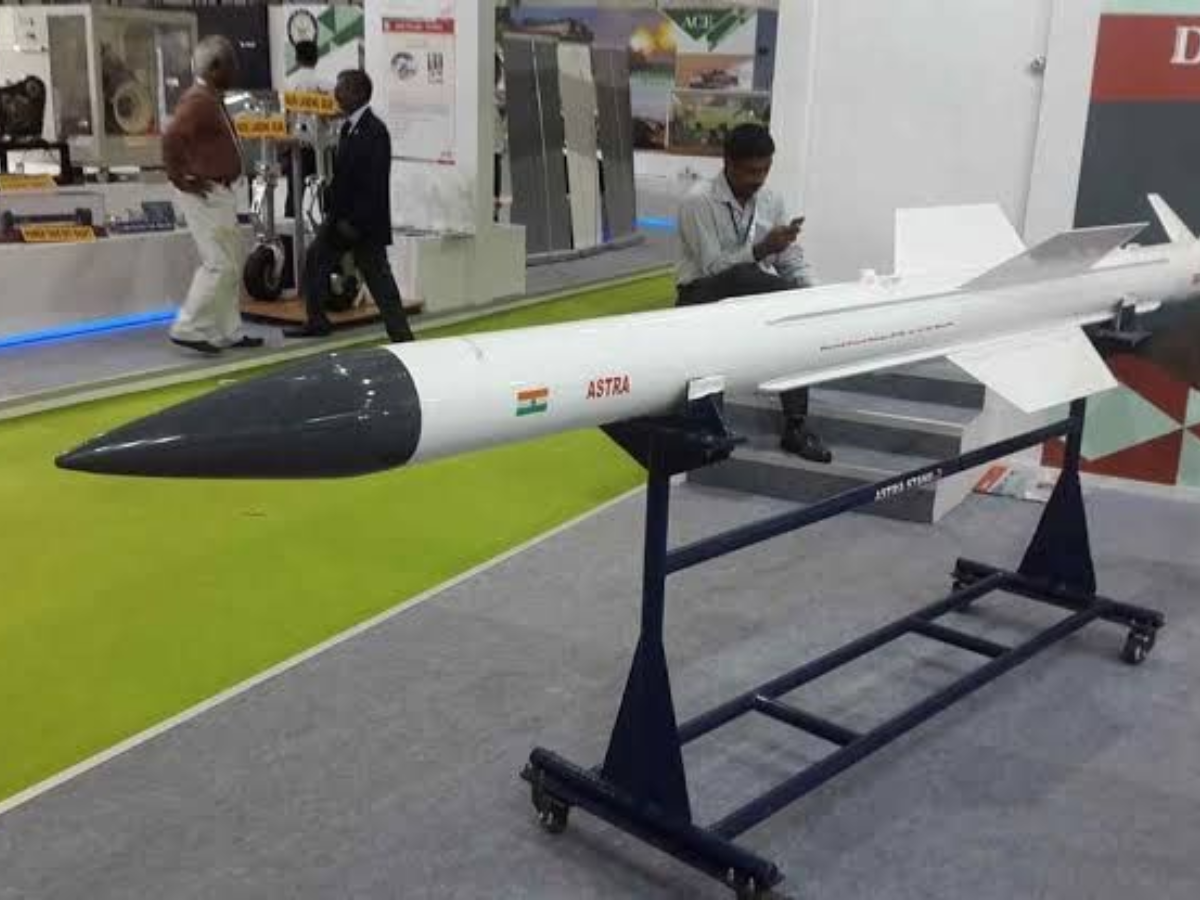
On July 11, 2025, Two Astra missiles were launched from a Su-30 MKI fighter jet and flawlessly struck their targets off the coast of Odisha not as actual trials but as a demonstration to the world that India’s indigenous missile technology stands up to that of the global military superpowers. The missiles speed and accuracy henceforth herald a new set of standards for aerial engagement capabilities for India.
Why the Game Changing Astra Missiles?
Astra missile lies within its three key aspects long-range, intelligent guidance systems and a highly powerful warhead. Contrary to popular beliefs and actual air combat is no longer about close range dogfighting it is about BVR engagement. Astra can engage enemy aircraft over 100 kilometers ahead and a missile fired from Delhi could, theoretically hit a target somewhere near Gurgaon without the enemy pilot even spotting it.
ALSO READ: Google Hit with $3.5 Billion EU Fine: Will This End Its Dominance in Digital Advertising?
The guidance system of Astra operates in two phases. During the first phase, after launch the missile flies a mid-course autopilot trajectory and receiving constant updates from its launching aircraft. In the final phase, its onboard Active Radar Homing seeker autonomously locks onto the target, allowing the pilot to be free of any control of the missile immediately after launch. The missile carries a 15-kilogram pre fragmented warhead that detonates near its target and creating a deadly spray of shrapnel to destroy targets without direct impact.
How to Enhance Fighter Jets with Astra?
The Astra missile has made India’s Su-30 MKI fighter jets long-distance hunters par excellence. While Su-30 MKI has advanced radar and twin-engine capabilities and its lethality was limited without a state of the art long-distance missile. With the Astra it can find a target, engage and neutralize threats from a distance.
The missile was extensively tested from India’s indigenously developed LCA Tejas AFMK1 fighter jet and criticized for being too light. Armed with Astra now the Tejas proves its worth as a serious contender to engage enemies over 100 kilometers away with utmost precision. Integration of Astra onto the upcoming Tejas Mk-2 and imported Rafale jets is around and thereby standardizing missile capabilities across the Indian Air Force fleet.
ALSO READ: James Webb Unveils Universe’s Oldest Black Hole | Born Seconds After the Big Bang
What is Astra’s Journey to Revolutionary?
A rapid evolution in India’s missile programmed is seen with three generations of Astra missiles:
- Astra Mk-1: The present workhorse having 110 km range, Mach 4.5 speed and 154 kg weight. It is already a front-line missile of the Indian Air Force.
- Astra Mk-2: Due 2026 this will be an enhanced model giving 160 km range and employing a dual pulse motor for better thrust bursts, giving it superior handling and range.
- Astra Mk-3 (Gandiva): Under development this missile will be a 350-km one operating on ramjet propulsion, a technology that uses atmospheric air for fuel combustion and allowing for greater efficiency and range.
A New Era of Indigenous Strength
The success of India with the Astra series of missiles largely demonstrates an ever-growing self-reliance in defense technology. Each generation being an advancement in the range, speed and accuracy now firmly carves India’s position among the world’s elite powers in missile technology.
The same enhance the security of the nation but it also clearly convinces every passing adversary India is a mammoth force in modern aerial warfare.
ALSO READ: The Fiery “Door to Hell”: Turkmenistan’s Burning Crater Still Alive After 50 Years